GODREJ SOUKYA ROAD · HOME LIBRARY
Godrej Soukya Road: Home Library Planning
Plan a Godrej Soukya Road home library around real book collections, reading habits, shelf access and future flexibility.
12 September 2026 · 1,400 words · About 8 minutes
Ask about this topic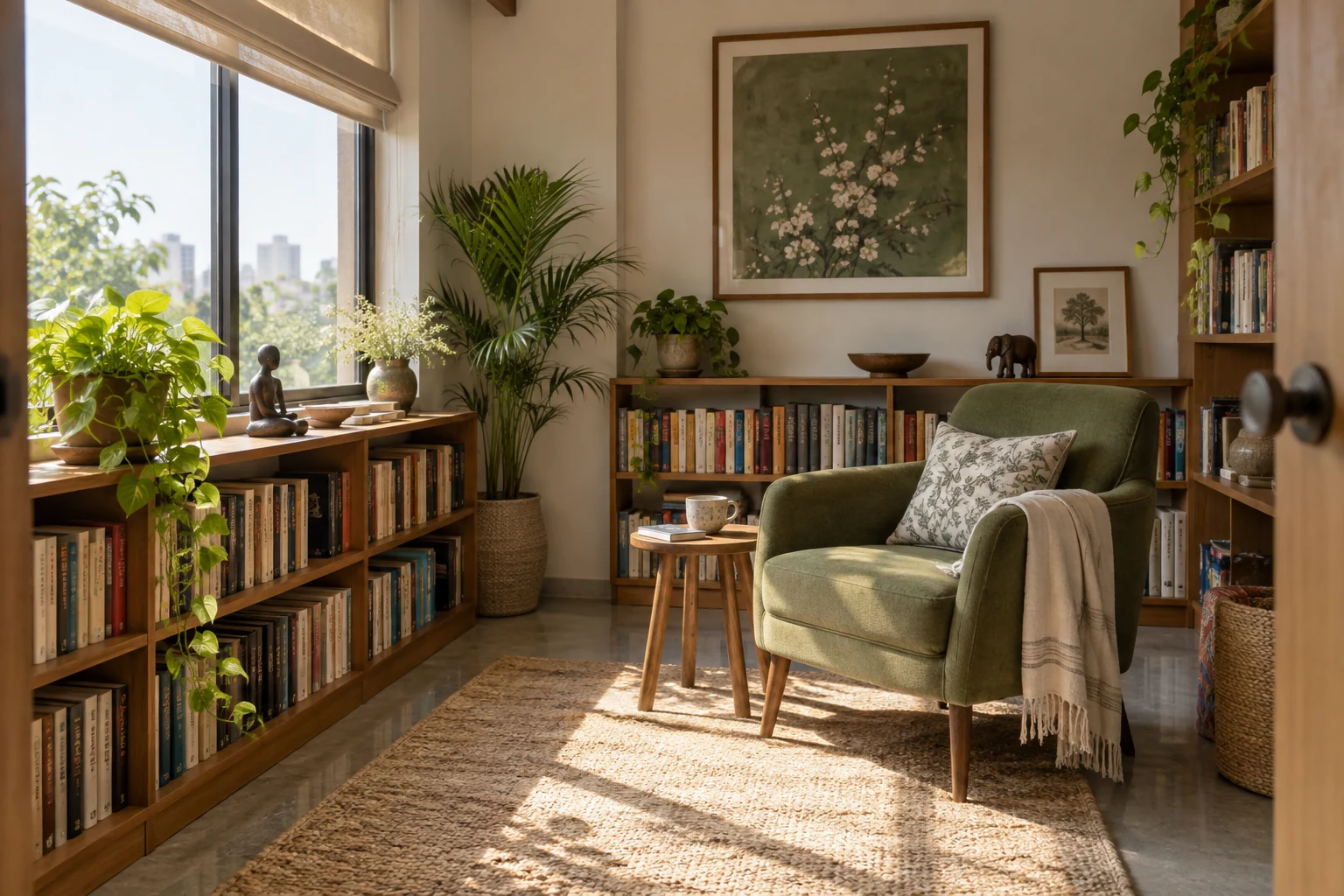
A Godrej Soukya Road home library does not have to occupy an entire room to become a favourite part of the house. It might be a reading chair beside accessible shelves, a shared collection near the family sitting area or a quieter room for someone who reads every evening. The right starting point is the collection you own and the way you enjoy it.
When reviewing Godrej Row Houses Soukya Road, think about where reading would fit into an ordinary day. A dramatic wall of books can look appealing, but a smaller arrangement used frequently may be more satisfying. This guide helps translate a reading habit into a practical room brief without assuming that a dedicated library is part of the supplied home.
Count the collection you will actually keep
Sort books into useful groups before measuring shelves. Everyday reading, reference books, children's books and occasional collections may need different locations. Include oversized volumes and albums, which can be missed when storage is estimated from an average paperback. Measure a representative group of your own books instead of relying on the number of shelves in a photograph.
Decide which books you want to browse and which simply need a reliable storage place. A collection arranged entirely for display can make a favourite title surprisingly difficult to find. Choose an order that the household understands, whether by subject, reader, language or another familiar system. There is no requirement to organise a private library like a public one.
Leave reasonable room for the collection to change. That does not mean building empty shelving across every wall. It means avoiding an arrangement that is completely full on the first day. A modest expansion option can be more flexible than buying a large fixed unit before you know how the room will be used.
Choose the reading location by habit
Ask when you usually read. Morning newspaper reading may belong near the household's first cup of tea, while an evening novel may suit a quieter sitting area. If several people read together, consider whether the location supports that shared use. A remote room will not become a family library simply because it has shelves.
Notice what competes with reading. Television, frequent circulation or an activity that needs conversation may make a particular corner less suitable for someone seeking concentration. Another reader may enjoy the same background activity. Test preferences rather than describing one location as universally peaceful or ideal.
The Godrej Whitefield villas project reference can help you identify the wider shortlist. Bring the exact room arrangement into the discussion when deciding where the library belongs; the broad description of a spacious home cannot answer that personal question.
Design shelves for retrieval
Consider the books used most often and place them where their readers can retrieve them comfortably. A shelf that looks balanced in elevation may be inconvenient for the person reaching it daily. Think about the actual users, including children who should have an appropriate arrangement for their own books.
Check the furniture manufacturer's loading and fixing instructions, and arrange suitable installation. For a substantial collection or extensive fitted shelving, obtain an appropriate professional assessment rather than assuming any wall or floor can support the proposal. Book storage involves real weight, and decorative appearance does not establish capacity.
IKEA's book storage ideas offer visual inspiration for displaying a collection. Use them to explore styles, then return to your own book sizes, installation requirements and preferred organisation. A source of ideas is most useful when it helps you ask better questions about your specific room.
Give the reader enough space
Try the proposed chair rather than choosing it only from a photograph. Consider how you sit, whether you use a footrest and where you put a drink or glasses. A side table may be useful, but it should not make the route around the chair awkward. Place the everyday accessories before adding decorative objects.
Test lighting at the times you expect to read. Daylight photographs cannot show the evening experience, and the most attractive window position may not be your preferred seat after dark. A suitable lamp can make the arrangement more adaptable. Have any electrical changes planned appropriately instead of trailing cables through circulation routes.
As you compare Soukya Road property search results, keep a separate note of the library essentials: collection size, preferred reading time and seating needs. That short brief is easier to apply to a real room than a folder of unrelated inspiration images.
Make a shared library easy to use
If several generations contribute books, give each collection an understandable home. A parent may want reference material close to a favourite chair, while children may prefer books near their regular activity area. The library can be connected across a few locations rather than concentrated in one room that nobody wants to visit.
Agree how borrowed or unfinished books return to the shelves. A small temporary landing place can prevent stacks from taking over every table. Avoid a complicated system that nobody follows. The aim is to make reading and returning a book easy, not to create another household administration task.
For a family sharing the home with parents, the multigenerational living guide helps connect personal collections with room choices. Books often reveal daily preferences that a bedroom allocation based only on size can overlook.
Keep room for other uses
A library may also support quiet conversation, occasional writing or a board game. Decide which secondary uses genuinely belong there. If a large desk would push the reading chair into an awkward position, ask whether that desk is needed every day or whether another surface would work better.
Movable furniture can help you learn the room before committing to extensive joinery. Try the chair and a modest shelf arrangement first where practical. Observe whether the room attracts use, then improve the elements that support that habit. An unused formal library is not made more useful by adding further shelving.
The Soukya Road row houses overview can remain part of the property research, while your library plan develops through the actual household. Keep supplied provisions and personal furnishing choices clearly separate in the brief you share with a designer.
Keep moving day manageable for books
A substantial collection needs its own packing and unpacking sequence. Group books by the destination they will have in the new arrangement, and ask the moving provider about suitable packing and handling. Avoid creating containers that are difficult for the intended handlers to manage. Clear destination labels can save repeated sorting after arrival.
Unpack the books used most often first. Reference material needed for work or a child's current reading can become available while less urgent collections remain in their planned temporary location. This makes the library useful before every shelf is styled or every decorative decision is complete.
Check that the storage is appropriately installed and ready before filling it. Follow the supplier's instructions rather than treating an assembled appearance as proof that all required fixing work is finished. Keep any loading guidance with the furniture record so later additions do not rely on guesswork.
As the collection settles, notice which categories are retrieved repeatedly. Adjust their position before the arrangement becomes difficult to change. A library that evolves through use will usually feel more personal and convenient than one organised once for a photograph and never reconsidered.
Keep the final shelf arrangement easy to explain, so another family member can find and return a book without needing help.
Compare two library arrangements
Imagine a household deciding between a full library room and shelves beside an everyday sitting area. The separate room provides more collection space, but the family usually reads together after dinner. They test a smaller shared arrangement and find that it gets more use. Less frequently consulted books receive a second storage location elsewhere.
Another household might reach the opposite conclusion because one person studies quietly for long periods. The useful lesson is to compare real habits, not copy a preferred photograph. Measure the collection, test the seat and decide what should be within reach during a normal reading session.
Discuss your chosen arrangement through the Godrej Soukya Road project page when requesting the relevant room information. You can revisit Godrej Soukya Road home search references for the wider shortlist. A good home library earns its place through regular use, comfortable retrieval and enough flexibility for the next book you bring home.
More Godrej Soukya Road articles
EXPLORE THE PORTFOLIO
Projects by the same builder



Browse all Godrej project guides
Discuss your Godrej Soukya Road shortlist
Ask for the project details relevant to this guide.
Chat about Godrej Soukya Road: Home Library Planning