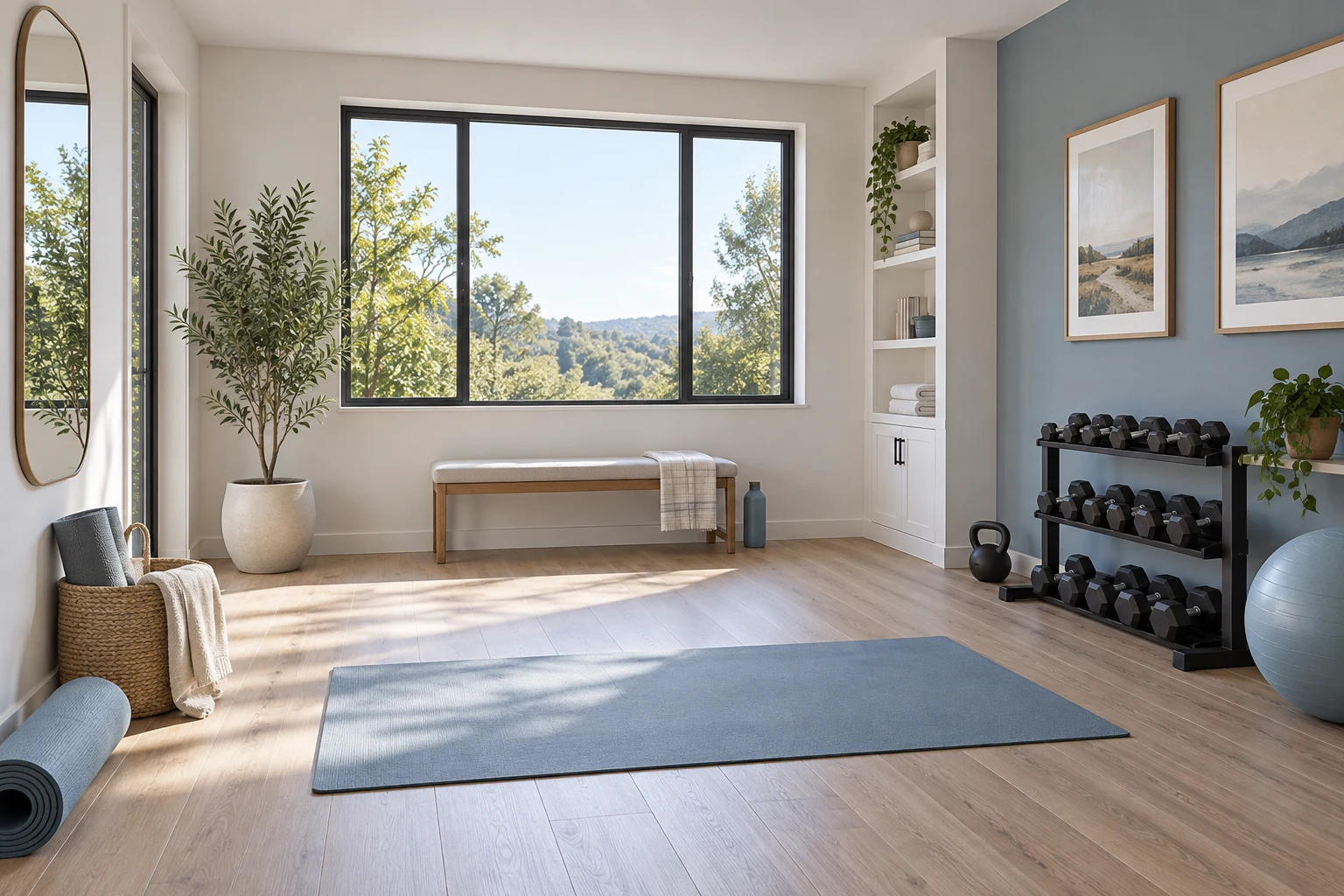
GODREJ SOUKYA ROAD · HOME GYM
Godrej Soukya Road: Home Gym Planning
Plan a modest home gym at Godrej Soukya Road around your routine, usable space, equipment access and professional checks.
21 September 2026 · 1,400 words · About 8 minutes
Ask about this topicA home gym does not need to fill a room with machines. For many households, a clear place to stretch, keep a few exercise accessories and follow a familiar routine is more useful than a miniature fitness club. When planning a Godrej Soukya Road home gym, begin with the activities you already enjoy and the space those activities need. Buying equipment first can leave you with a crowded room that is difficult to use.
This guide helps you prepare a practical brief for a modest exercise area. It does not confirm that a particular room, floor or terrace is suitable for equipment. Structural capacity, installation requirements and project permissions need separate verification. Refer to the Godrej Soukya Road project page for the home you are considering, then use its current unit drawing to develop your questions.
Describe a normal exercise session
Write down the beginning, middle and end of a typical session. You might unroll a mat, follow a video, use a pair of light weights and then put everything away. Someone else might want a stationary bicycle and somewhere to stretch afterward. These routines require different layouts. A list of actual movements is more useful than the broad instruction to design a gym.
Include preparation and clearing up. Where will shoes, a towel and a water bottle go? Can you reach the equipment without moving a desk or a spare bed? If the setup takes several minutes every day, consider whether a simpler arrangement would be easier to maintain. Convenience can matter more than the number of machines.
When reading Godrej rowhouse information for Soukya Road, distinguish community amenities from the space inside your selected home. A reference to a shared gym does not establish permission or suitability for private equipment. Keep the two decisions separate and ask for the relevant details for each.
Choose the room through everyday use
Look at when the room is available. A space that doubles as a guest bedroom may be convenient most of the year but unavailable during family visits. A study might work for quiet stretching outside working hours, while equipment noise could disturb calls. Discuss these overlaps before deciding that an occasionally empty room is permanently available.
Check the route from bedrooms and bathrooms. Exercise can be easier to fit into the day when accessories and changing arrangements are nearby. At the same time, avoid treating a landing or a narrow passage as spare floor area. Circulation routes need to remain useful for the rest of the household while someone is exercising.
If you are considering heavy equipment, seek written guidance from the developer or an appropriately qualified professional about the proposed location. Do not assume that placing a machine on a lower floor removes every concern. Equipment weight, concentrated loads, vibration and installation details should be assessed for the actual construction and intended use.
Measure movement around the equipment
Use the manufacturer's dimensions and required clearances for each item. The machine footprint alone does not describe the space needed to mount, dismount, adjust or service it. Mark the complete operating area on a plan. Include doors and cupboards in their open positions so that an apparently generous corner does not become unusable when storage is accessed.
For mat-based activity, test the movements you normally perform within the proposed area. Consider both floor space and overhead clearance. A light fitting, fan or low shelf can affect how a space is used. This is a room-planning exercise, not a recommendation to perform a particular workout. Follow suitable instruction for the activity itself.
The Godrej Whitefield villa project reference may help you compare the overall home format. It cannot establish safe clearances for your equipment. Take the selected model's installation manual to the discussion with your designer so the plan responds to a real product rather than a generic gym symbol.
Coordinate the floor and nearby rooms
Ask equipment suppliers what surface their products require and how protective accessories should be used. A mat chosen only for colour may not be appropriate for the machine or floor finish. Check compatibility with the flooring supplier as well, particularly where a product will remain in one place for long periods.
Think about the people in adjoining rooms. Repeated movement or equipment operation may be noticeable elsewhere, especially during early mornings or late evenings. Avoid promising that a rubber mat will make every activity quiet. If vibration or sound matters to your household or neighbours, seek a suitable assessment before committing to the layout.
Record the intended exercise hours in the brief. Sometimes a different room or a quieter activity solves a practical problem more effectively than a complicated fit-out. The room should support a routine that fits the home as a whole. Keeping those expectations explicit makes equipment selection and family agreements much easier.
Plan air, light and simple services
Consider how the room will feel at the time you intend to use it. Visit at that hour where possible, and note daylight, glare and the available ventilation arrangements. Confirm supplied services rather than assuming that an illustration includes air conditioning, extra sockets or a particular type of window. Ask qualified installers about any proposed additions.
If you follow guided sessions on a screen, check its position from the places you will use. A phone balanced on a shelf may be sufficient for one routine, while another calls for a stable screen arrangement. Keep charging leads and electrical accessories away from movement routes. Use the equipment maker's electrical requirements when discussing the setup.
Use Soukya Road project search results to gather current project references, then keep your exercise-room requirements in a separate schedule. That schedule should state the equipment, operating hours, storage and installation checks. It helps prevent a general lifestyle image from becoming an untested assumption about your particular home.
Keep storage proportionate to the routine
Group accessories by how frequently they are used. Everyday items should be easy to reach and return. Occasional equipment can occupy a less prominent location, provided it can be retrieved without an awkward lift or a blocked passage. Do not put heavy items on a shelf simply because it looks tidy; use storage appropriate to their weight and the manufacturer's guidance.
Decide whether equipment will remain visible. A compact rack may suit a dedicated room, while a multipurpose room might need a cupboard or a movable basket for smaller accessories. Measure those containers too. Storage that consumes the exercise area defeats its purpose, even if the room looks organised between sessions.
Leave some space unassigned at the beginning. A new routine often reveals which accessories are actually useful. Buying every possible item before living with the room can create unnecessary clutter. Start with the confirmed essentials and add only when a clear need appears through regular use.
A useful trial before ordering
Set up the proposed activity area with the accessories you already own and a taped outline of any equipment under consideration. Walk through starting and finishing a session without actually installing a machine. Notice where you put a towel, how you reach the controls and whether the door can still open. Ask another household member to use the adjacent room during the trial. Their observations may reveal a practical conflict you had not considered. Record the changes on the plan and share them with the equipment supplier before confirming the final order.
Make a staged installation plan
Separate room preparation from equipment purchase. First confirm the location, dimensions, services and any required permissions. Then compare products that fit those constraints. Ask how each item will be delivered, assembled and serviced. A product that fits the room may still present a problem on the route through doors and stairs.
For another Godrej Soukya Road information search, retain the date of the material you consult and verify anything that affects installation. Delivery access, room specifications and community procedures should be checked directly for your home. Avoid treating an old listing as a current instruction for contractors.
Review the final plan with everyone sharing the space. Show what remains in place, what folds away and how the room will work on a busy day. Keep the Godrej Row Houses Soukya Road details alongside your unit-specific questions, and keep professional confirmations with the equipment documents. A successful home exercise area is one you can use comfortably and consistently, without making the rest of the house harder to live in.
More Godrej Soukya Road articles
EXPLORE THE PORTFOLIO
Projects by the same builder



Browse all Godrej project guides
Discuss your Godrej Soukya Road shortlist
Ask for the project details relevant to this guide.
Chat about Godrej Soukya Road: Home Gym Planning