GODREJ SOUKYA ROAD · FURNITURE DELIVERY
Godrej Soukya Road: Furniture Delivery Guide
Check furniture delivery for Godrej Soukya Road with package sizes, staircase turns, assembly access and delivery coordination.
12 September 2026 · 1,400 words · About 8 minutes
Ask about this topicIn this guide
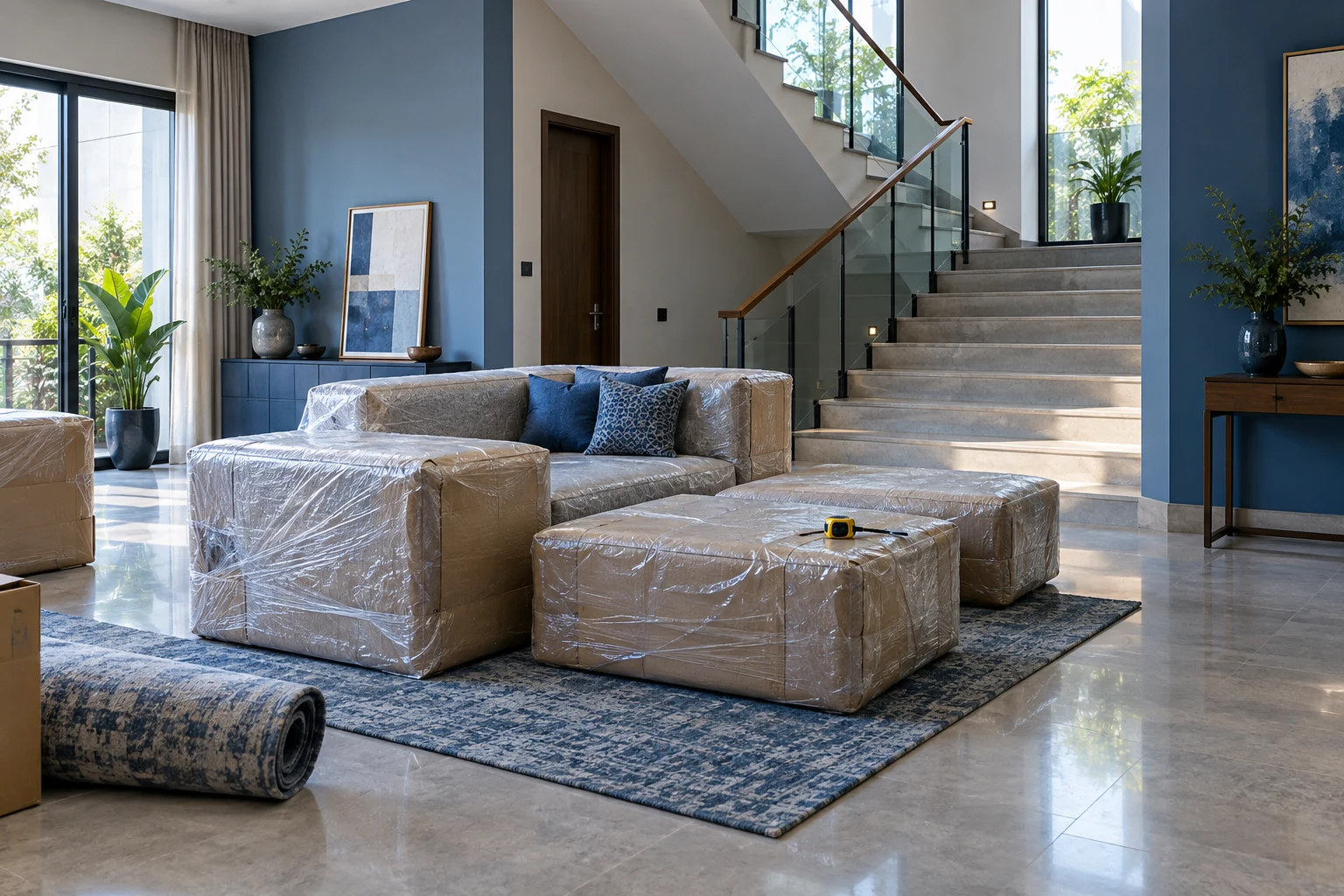
Godrej Soukya Road furniture delivery deserves attention before you order a large sofa, bed or dining table. A piece can fit beautifully inside its intended room and still be difficult to bring there. In a home with internal levels, the delivery route includes entrances, turning points, stair landings and the space needed by the delivery team to handle the package.
Begin with the Godrej Row Houses Soukya Road project guide and identify the exact home. Then ask for the access information relevant to that unit. This guide explains how to prepare a delivery brief; it does not establish staircase dimensions or promise that any particular furniture item will fit.
Separate room fit from delivery fit
Room planning usually starts with the finished furniture dimensions. Delivery planning starts with the largest component that must travel through the house. Those measurements may differ substantially. A table may arrive in several boxes, while a sofa may have a rigid frame that cannot be separated further. Ask the seller for packaged dimensions and the permitted assembly method.
Do not assume removable legs make an item easy to deliver. The remaining frame may still be large, and some products cannot be dismantled without affecting their condition or warranty. Obtain the manufacturer's or seller's answer for the exact model. A photograph of a similar item is not enough to establish how yours arrives.
Keep both sets of measurements on the order record: finished size and largest delivery component. Add weight information where the delivery company requests it. This makes later conversations concrete and prevents the room designer, furniture seller and delivery team from working with different assumptions.
Trace the whole route
Start at the permitted unloading point, then follow the route to the room. Include gates, entrance doors, corridors, internal stairs and the final doorway. Record turns and changes in level, not just the narrowest straight opening. Long rigid items need room to change direction, and an apparently generous entrance does not resolve a tight turn farther inside.
Ask the delivery company what measurements or photographs it needs. Where access is available, provide a continuous walkthrough and clear views of the relevant turning points. Let the professionals assess the handling plan. Avoid improvising a route through a balcony, window or other opening without appropriate assessment and permission.
The Godrej Whitefield villas reference page is useful background for the shortlist, but its illustrations cannot establish delivery clearances. Measurements should relate to the actual home and the final route the delivery team is allowed to use.
Check staircase turns early
Staircases deserve particular attention because the item changes both direction and height. Ask the team to consider landings, handrails, overhead clearance and the space available for handlers. A simple comparison between package width and stair width can miss the movement required to carry a rigid object around a turn.
Give the team the intended destination floor at the quotation stage. Clarify whether carrying upstairs, unpacking and assembly are included, and what happens if access proves unsuitable. Establish any additional visit or return arrangements in writing. These questions are easier to resolve before dispatch than when a large item is waiting at the entrance.
If several items use the same route, assess the most difficult ones first. A large headboard, long tabletop or one-piece sofa may determine your options. Smaller boxes can often be planned afterward. This approach also helps your staged furnishing decisions by identifying which purchases need early access checks.
Allow space for assembly
Getting a box into the room is only part of delivery. Some furniture needs to be assembled flat before being raised, while other pieces require access around several sides. Ask the seller about the assembly space for the model. Do not fill the room with unrelated cartons before the installer arrives.
Decide where packaging will temporarily go and how it will leave. Keep the route clear so the team does not have to step around other furniture or household belongings. If multiple suppliers are arriving, avoid overlapping appointments that compete for the same room or staircase. A slower sequence can produce a much smoother move.
When browsing Soukya Road home search results, save project questions separately from supplier questions. The project team can clarify access procedures; the seller must explain packaging, assembly and its delivery service. Neither answer automatically covers the other's responsibility.
Coordinate access and protection
Ask the relevant project or community contact about delivery hours, vehicle access and any advance registration procedure. Confirm these arrangements close to the delivery date because the applicable process may depend on the stage of occupation. Share the approved details with the supplier rather than assuming its driver will know them.
Discuss protection of finished surfaces with the delivery company. Clarify who supplies suitable materials and who removes them afterward. Do not prescribe a handling method yourself if you lack the expertise. The goal is to agree a professional plan that respects the property and the delivery team's working requirements.
Nominate one household contact who knows the room destinations. Give each item a clear destination before it arrives. Changing the location of a heavy assembled piece later may create another access problem, even if the original delivery went well. A simple marked room list helps everyone use the same names.
Compare flexible furniture options
Where a difficult route remains unresolved, compare alternatives before committing. A modular sofa, a bed assembled in the room or a table with separate components may suit the route better. Their suitability still depends on the exact product and assembly requirements. Modularity is a question to investigate, not a universal guarantee.
Consider future removal as well as first delivery. Furniture may eventually need repair, replacement or a move to another room. Ask whether it can be dismantled again and who should do that work. A piece selected only for its first installation may become inconvenient when the household changes.
Use the Soukya Road row houses listing alongside the specific access documents when comparing homes. Keep a clear distinction between the broad property description and the delivery evidence that supports your furniture order.
Keep a useful delivery record
Create one record for each difficult item containing the exact model, largest package, destination room and the supplier's route assessment. Include photographs or measurements requested by the team, with enough context to identify the doorway or turn shown. A close photograph of an opening without its surrounding route can be less useful than a clearly explained sequence.
Check that the order record matches the item being dispatched. A different size or model may have different packaging even when its appearance is similar. If the supplier proposes a substitution, revisit the access check before accepting it. Do not assume that an earlier assessment transfers automatically to another product.
On the day, keep the relevant order details available to the household contact. Follow the seller's inspection and reporting process for the delivered item, and retain the assembly and care information. If a problem arises, a clear record helps explain what was agreed and what arrived without relying on memory.
Finally, photograph the completed arrangement for your own reference if useful. Record where any supplied fittings or assembly documents are stored. Future repairs or moves become easier when the household can identify the model and its supported dismantling procedure. Good delivery planning continues through the handover, rather than ending as soon as the box crosses the entrance.
Keep this record available until assembly and any delivery questions are resolved.
An example of a better ordering process
Imagine a family choosing a sofa for an upstairs sitting room. They first check the finished size against the room, then request the largest packaged component. The supplier reviews the actual route and identifies an unresolved turn. Instead of hoping it will work, the family compares a model delivered in smaller approved sections.
They confirm assembly space, carrying charges and the appointment procedure before ordering. On delivery day, the room and route are ready, and the household contact knows the intended arrangement. The improvement comes from connecting several small decisions, not from guessing a single ideal furniture dimension.
Take your shortlist of difficult items back to the Godrej Soukya Road project page and request the relevant access clarification. Broader Godrej Soukya Road search references can support the property search, while a supplier's route assessment supports the furniture purchase. Keep those two decisions linked without treating either as a substitute for the other.
More Godrej Soukya Road articles

EXPLORE THE PORTFOLIO
Projects by the same builder



Browse all Godrej project guides
Discuss your Godrej Soukya Road shortlist
Ask for the project details relevant to this guide.
Chat about Godrej Soukya Road: Furniture Delivery Guide