GODREJ AVELINE · DINING SPACE
Godrej Aveline: Flexible Dining Space
Assess Godrej Aveline dining space for everyday meals and occasional guests using chair movement, serving and storage.
12 September 2026 · 1,400 words · About 8 minutes
Ask about this topic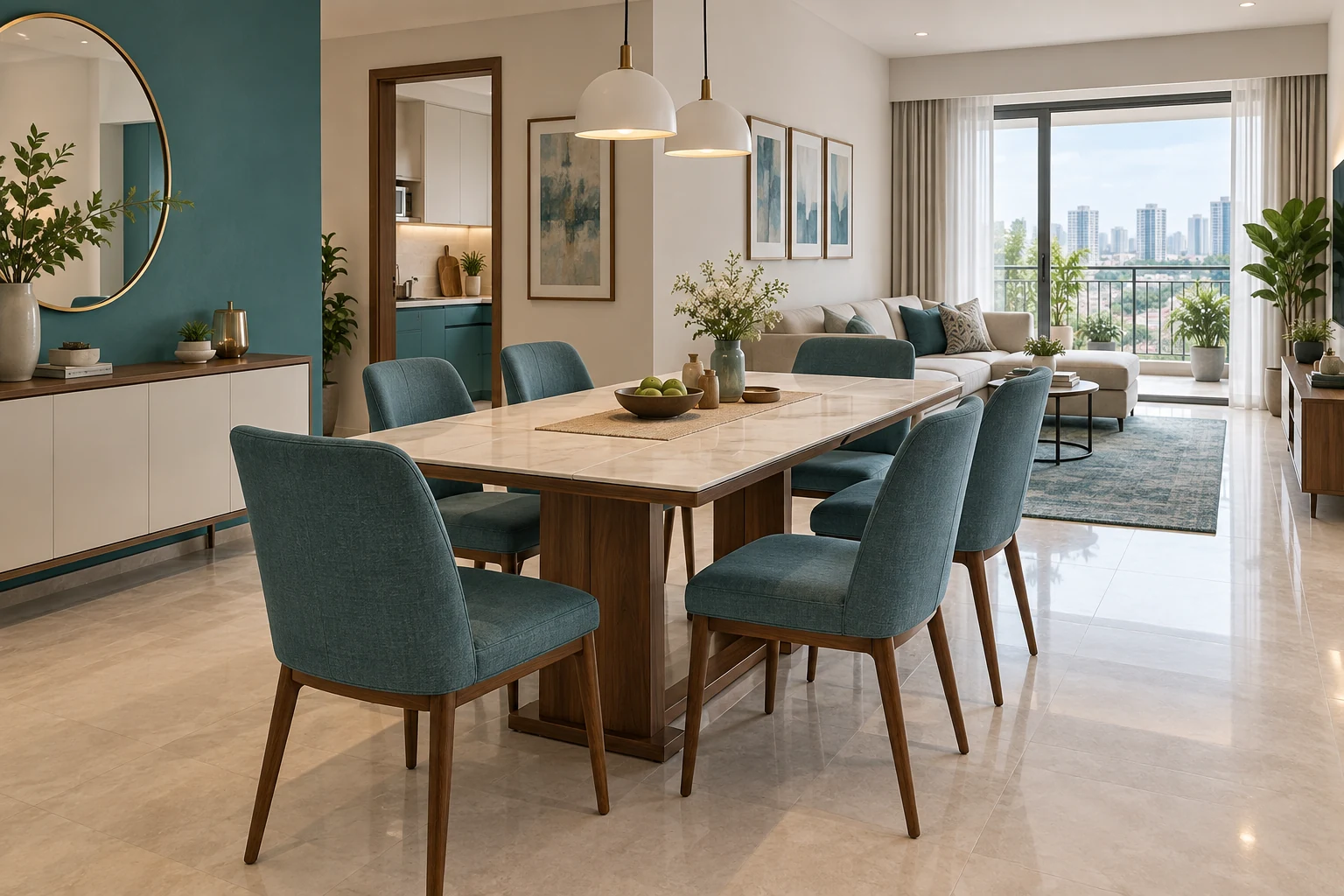
Godrej Aveline dining space planning should begin with the meal your household eats most often. A table may need to serve two people on a weekday, several family members on a weekend and occasional guests during a celebration. Flexibility means supporting those different occasions without allowing the largest one to dominate the apartment every day.
Explore the Godrej Aveline Yelahanka project guide alongside the actual apartment drawing. This article helps you assess personal furniture choices. It does not confirm a particular seating capacity or suggest that every table arrangement will fit all units.
Describe everyday dining honestly
Count the people who normally sit together and the way food is served. Some families place several dishes on the table, while others use a nearby surface. One person may eat earlier than the rest. These details determine how the table is used and whether the household needs flexibility in seating, serving or timing.
Notice other activities that take place there. Homework, occasional laptop use and sorting household items may share the surface. Decide whether those uses are welcome and how the table returns to dining. A multipurpose arrangement works best when the transition is simple rather than requiring a major clear-out before every meal.
Avoid choosing a table solely from the number of chairs shown with it. Think about the actual dishes, people and movement. An attractive photograph usually shows a carefully controlled moment, while everyday dining includes open chairs, someone getting up and objects moving between the kitchen and table.
Test the occupied arrangement
Place the selected table and chairs on the relevant plan, then consider them in use. Someone should be able to sit, rise and move toward the kitchen according to the actual available space. Ask a designer to review the complete arrangement rather than comparing only the tabletop dimensions with the room.
Include nearby storage and door movement. A cabinet that opens into the same area as a dining chair may create an inconvenience that is invisible in a closed-furniture illustration. Decide which openings are used during meals and whether the arrangement can accommodate them comfortably.
The useful measurement is the whole activity area, not just the rectangle occupied by the table. Keep this distinction in your notes when comparing different models. A smaller table with an easier working arrangement may feel more generous in daily use than a larger one surrounded by compromises.
Evaluate an extendable table in both states
If you are considering an extendable design, check its ordinary and expanded dimensions, operating instructions and storage requirements. Ask where separate components are kept if the model uses them. Confirm that the household can manage the change appropriately and that the extended arrangement still works in the actual room.
Decide where additional chairs live between gatherings. Spare seating can be useful elsewhere, but it should have a genuine role or suitable storage location. An expandable table is less convenient if every occasion begins with searching for chairs or moving bulky furniture out of another room.
Try the mechanism with the supplier where possible and understand its care requirements. Do not assume that all extendable tables work the same way. A model that suits one household's frequency of use may feel unnecessarily complicated to another.
Keep serving separate when it helps
A modest nearby surface may hold dishes or water without crowding the table, but it also occupies space and needs an appropriate location. Consider the route between that surface, the kitchen and the seats. Adding a sideboard is useful only if it improves the complete meal sequence.
Test the idea with the actual serving pieces you use. Large bowls and trays can make a decorative surface less practical than expected. Keep the arrangement clear enough that someone can retrieve a dish without reaching awkwardly around unrelated objects. Decoration can follow once the meal works.
For a household using the dining area for family activities, the screen-free space guide offers ideas for making transitions easier. A table can support more than meals if the supplies have somewhere appropriate to return afterward.
Choose storage from the real collection
Inventory everyday crockery and occasional serving items before commissioning a large cabinet. The frequently used pieces deserve convenient access, while an occasional collection can have a different arrangement. Keeping everything together is not always the most practical choice if it makes ordinary meals harder to prepare.
Consider the furniture's loading, fixing and care instructions and arrange suitable installation. Storage should support the actual contents, not merely their visual appearance. Ask the supplier how large or fragile pieces should be accommodated within the proposed unit rather than assuming any shelf will serve the purpose.
Review items that no longer have a clear use. Some possessions are kept for meaningful reasons, while others remain because nobody has considered them recently. A conscious decision about the collection can prevent a storage purchase from becoming larger than the household really wants.
Preserve the route through the apartment
The dining area may connect several rooms, so consider how it behaves outside mealtimes. A chair left pulled out or an expanded table can affect everyday circulation. Decide whether the household will realistically return the furniture to its ordinary position after guests leave.
Do not solve occasional seating by assuming common corridors or other shared areas can be used. Keep the arrangement within the permitted space and confirm applicable rules for any unusual proposal. A flexible home plan should be based on the actual apartment, not borrowed space that may not be available.
If assessing remotely, use the Aveline video walkthrough guide to request a clear view of room relationships. Final furniture planning still needs reliable measurements and a review of the selected pieces in use.
Compare the table through storage and effort
Before choosing an expandable arrangement, write down the steps needed to change it. Where do additional chairs come from, what moves out of the way and who handles the table according to its instructions? The convenience of the mechanism matters alongside the expanded seating capacity.
Try the reverse sequence too. After guests leave, the household needs to return the furniture and store any separate components. If that process is cumbersome, the table may remain expanded and occupy more space than intended. A flexible product only produces a flexible room when the household can comfortably manage both transitions.
Consider how often expansion will happen. A mechanism used every week deserves a different level of everyday convenience from one used rarely. Ask the supplier about operation and care, and compare models through their actual use rather than assuming all extendable designs offer the same experience.
Keep a small hosting inventory with the table plan. Count the suitable chairs and serving pieces already available before buying more. Some additional seating may have a useful role elsewhere in the apartment, while other items would need dedicated storage. Include that destination in the decision.
Finally, compare the room when nobody is dining. Does the ordinary arrangement leave a comfortable route and a surface the household can use for its other agreed activities? The table will spend many hours in that state, so it deserves attention equal to the occasional guest meal.
A clear comparison of everyday use, expansion and return can make the decision easier. It replaces a vague attraction to flexibility with an arrangement the household understands and is willing to maintain.
Keep the final comparison with your furniture notes, so later purchases of chairs or storage remain consistent with the dining arrangement the household has chosen together.
Compare a realistic week with a guest evening
Imagine a family choosing between a large fixed table and a smaller extendable model. The fixed table offers immediate seating but occupies more room throughout the week. The extendable option preserves everyday space but requires a workable expansion and chair-storage routine. The comparison should include both experiences rather than judging only the guest evening.
Another household may rarely host a seated gathering and prefer a simpler table with no expansion mechanism. Flexibility can also come from the way the meal is organised. The right answer reflects actual use, not a requirement to buy a particular type of furniture.
Write down your usual seating, occasional needs, serving method and storage plan. Take the room-specific questions to the Godrej Aveline project page. A useful dining arrangement makes an ordinary meal easy, accommodates realistic changes and leaves the rest of the apartment comfortable to move through.
More Godrej Aveline articles

EXPLORE THE PORTFOLIO
Projects by the same builder



Browse all Godrej project guides
Discuss your Godrej Aveline shortlist
Ask for the project details relevant to this guide.
Chat about Godrej Aveline: Flexible Dining Space