GODREJ AVELINE · WARDROBE PLANNING
Godrej Aveline: Planning Wardrobe Interiors
Plan Godrej Aveline wardrobe interiors around actual clothes, daily access and shared storage rather than frontage alone.
12 September 2026 · 1,400 words · About 8 minutes
Ask about this topic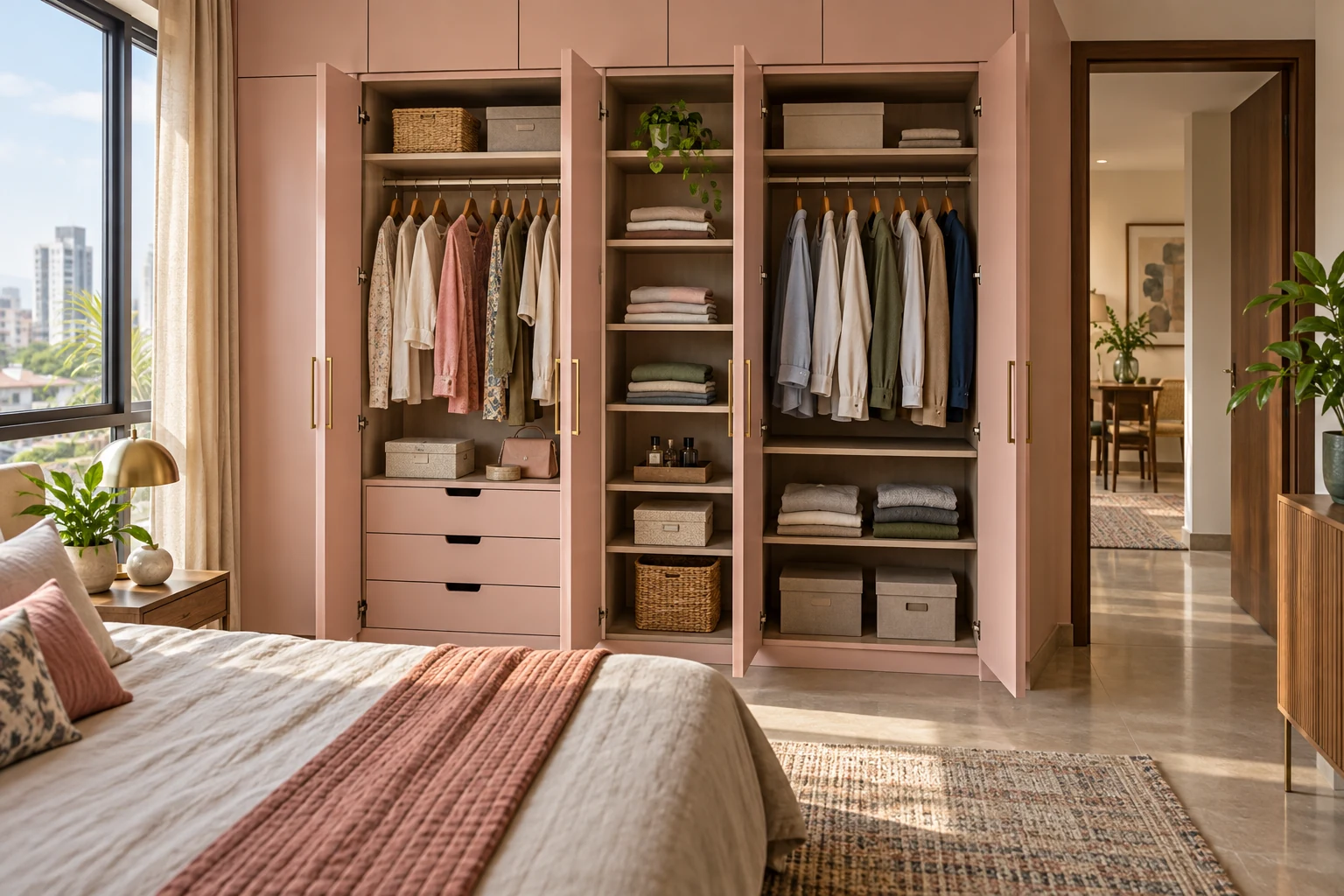
Godrej Aveline wardrobe planning should begin inside the cupboard, with the clothes and accessories you use. An attractive frontage does not tell you whether long garments fit conveniently, everyday items are easy to reach or two people can share the storage without confusion. The best interior arrangement reflects the collection rather than a standard set of compartments.
Start with the Godrej Aveline Yelahanka project guide and the relevant bedroom information. This article concerns a personal furniture proposal, not a confirmation that wardrobes are included. Check supplied specifications, actual dimensions and the selected furniture's installation requirements before ordering.
Inventory clothes by how they are stored
Separate hanging garments, folded items, accessories and occasional clothing. Notice long garments and bulky pieces that may not suit an average compartment. Use your actual collection to estimate the balance of hanging, shelves and drawers instead of copying an arrangement designed for someone else's wardrobe.
Consider what is worn frequently. Everyday work or school clothing should have convenient access, while occasional pieces may use a different location. A visually balanced interior can still be inconvenient if the most used items occupy awkward positions. The routine matters more than symmetry.
Review clothing that no longer belongs in the active collection. Some items may be retained for personal reasons, but they need a deliberate place rather than quietly taking over everyday storage. A wardrobe designed after a thoughtful review can serve the household more clearly than a larger one built around everything currently in a cupboard.
Plan personal allocation before compartments
If two people share the wardrobe, agree their areas and any common storage. Equal space is not always the same as useful space because clothing types and quantities differ. Discuss actual needs rather than dividing the frontage automatically down the middle.
Keep the allocation understandable. One person's belongings should not need to move whenever the other opens a frequently used drawer. Consider different dressing times, especially if household work schedules vary. Storage that supports independent access can make an ordinary morning easier.
The different-shifts living guide explores that timing question. Apply it to the wardrobe by asking who uses which section, when they use it and what needs to be prepared without disturbing another routine.
Test the wardrobe with doors open
Place the proposed unit in the actual room and consider door or drawer movement alongside the bed and other furniture. A cupboard may fit against a wall while being awkward to use because the remaining space is poorly arranged. Ask the designer to show the working condition, not only the finished elevation.
Compare the selected door system through its actual operation and maintenance requirements. Different designs have different access patterns, and no option is automatically best for every room. Try the product or a representative mechanism with the supplier where possible and ask how the full interior is reached.
Confirm that the furniture does not interfere with relevant openings, services or required access. Any fitted proposal should use reliable measurements and appropriate installation advice. Avoid treating the apparent space in a marketing drawing as a final joinery dimension.
Choose drawers and shelves for real contents
A drawer is useful when its contents can be seen and retrieved conveniently. Very deep or poorly allocated compartments may encourage mixed piles. Think about the categories you want together and whether a simpler arrangement would make them easier to maintain.
Adjust shelf planning to the size and handling of folded items. A collection of large stacked piles can become untidy when the desired item sits underneath several others. The solution may be a different category or allocation rather than more decorative organisers. Test the idea with the clothing you actually fold.
Accessories deserve a defined location too, but avoid overcomplicating the system. A modest suitable organiser may work better than many tiny compartments that do not match the collection. Choose the interior after understanding the belongings rather than purchasing containers first and forcing clothes around them.
Keep occasional items separate from everyday dressing
Travel accessories, seasonal clothing and special-occasion pieces may need less frequent access. Give them a suitable location that does not displace the daily collection. Consider their care requirements and the way they will be retrieved. An item used rarely still needs to be handled conveniently when the occasion arrives.
Decide what should be stored elsewhere. A wardrobe can become crowded by luggage, unrelated paperwork and spare household items simply because it has a door. Assign those categories deliberately instead of allowing the bedroom storage to absorb every unresolved possession.
The moving with less clutter guide helps review those mixed categories before furnishing. A clearer inventory makes the wardrobe brief more precise and can prevent a larger cabinet from hiding an underlying organisation problem.
Ask about installation and future adjustment
Obtain the supplier's requirements for fixing, loading and assembly, and arrange appropriate installation. Keep the relevant care information with the order record. A wardrobe is a substantial furniture decision, so its practical requirements deserve attention alongside colour and finish.
Ask which internal elements can be adjusted later. The household's clothing collection may change, and some flexibility can be useful. Do not assume every shelf or rail is movable; confirm the actual design and any limits. A specific answer is more useful than a general claim that the wardrobe is customisable.
Consider future access for repairs or replacement of fittings. An attractive built-in arrangement should still have an understandable maintenance plan. Ask the supplier what information to retain and whom to contact if a mechanism or component needs attention later.
Test the return of clean clothing
A wardrobe plan is incomplete until clean laundry has somewhere convenient to go. Imagine returning a normal load and placing each category in its intended section. If shelves are already tightly packed or drawers contain mixed belongings, the task may stop with clothes waiting on a chair.
Leave the active collection easy to maintain. A storage arrangement that only works when every item is folded in one highly specific way may not suit the household. Choose a method the users are willing to repeat, with enough practical access to retrieve one item without disturbing the entire category.
Ask how occasional clothing moves in and out of active use. A special event or trip may temporarily change what needs to be accessible. The wardrobe should have an understandable way to handle that change without requiring all everyday belongings to be reorganised.
Consider items between uses too. The household may have clothing awaiting an ordinary next action, such as returning to storage or entering the laundry routine. Give that stage an appropriate decision rather than letting it spread over the bed or every available hook. The precise routine is personal, but the destination should be clear.
Review the proposal with each regular user. One person may prefer hanging a category that another folds, and the furniture should reflect those real habits where practical. A shared wardrobe does not need identical methods to remain organised; it needs clear allocation and suitable compartments.
Before commissioning the final interior, compare the full routine from selecting clothes to returning them. This can reveal small changes to drawer placement or hanging allocation that an elevation drawing alone would miss. The result is storage designed for repeated use, not merely a cupboard that looks orderly on the day it is installed.
Keep a record of the agreed interior and any adjustable elements so future changes can be discussed with the supplier accurately.
Keep those records with the room measurements, so a later adjustment can be discussed from the design rather than a remembered impression of how the wardrobe works.
Review a dressing routine before ordering
Walk through selecting clothes, retrieving accessories and returning items to storage. Include the ordinary laundry arriving back in the room. If the plan leaves no convenient destination for clean clothes, the bedroom may still accumulate piles despite a generous wardrobe.
Imagine a couple initially requesting identical halves. After reviewing their clothing, one side needs more long hanging space while the other benefits from accessible drawers. The revised interior remains fair because it supports both users, even though the compartments differ. That is a stronger basis than symmetry alone.
Bring the bedroom and specification questions to the Godrej Aveline project page. A useful wardrobe plan connects actual garments, independent access and the room's working space, creating storage the household can maintain without repeatedly reorganising everything inside it.
More Godrej Aveline articles


EXPLORE THE PORTFOLIO
Projects by the same builder



Browse all Godrej project guides
Discuss your Godrej Aveline shortlist
Ask for the project details relevant to this guide.
Chat about Godrej Aveline: Planning Wardrobe Interiors