GODREJ REGENT PARK · DESIGN & GARDENS
Godrej Regent Park Design: Gardens and Living
Explore the Godrej Regent Park Victorian-inspired design theme while distinguishing illustrations from agreed specifications.
12 September 2026 · 1,400 words · About 8 minutes
Ask about this topic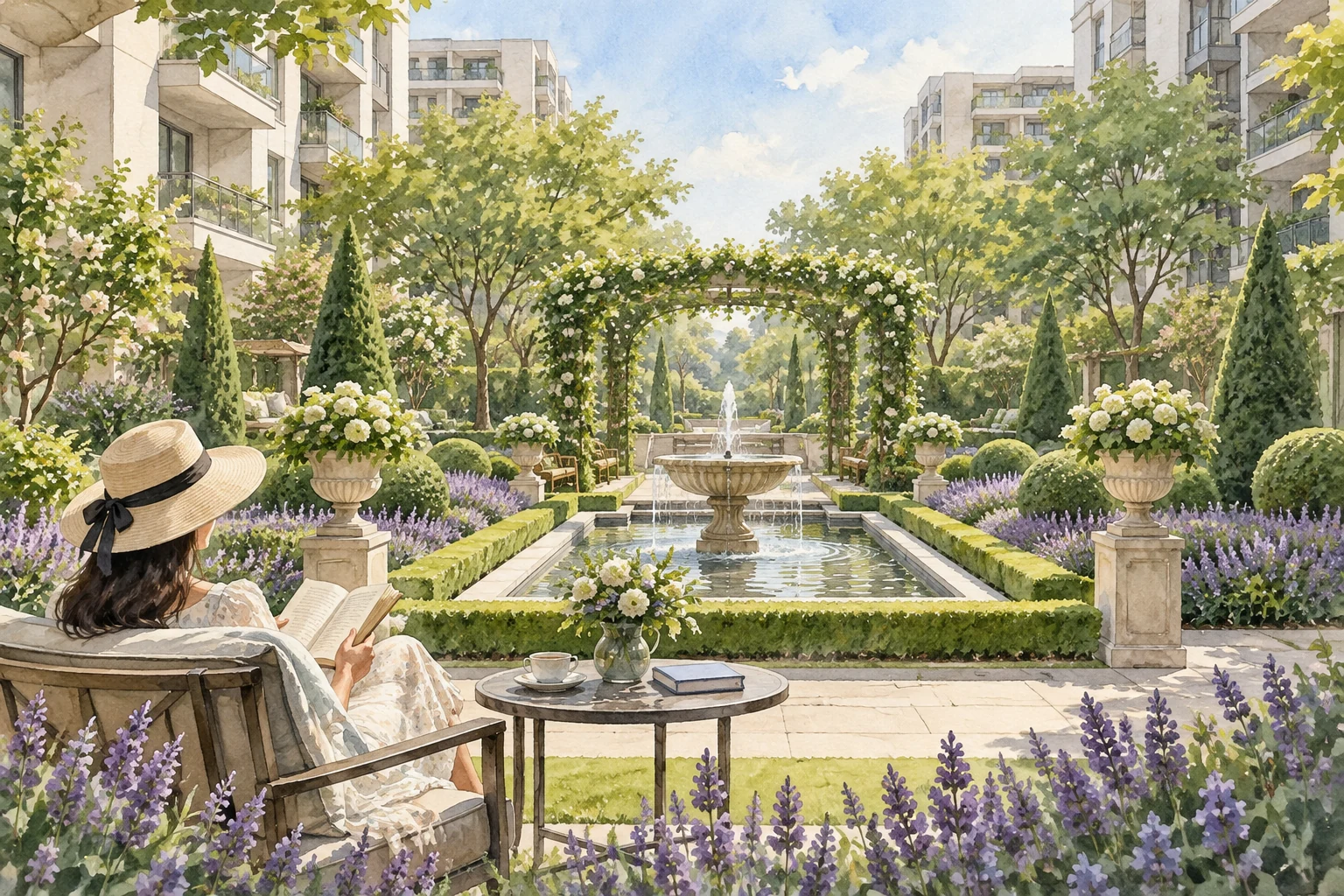
In this guide
- Understand what an architectural theme offers
- Read illustrations as illustrations
- Connect gardens with everyday access
- Consider the relationship between formality and use
- Keep the apartment layout central
- Ask what is included in shared interiors
- Compare design preferences fairly
- Make a design preference sheet
- Make an informed design choice
Godrej Regent Park design is presented through a Victorian-inspired architectural theme and landscaped outdoor settings. That visual character can be part of the appeal, but buyers still need to connect it with the rooms, routes and specifications of a particular home. A design theme is most meaningful when it supports the way you want to live.
The supplied digital flipchart describes twin towers, English gardens and a contemporary residential setting influenced by Victorian character. Use the Godrej Regent Park project guide to explore the available material. This article distinguishes the design idea from the specific features and finishes that should be confirmed in the applicable documents.
Understand what an architectural theme offers
A theme can influence the impression of arrival, the relationship between buildings and gardens, and the visual atmosphere of shared spaces. You may value that character because it feels calmer, more formal or simply more appealing to you. Those preferences are legitimate parts of a housing decision.
However, the theme does not by itself establish construction quality, final materials or room usability. Ask which visible elements belong to the agreed specification and which are illustrative. This keeps appreciation of the design connected with the actual offer rather than allowing an attractive image to answer unrelated questions.
Describe what you like in concrete terms. It might be a garden arrangement, a particular style of shared-space detailing or the overall composition of the towers. A specific preference is easier to investigate than a general statement that the project looks luxurious.
Read illustrations as illustrations
The supplied brochure labels many visuals as artist's impressions or representative images. Their purpose is to communicate an intended experience, not document a completed apartment or garden. Keep that distinction visible when comparing them with plans and specifications.
If a detail strongly influences your decision, ask whether it appears in the applicable scope and how it will be described in the final documents. Do not assume that furniture, planting maturity or decorative objects shown in a rendering will be delivered exactly as pictured.
The conceptual image on this article is also not a photograph of the project. It illustrates the topic of garden-oriented living. Actual plan references and written information should carry the factual part of your assessment.
Connect gardens with everyday access
A garden can provide an appealing outlook from a window and a place you visit regularly. Those are different benefits. Locate your shortlisted unit and trace the route from its lobby to the outdoor spaces you would use. The master plan and clubhouse guide helps organise that check.
Ask about level changes, pedestrian connections and the intended route through the community. A space appearing close on a master layout may not be reached by the shortest visual line. The drawing is a starting point for questions, especially where access details are not clear.
Think about short visits rather than only leisurely weekends. If a garden is easy to reach for a brief walk or reading break, it may become part of ordinary life. That repeat use can matter more to your household than the total number of decorative features.
Consider the relationship between formality and use
An English-garden theme may suggest ordered planting and composed views, but residents use outdoor spaces in varied ways. Ask which areas support quiet sitting, active recreation or informal gathering. A balanced community can offer different settings without requiring every garden to serve every activity.
Consider who will use the landscape. A child, an older relative and an adult taking a work break may need different routes and resting places. Do not assume that visual elegance alone establishes comfort for every person. Ask about the details relevant to your household.
Also consider maintenance and seasonal change. Planting grows and outdoor environments vary over time. A mature-looking rendering should not be treated as a precise picture of the first day of occupation. Ask for the relevant landscape scope and expected delivery information where available.
Keep the apartment layout central
The exterior theme does not replace a careful floor-plan review. You will spend substantial time inside the home, using bedrooms, kitchen and shared rooms. Test those spaces with your furniture and routine even if the overall architecture is the feature that first attracted you.
The furniture planning article explains how to do that. An apartment should support comfortable movement and realistic storage, while the wider design provides an additional setting around it. Both parts deserve attention.
If a particular balcony or window view is important, confirm the unit orientation and surrounding layout. A brochure's strongest perspective may not represent the outlook from every apartment. Ask for a unit-specific explanation rather than extending the overall design image to all homes.
Ask what is included in shared interiors
The brochure presents a clubhouse and other shared settings as part of the community experience. Request the applicable scope, specifications and delivery information. A visual theme can be carried through many materials and details, so it is useful to understand what is actually committed.
Ask about intended operating arrangements for spaces you expect to use frequently. A beautiful room has practical value when its access, timing and management fit residents' routines. The physical design and the operational experience are related but separate questions.
Where published figures or descriptions differ between materials, request the current governing information rather than choosing the most attractive number. The supplied brochure and current web presentation use different rounded clubhouse descriptions. That difference is a reason to confirm the applicable specification, not to invent a single definitive figure.
Compare design preferences fairly
If you are choosing between Regent Park and another project, identify the features you like in each without assuming one theme is universally superior. A contemporary minimalist setting and a more classical design language can both support a comfortable home when their practical arrangements work.
Use the same criteria for both: actual apartment layout, access, shared-space use, specifications and complete cost. This prevents one project being judged through its best rendering while the other is assessed through detailed technical questions.
Discuss which design qualities you would notice and enjoy regularly. A preference that remains meaningful during an ordinary week deserves more weight than a feature admired only during a brief sales presentation. Your own experience is the relevant measure.
Make a design preference sheet
Choose three visual qualities that attract you and describe them without relying on a style label. You might prefer composed planting, a particular arrival atmosphere or a sense of openness between shared spaces. Then identify which document or site observation can help you understand each quality in the actual project.
This exercise separates personal taste from factual claims. Saying that you like a garden's formal appearance is different from assuming its planting will be mature at handover. Both points can be discussed, but only the latter requires confirmation of a delivery expectation.
If another household member prefers a different design style, compare the practical qualities behind the preference. They may value easy upkeep or simpler interiors rather than objecting to the overall architecture. A concrete discussion can reveal common priorities that a debate about style names would miss.
Keep those priorities beside the apartment plan and quotation. The design should remain part of a balanced home decision, with the features you enjoy supported by an arrangement that works for everyday living.
During a visit, distinguish completed surfaces you can observe from samples or visual presentations describing future work. Record which is which in your notes. This helps preserve the value of the visit without turning a material sample into evidence that every shared space has already been finished that way. Where a detail matters, ask how it is specified for the relevant area and retain the answer. Clear distinctions allow you to appreciate the design while keeping your expectations connected with the actual stage and scope of the project. Retain the relevant specification for reference.
Make an informed design choice
Keep a short list of the visual features that matter to you and the documents needed to confirm them. Separate observations, illustrations and written commitments. This allows you to appreciate the project's character while maintaining a clear understanding of the actual home being offered.
Return to the Godrej Regent Park design and apartment details with that balanced view. The design theme should enrich a home that already works for your household, supported by usable plans, clear specifications and realistic expectations of the shared environment.
More Godrej Regent Park articles


EXPLORE THE PORTFOLIO
Projects by the same builder

Browse all Godrej project guides
Discuss your Godrej Regent Park shortlist
Ask for the project details relevant to this guide.
Chat about Godrej Regent Park Design: Gardens and Living