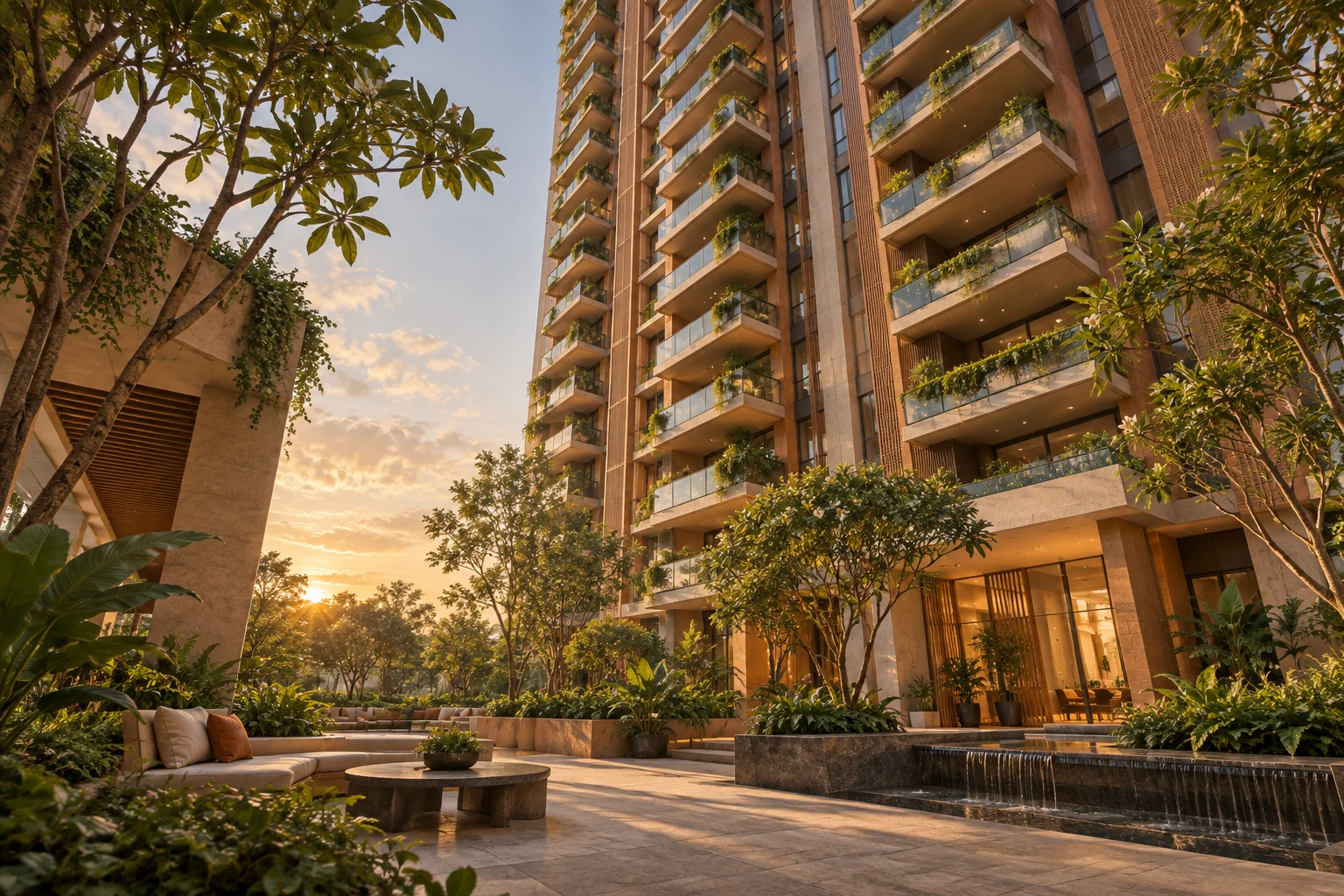
GODREJ VANANTARA · FLOOR PREMIUMS
Godrej Vanantara Floor Rise: Is It Worth It?
Compare floor premiums at Godrej Vanantara against daylight, privacy, access and your total apartment budget.
12 September 2026 · 1,400 words · About 8 minutes
Ask about this topicGodrej Vanantara floor rise charges are worth considering only alongside the difference between the apartments you can actually choose. A higher floor may offer a preferred outlook or a different relationship with nearby buildings. It may also increase the purchase amount without solving your most important need. Start with the unit, then examine the premium.
There is no verified universal floor rise rate published in this guide. Request a dated, floor specific quotation through the Godrej Vanantara project page. Rates, available units and offer conditions can change, so a figure mentioned in an older discussion should not become your current budget assumption.
Find out how the charge is calculated
Ask whether the premium is a fixed amount per apartment, a rate applied to an area, or a schedule that changes after certain floors. Also ask which floor starts the calculation. Two people can both say a charge is per floor while using different starting points or area definitions, producing very different totals.
Request the calculation itself, not just its final result. The document should identify the number of chargeable increments, the rate and any area multiplier. If taxes or other amounts are calculated on the premium, ask for those separately in the complete quotation. This makes the additional commitment visible rather than scattered across several lines.
Do not infer the method from a neighbouring project. Even developments by the same builder can use different pricing structures or offer conditions. The correct reference is the written quotation for the Vanantara apartment you are considering, with its date and unit identification intact.
Use arithmetic before judging the upgrade
Consider an invented example purely to illustrate the calculation. Suppose a premium of ₹20 per square foot applies to each chargeable floor increment, the quoted area is 1,500 square feet and you are comparing four increments. The difference would be ₹1.20 lakh before any additional amounts that the quotation says apply.
Now suppose the seller instead quotes a fixed ₹40,000 for each increment. Four increments would produce ₹1.60 lakh. Neither example is a Vanantara rate. They show why you should ask how the number is built before discussing whether it seems reasonable. The same phrase can describe different arithmetic.
Once you have the actual difference, compare it with your available budget for other priorities. That amount might compete with useful storage, a work setup or a moving reserve. The better choice depends on which improvement you will notice regularly, not on an assumption that higher always means better.
Compare the same unit series where possible
The cleanest floor comparison uses the same layout and orientation on different floors. Otherwise, differences in area, balcony size or facing may become confused with the floor effect. If the available choices are unlike each other, list those differences explicitly before attributing the entire price gap to height.
Use the tower drawing to check whether a floor has a special arrangement. Changes around podium levels, service spaces or other building features can affect the immediate surroundings. Ask for the applicable drawing rather than assuming every level repeats identically. This is a document check, not a claim that a particular Vanantara floor has an issue.
Keep the apartment number beside each observation. A comment such as better view becomes useful only when you can connect it to a particular window, floor and direction. Otherwise, a general impression from the sales gallery can attach itself to the wrong home.
Look at daylight and privacy separately
An elevated position can change how neighbouring buildings affect a window, but height alone does not establish good daylight. Orientation, setbacks, balcony depth and nearby structures also matter. Ask what stands in front of the selected living room and bedrooms at the relevant level, then inspect the relationship using the available plans.
Privacy is another separate question. A higher apartment may still face a nearby balcony or bedroom at a similar height. A lower apartment with a different angle may feel more private. Trace likely sightlines instead of using the floor number as a shortcut. The Vanantara sunlight and privacy guide explains this assessment in more detail.
If a view is central to the premium, identify what is inside the project boundary and what lies beyond it. Ask which surrounding features are existing, proposed or outside the developer's control. An attractive present outlook should not be treated as a permanent guarantee without supporting rights and documents.
Think through access and everyday comfort
Your daily journey begins at the apartment door and continues through the corridor, lift lobby and entrance. Ask about the lift arrangement serving the tower, access during maintenance and the relevant emergency provisions. Do not estimate waiting times from the number of floors alone; operating arrangements and occupancy also affect the experience.
Discuss any particular mobility needs early. Someone who finds long walks tiring may value a convenient tower entrance more than additional height. A household with young children may focus on supervised routes to shared areas. These needs do not produce one correct floor for everyone, but they can change what deserves a premium in your case.
Wind, rain exposure and sound are also influenced by the building and surroundings. Avoid blanket claims that an upper floor is always silent or that a lower floor is always uncomfortable. Where direct inspection is impossible, record the uncertainty and ask for technical information relevant to the selected position.
Set a personal value test
Write down three benefits you expect from the more expensive floor. Make each one observable: less direct overlooking from a specific building, a preferred internal outlook, or a particular relationship with the landscape. Then ask what evidence supports each expectation. If the list contains only prestige or resale assumptions, reconsider whether the premium serves your current needs.
You can use a simple scorecard, but keep it modest. Give each option a rating for privacy, daylight, access and cost using the same scale. Mark unknowns as unknown rather than awarding optimistic scores. The purpose is to expose tradeoffs, not to turn incomplete information into a scientific ranking.
Compare the total price difference after all quoted adjustments. A discount on one floor or a separate facing charge can change the apparent gap. The complete cost sheet guide helps bring those amounts back into one comparable figure.
A practical upper floor comparison
Consider a household choosing between two otherwise similar available units several levels apart. The more expensive option is described as having a better outlook. Before deciding, the household marks the main balcony direction and the opposite building on the plan. They discover that the important question is whether the selected level changes the direct sightline, not merely how many floors separate the options.
They ask for the relevant elevation or another suitable explanation of that relationship. If the evidence supports a meaningful privacy improvement, they record it as a benefit. If the answer remains uncertain, they leave the benefit unconfirmed rather than treating the premium itself as proof of quality.
The household then compares the complete quoted difference with two other priorities: furnishing the study and retaining money for the move. Each adult writes which improvement would matter most during an ordinary week. This does not produce a universal verdict on higher floors. It shows whether the extra payment serves the people buying this particular home.
Before accepting either option, they check that the latest quotation still refers to the same unit series and that no separate facing charge has changed the gap. A final written comparison now contains the actual additional amount, the supported advantage and the tradeoff. That is enough to make a reasoned choice without relying on a generic claim that upper floors always command better value.
Ask for corrections before signing if the total differs from the explanation. A clear calculation is easier to review than several informal messages describing separate parts of the premium.
Ask for the final choice in writing
Before paying, match the agreed tower, floor and apartment number across the quotation, plan and booking document. If your preferred unit changes during allotment, repeat the comparison. A different floor or series should not inherit the reasoning you used for the original apartment without a fresh look.
Use the Godrej Vanantara unit enquiry to request two clearly identified alternatives. A worthwhile floor premium buys a benefit you understand, at an amount your household accepts. The aim is a comfortable home choice, not simply the highest available number.
More Godrej Vanantara articles


EXPLORE THE PORTFOLIO
Projects by the same builder
Browse all Godrej project guides
Discuss your Godrej Vanantara shortlist
Ask for the project details relevant to this guide.
Chat about Godrej Vanantara Floor Rise: Is It Worth It?