GODREJ SOUKYA ROAD · LINEN STORAGE
Godrej Soukya Road: Linen Storage Guide
Organise linen at Godrej Soukya Road with practical cupboard planning, useful quantities and storage near the rooms you use.
21 September 2026 · 1,400 words · About 8 minutes
Ask about this topic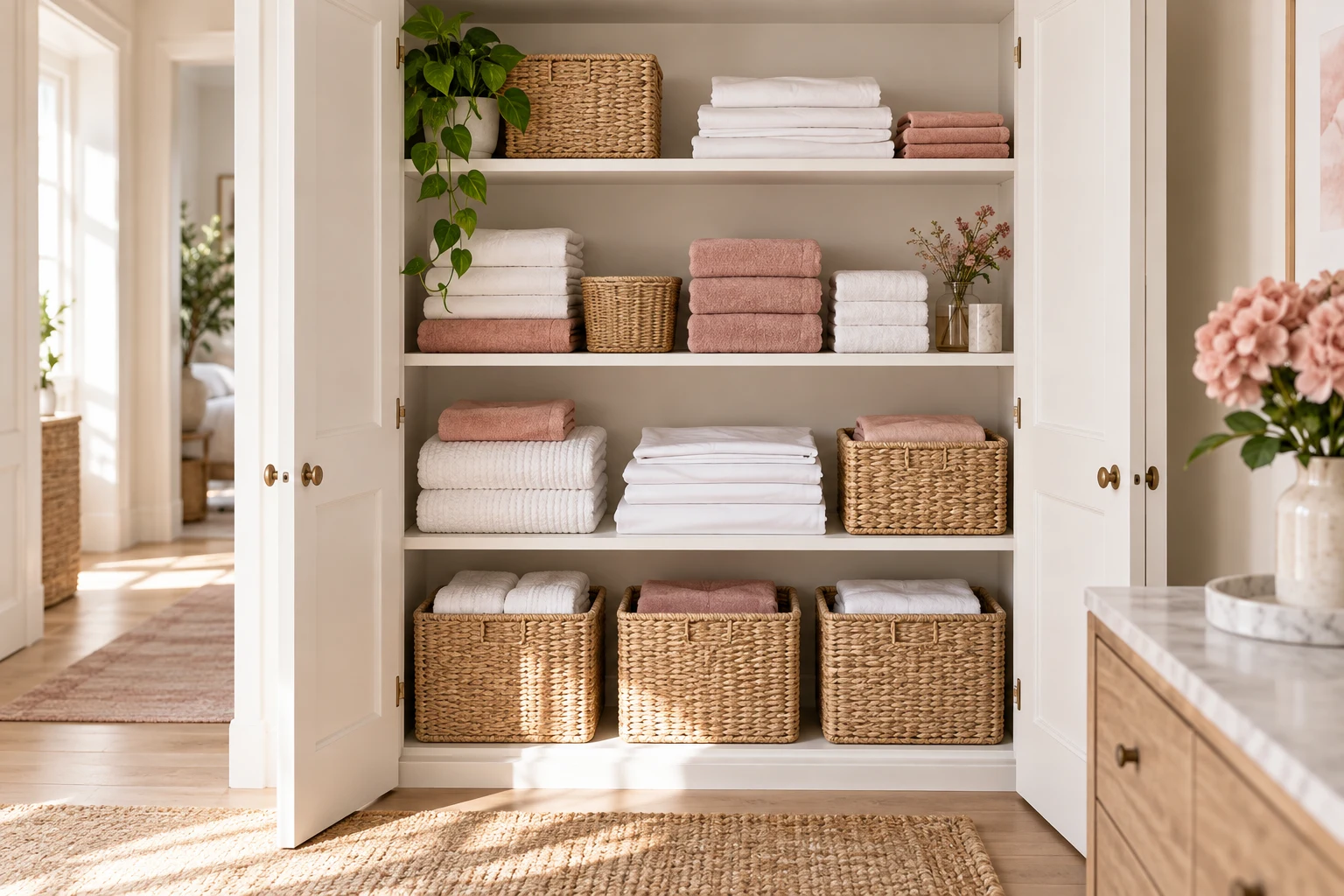
Bed linen and towels can quietly occupy a surprising amount of space. A larger home does not automatically solve that problem; it can simply spread spare sheets across more cupboards. Planning Godrej Soukya Road linen storage begins with a clear inventory and a decision about where each item is used. The most useful arrangement is one that makes changing a bed or finding a towel straightforward.
This guide focuses on cupboard organisation and everyday routines. It does not assume that a linen cupboard is supplied or that a particular niche can be converted into storage. Use the Godrej Soukya Road project details and your selected unit plan to identify possible locations. Then work with actual quantities and measurements rather than filling an imagined wall with cabinets before knowing what belongs there.
Count complete sets before counting shelves
Gather the linen you intend to bring. Separate sheets, pillowcases, covers, towels, blankets and occasional guest items. Group matching pieces into usable sets. An inventory often reveals that the apparent volume includes incomplete sets or items no longer suited to the beds you own. Resolve those decisions before commissioning additional storage.
Record bed sizes and the linen needed for each. Similar-looking sheets can be frustrating when several bedrooms use different dimensions. A simple room label or consistent grouping method can reduce searching. Choose an approach that everyone who changes beds can understand, rather than a system that works only for the person who arranged the cupboard.
While reviewing Godrej Row Houses Soukya Road information, look at the relationship between bedrooms, bathrooms and possible storage locations. The number of bedrooms alone does not tell you where spare linen will be convenient. A smaller cupboard near the relevant rooms may be more useful than one large store several trips away.
Decide what should stay near each room
Keep frequently used items close to their destination where space permits. A bedroom might hold its next set of sheets, while additional blankets live in a central cupboard. Bathrooms may need a modest supply of towels rather than every towel the household owns. The right distribution depends on how your family handles laundry and room changes.
Think through a bed change from beginning to end. Someone removes the used linen, carries it to the laundry area, retrieves a clean set and returns to the room. Mark that route across the floor plan. If it repeatedly crosses several levels, consider whether a small local supply would simplify the routine.
Do not turn every spare shelf into linen storage. Cupboards also need to serve clothing, household supplies and personal belongings. Assign each storage area a primary purpose before filling it. Otherwise, a central linen cupboard can become a miscellaneous store in which the useful items are difficult to reach.
Measure folded items in the way you use them
Fold a few representative sheets and towels using your normal method, then measure the resulting stacks. This gives the cabinet designer a more useful starting point than a generic linen symbol. Include the largest blanket or cover you plan to store. Its dimensions may determine whether a separate shelf or container makes sense.
Consider shelf depth carefully. Deep shelves can hold more, but items at the back may be forgotten or difficult to retrieve. If the cupboard is deep, discuss pull-out storage or a clear division between front and rear items. Check the operating space of any pull-out fitting with nearby doors and circulation routes.
The Godrej Whitefield villas project reference provides broader home information, while cupboard details need a unit-specific design. Ask the designer to show usable internal dimensions after doors, hinges and fittings are allowed for. External cabinet width does not equal the space available for neatly folded contents.
Separate clean storage from the laundry queue
Choose a clear place for linen waiting to be washed and a different place for clean, fully dry items. Mixing those stages makes it harder to know what is ready for use. The containers do not need to be elaborate, but their purpose should be obvious. Discuss the routine with anyone who helps with household laundry.
Follow the textile manufacturer's care and storage instructions. Avoid packing items away while they are still damp or compressing them into an unsuitable space simply to close a door. If a cupboard has a moisture problem, investigate the cause instead of trying to conceal it with fragrance or decorative baskets.
Think about temporary holding space after laundry is folded. A clear surface can help items return to the correct rooms without being mixed into general household clutter. The aim is a short, repeatable route from washing to storage. More cupboards will not fix a routine in which clean linen has no agreed destination.
Make guest preparation easy
Prepare guest linen as complete groups where practical. A set containing the relevant bedding and towels is easier to retrieve than several separate stacks. Label it clearly in a way that identifies the room or bed size. If guests stay in different rooms at different times, keep the grouping flexible rather than tying every item permanently to one cupboard.
Store occasional items where they remain accessible without displacing everyday supplies. A guest blanket may not need the most convenient shelf, but it should not require unpacking a whole cupboard. Consider the person likely to retrieve it and avoid arrangements that depend on an awkward reach or lifting a heavy container.
Use Soukya Road home search results to collect current project references, then record storage decisions on your own room schedule. Marketing descriptions of spacious homes do not establish the useful capacity of a proposed cupboard. Your inventory and folded measurements provide a clearer basis for design.
Keep the arrangement easy to maintain
Leave enough space to remove and replace items without rebuilding the whole stack. A cupboard that is filled to its limit may look efficient on installation day but become untidy after normal use. Decide on a sensible quantity for each shelf, then review the inventory if it no longer fits comfortably.
Choose labels, dividers or baskets only where they solve a practical problem. Too many small containers can make large sheets harder to store. Test a simple arrangement first and add accessories after seeing how people use it. A consistent folding method and clear shelf purpose may be sufficient.
Plan an occasional review alongside seasonal household tasks. Remove items that no longer match your beds or are no longer suitable for use. Follow an appropriate reuse or disposal route for their condition. Keeping the inventory current makes it easier to see whether you need more linen or simply need to reorganise what is already there.
Use one shelf as a prototype
Before specifying the entire cupboard, arrange one representative shelf with a complete bed set, towels or another common group. Ask the person who normally handles laundry to remove and return the contents. Notice whether the stack collapses, whether labels can be read and whether the back of the shelf is useful. Try a different shelf spacing or folding method if the first arrangement is awkward. Photograph the version that works and share it with the cabinet designer. Repeat the exercise for the bulkiest item rather than assuming that every shelf can use the same spacing. This practical sample turns an abstract storage quantity into a design that reflects your actual belongings. It also gives the household a straightforward model to follow when the remaining shelves are filled after moving.
Prepare the cupboard brief
Give the designer an inventory, the proposed locations and representative folded dimensions. Identify everyday sets, guest supplies and bulky items separately. Ask for adjustable shelves where appropriate and confirm access to the full storage area. Review door opening, lighting and nearby furniture as part of the same drawing.
For a further Godrej Soukya Road information search, retain the unit context and date of anything that affects the plan. Confirm what storage is actually included before ordering additional work. A display cupboard or styled bedroom should not be treated as a specification unless the applicable documents support it.
Use the Godrej Soukya Road home overview to organise those project questions, then test your storage arrangement with the linen you already own. Start with one representative cupboard or shelf rather than ordering every accessory at once. A practical system should make clean linen easy to find, easy to return and proportionate to the household that uses it.
More Godrej Soukya Road articles


EXPLORE THE PORTFOLIO
Projects by the same builder



Browse all Godrej project guides
Discuss your Godrej Soukya Road shortlist
Ask for the project details relevant to this guide.
Chat about Godrej Soukya Road: Linen Storage Guide