
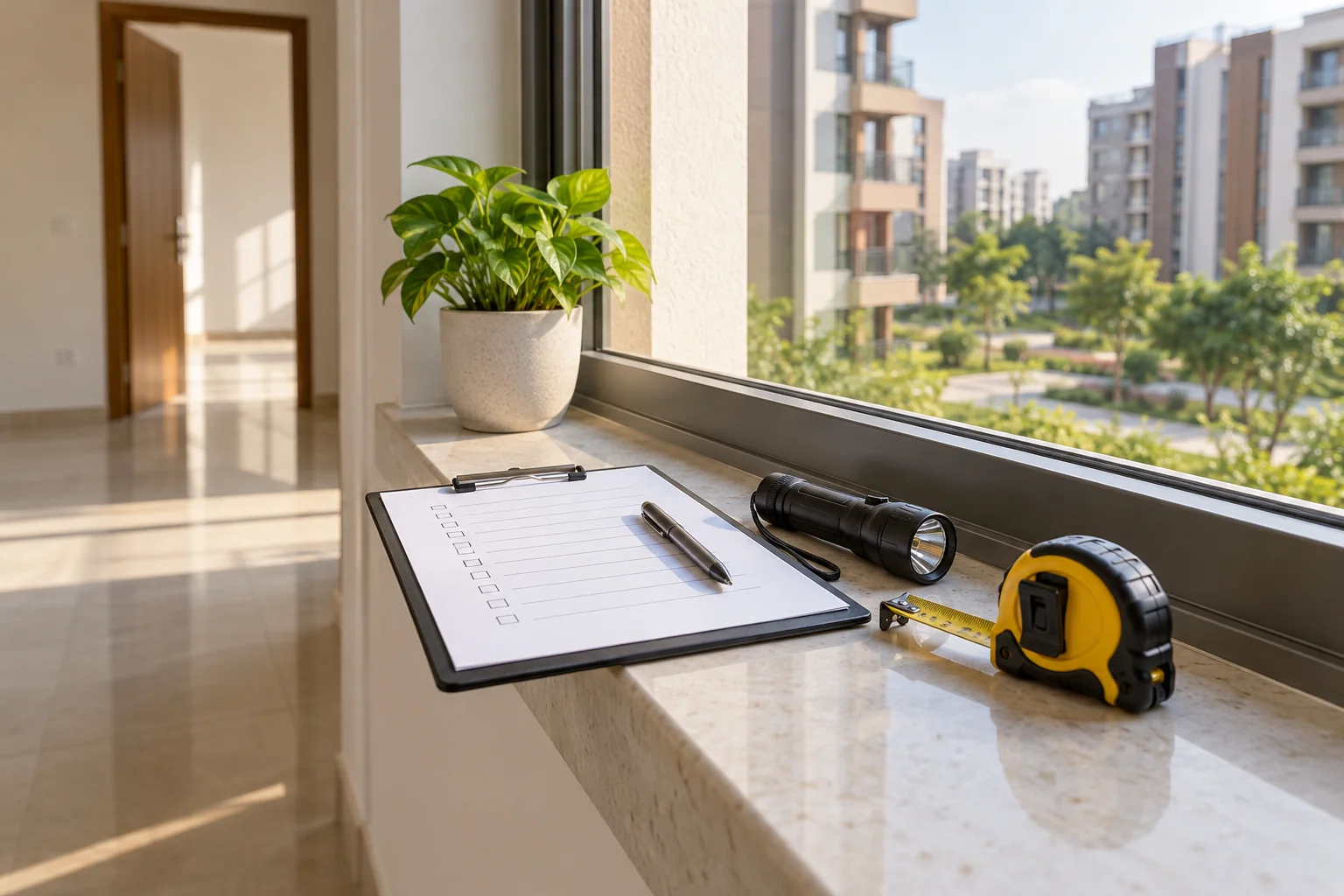
Handover involves more than receiving keys. Buyers researching the Godrej Soukya Road handover process can prepare a practical record of the home, its supplied items and any issues requiring followup. This guide does not confirm a possession date, current completion stage or project specific handover procedure. It is an organisational checklist, not a substitute for professional inspection or advice on contractual rights. The accompanying image is illustrative. Begin with the documents relevant to your unit and use the formal instructions issued by the project team when a handover appointment is offered. Clear records make discussions easier and help separate observed issues from assumptions about what should have been supplied.
Establish the appointment and its purpose
Ask whether the proposed visit is an early inspection, a demonstration or the formal handover appointment. Request the expected duration, permitted attendees and documents to bring. The Godrej Row Houses Soukya Road project page is a reference for enquiries, while current written handover instructions should govern the visit arrangements. If you plan to bring an independent inspector, confirm access and any required coordination beforehand. Avoid assuming that every service will be operating during an early walkthrough. Understanding the purpose of the appointment helps you prepare appropriate checks and identify what must be revisited at a later stage rather than treating an incomplete demonstration as a final answer.
Assemble the unit information first
Keep the selected unit reference, issued drawings, agreed specification and relevant correspondence together. Use the current versions and retain earlier documents where they explain an agreed change. Create a separate list of optional work or upgrades so they do not become confused with the standard scope. If a document is missing or unclear, ask for clarification before relying on memory. Buyers should obtain appropriate professional advice for contractual interpretation rather than drawing legal conclusions from a general article. The practical aim here is straightforward: arrive knowing which home is being reviewed and which written information will be used to compare supplied items with expectations.
Use a room by room record
Give each room a clear name and record observations in a consistent order. Start at the entrance, move around the space and finish with the doorway to the next area. Photographs are more useful when their filenames or captions identify the room and issue. You may consult Soukya Road handover search results for additional questions, but treat project procedures as unconfirmed until issued directly. Avoid creating a long unstructured collection of images that nobody can interpret later. A concise record with location, description, photograph and requested followup is easier to discuss with the project team and revisit during a subsequent inspection.
Observe finishes without causing damage
Look at visible surfaces in ordinary light and note marks, incomplete work or apparent inconsistencies for discussion. Do not scratch materials, remove coverings or open restricted service components to investigate an issue yourself. If something needs technical assessment, record its position and involve the appropriate professional. Compare supplied finishes with the written schedule rather than with a decorated sample home unless the relevant feature was included. A photograph should show enough surrounding context to locate the issue. Closeups alone can be difficult to interpret. Keep descriptions factual, such as a visible mark beside a doorway, rather than assigning a cause you have not established.
Request demonstrations of supplied items
Ask the responsible team to demonstrate doors, windows, fittings and included equipment through the approved handover procedure. Record items that cannot be demonstrated and the proposed followup. Electrical panels, mechanical systems and other technical installations should be assessed by qualified people; buyers should not improvise tests or operate unfamiliar components without guidance. A functioning demonstration and a complete technical inspection are not the same thing. Note what was shown, by whom and under what conditions. If an appliance or service is outside the supplied scope, keep that distinction visible. This prevents a later question about missing owner supplied equipment from being confused with an incomplete developer item.
Review external and shared interfaces
For a row house, the handover discussion may involve parking, private outdoor areas and the points where the home meets shared infrastructure. Ask which areas are included in the appointment and how responsibilities are described in the relevant documents. The Godrej Villa Whitefield reference page can support project identification, but it does not establish the boundary of maintenance responsibility. Use the issued unit information when recording observations. If a common facility is not part of the home inspection, ask how residents will receive information about it separately. Keep a missing answer on the followup list instead of assuming that every visible area falls within the same process.
Make the snag list easy to action
Use plain descriptions and one issue per entry. Identify the room, location and visible condition, then add the relevant photograph. Ask the project team to acknowledge the list and explain how responses and revisit appointments will be coordinated. Avoid assigning arbitrary repair deadlines or treating this article as a statement of legal entitlement. Where timing or acceptance has contractual significance, seek suitable professional advice. A practical snag record should let another person find the issue without needing you to explain every photograph. Number the entries and retain the original list so that later updates show what was addressed and what still requires clarification.
Keep demonstrations and documents together
Ask which manuals, equipment details, keys, access devices and service contacts are supplied with the home. Record quantities and descriptions through the formal process where applicable. Review Godrej Soukya Road homeowner search listings only as background for questions, not as evidence of the project's actual handover package. If an item will arrive later, request a written explanation of the arrangement. Store digital copies where household members can locate them. The value of a handover file is practical: when something needs attention, you should be able to identify the item and contact the responsible party without searching through unrelated messages or relying on recollection.
Revisit issues with the original record
When a followup visit is offered, bring the numbered list and compare each entry with the current condition. Add a new dated observation rather than deleting the earlier description. If a technical issue remains unclear, ask the relevant professional to review it. Keep unresolved matters distinct from items that have been explained or addressed. Do not mark an issue complete only because somebody says work has been arranged; record what you have actually been able to verify. This method supports a calm, organised conversation and reduces duplication. It also makes it easier for another household member or inspector to continue the review if you cannot attend every appointment.
Keep one shared followup file
Choose a single place for the household's handover records so that parallel messages do not create conflicting versions of the snag list. Keep the original photographs, dated updates and the project team's responses together. If a professional inspector provides a report, retain it as issued and refer to its item numbers rather than rewriting technical conclusions in your own words.
Before a followup appointment, identify the entries that need another look and the documents still awaited. Send a concise agenda where appropriate so the relevant people can prepare. Afterward, record what was observed and any next action discussed. A shared file does not need elaborate software; it needs consistent labels and a clear sequence of dates. This is particularly helpful when different household members attend different visits. Everyone can see which questions are open without reconstructing the history from memory. Keep private identification and transaction documents stored appropriately, with access limited to the people who need them for the process. Bring the current version to each appointment so everyone can discuss the same outstanding observations.
Prepare for using the home
Once the applicable handover steps are completed, organise the information needed for ordinary occupancy. Keep service contacts, operating guidance and the issue record accessible. Ask how future maintenance requests should be submitted and distinguish that process from the initial inspection followup. Plan owner arranged work through the relevant permissions and professional advice. The purpose of preparation is to make the transition understandable, with clear records of what was supplied and what remains under discussion. For Godrej Soukya Road, rely on the current unit documents and formally issued instructions when the time arrives. A careful record supports the process without pretending that a generic checklist can certify the home or replace specialist judgement.