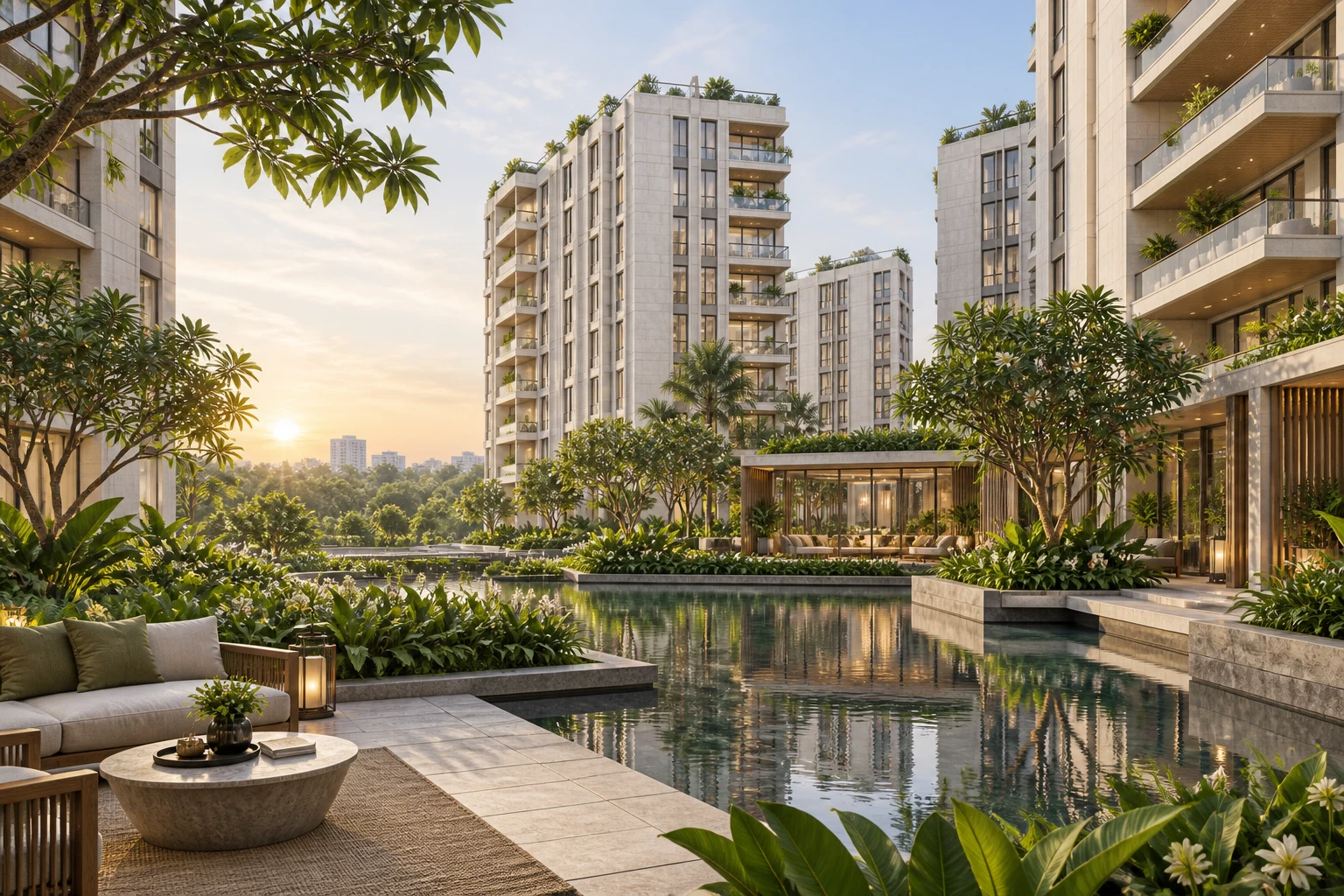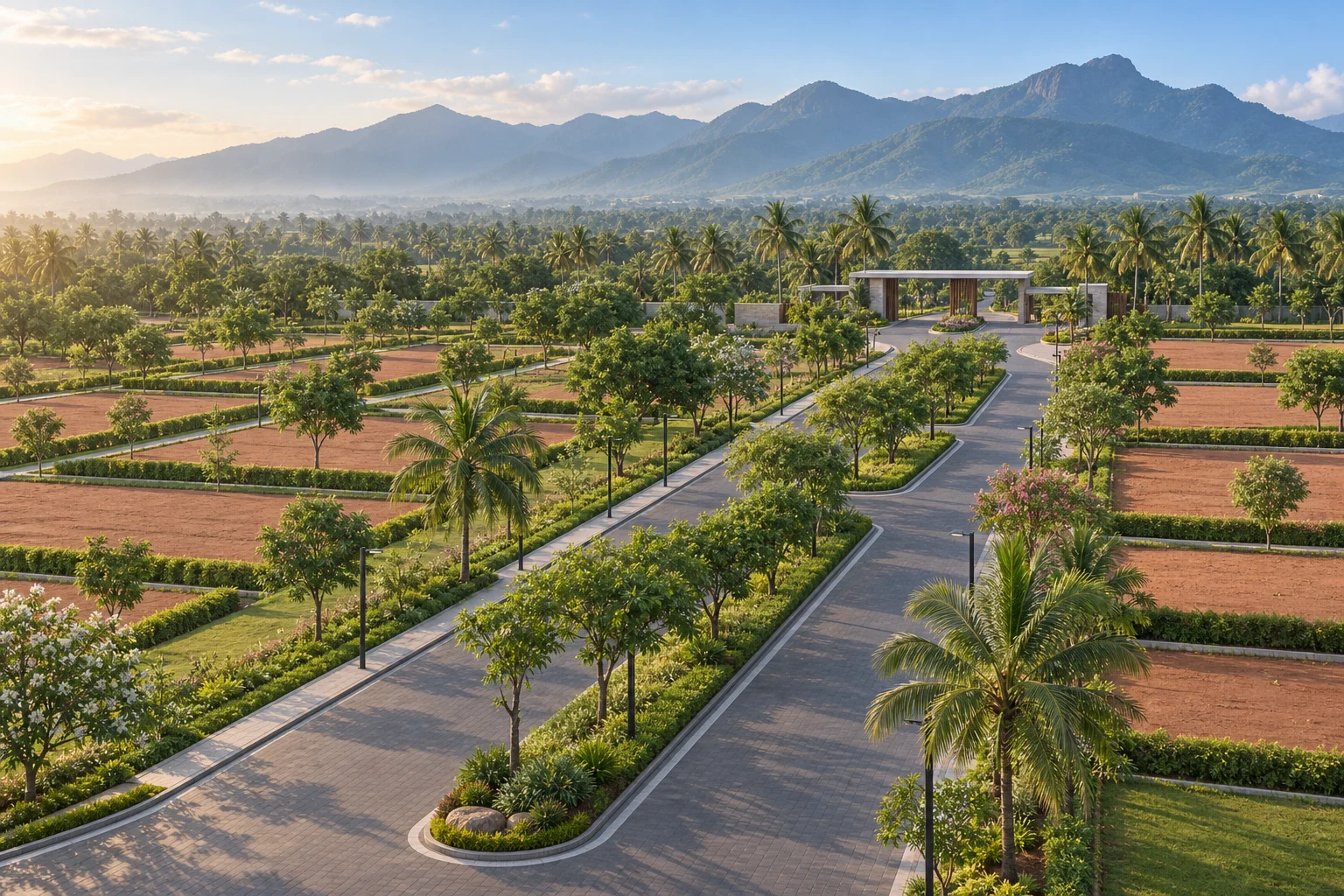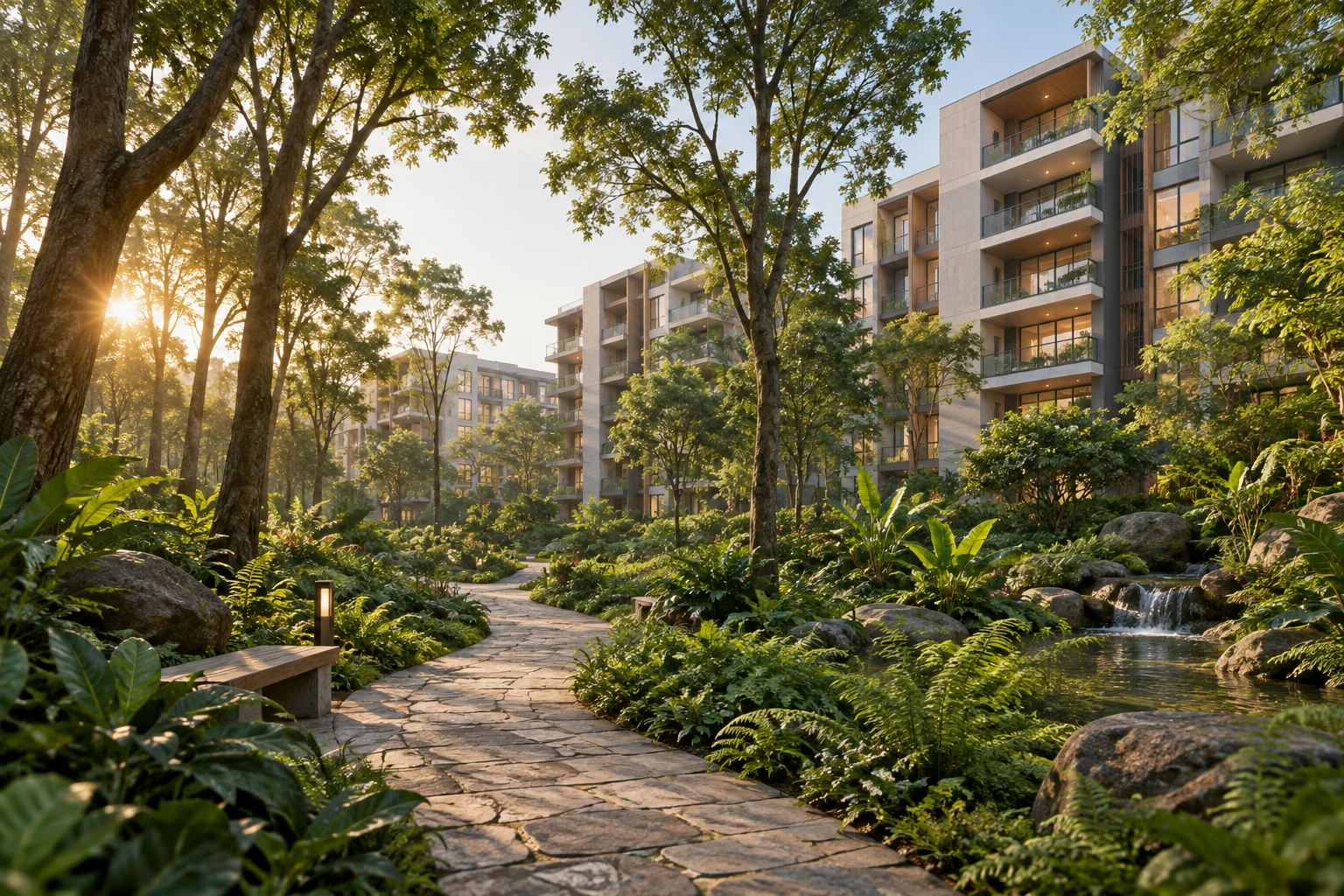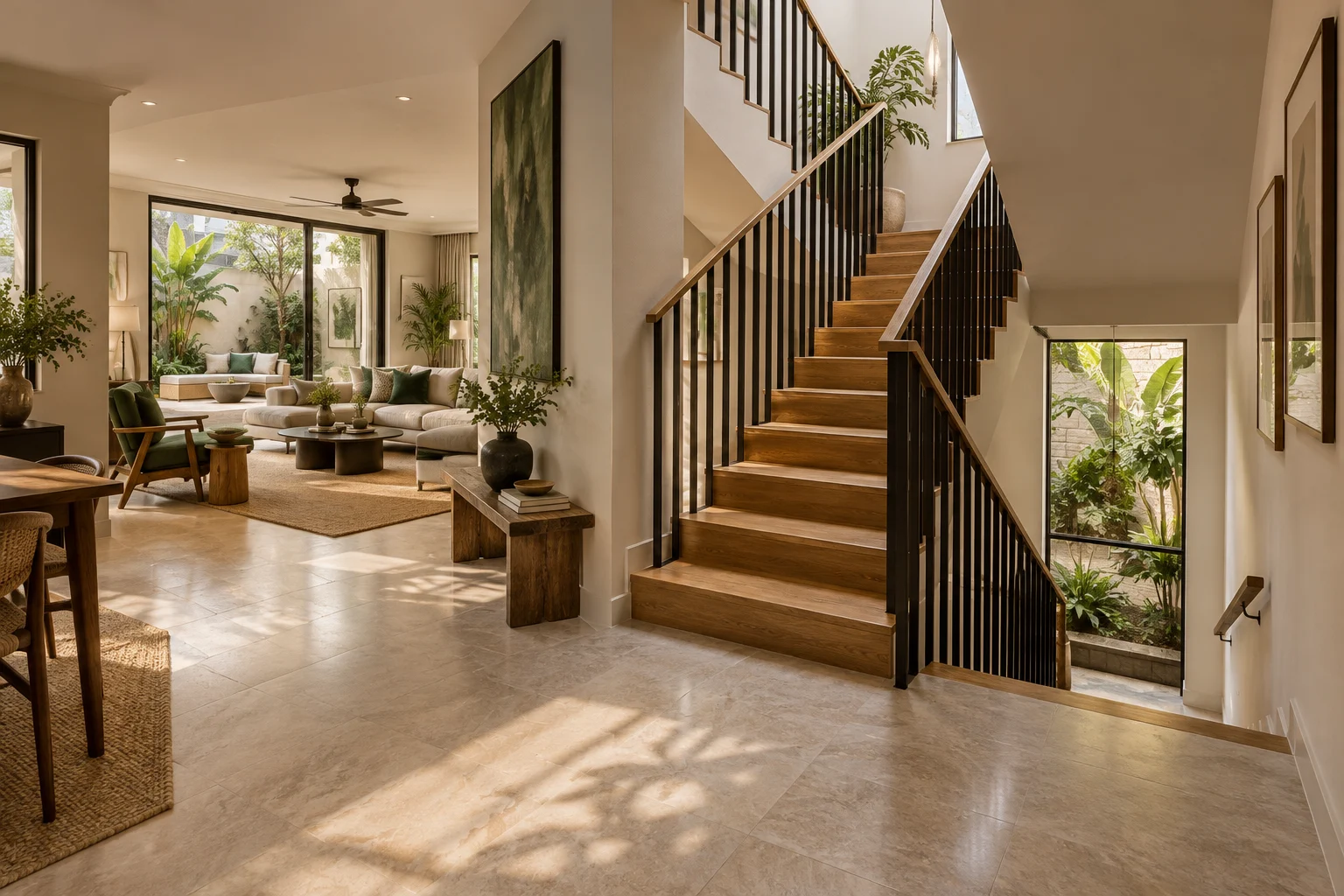
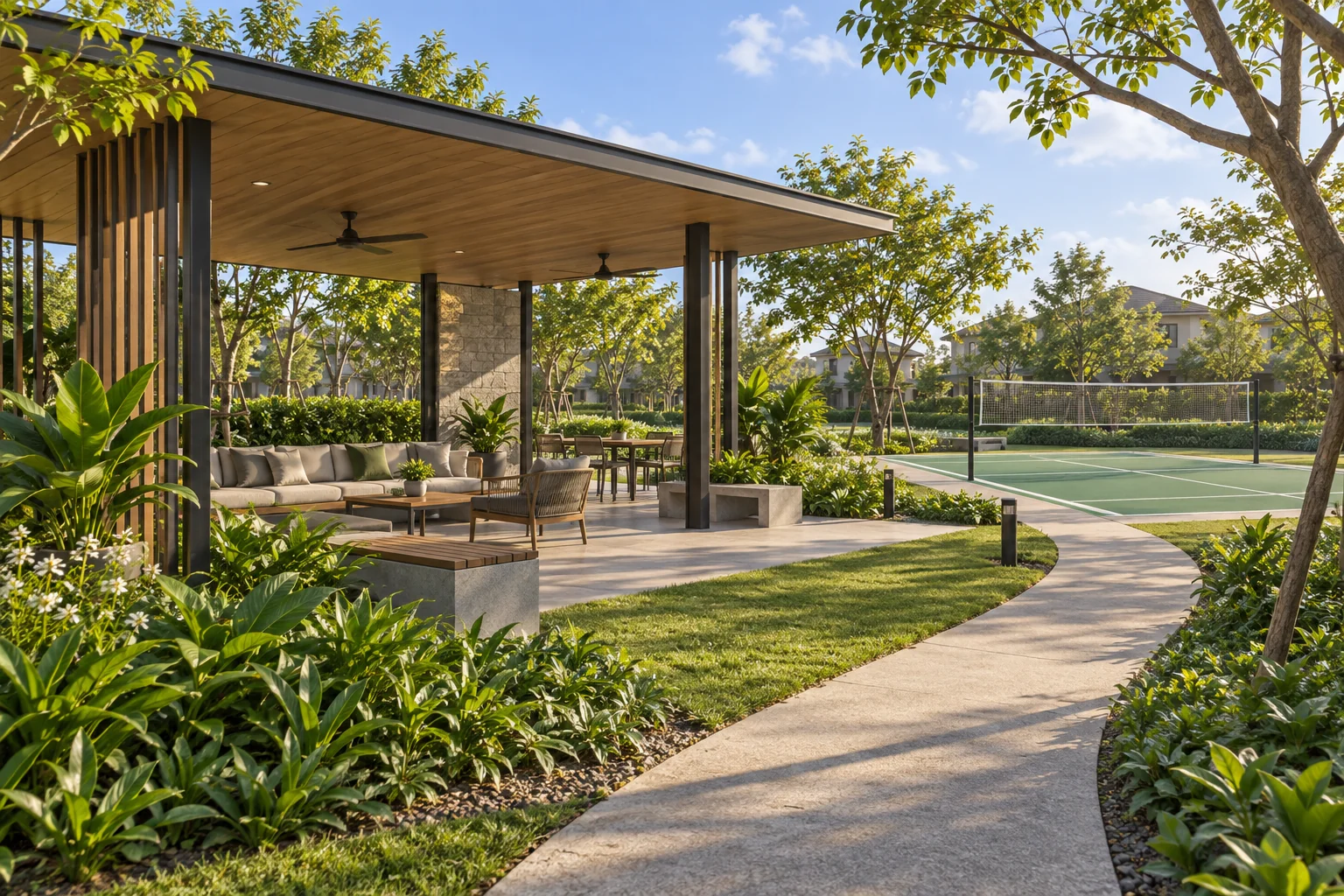
A Godrej Villa Whitefield amenities list becomes useful when you connect each proposed facility with an activity your household would actually do. A long collection of names cannot tell you how access, opening hours, upkeep or distance from the home will work. This guide explains how to assess community facilities for the Soukya Road project without treating every promotional description as a completed feature. The current developer documents should establish what is included and when it is intended to be available. The generated image on this page is a general recreation setting, not a photograph of a delivered amenity.
Start with the documented list
Ask the project team for the latest amenity schedule and the drawing that locates the facilities. The Whitefield villa reference mentions recreation and landscaped facilities, but those descriptions should be checked against current project documents. Keep a column for the source of each feature. A facility shown in a brochure, a verbal suggestion and an item included in the agreement are different kinds of information. If a feature is especially important to your decision, ask where its scope is recorded. This avoids building your routine around an attractive name whose size, location or inclusion has not been clarified.
Map a normal week before ranking facilities
Write down the activities your household already enjoys or genuinely intends to practise. Consider who participates, how often and at what time. A daily walk, a weekend game and an occasional gathering have different access needs. Choose a small number of priorities instead of rating every facility equally. Then ask how each priority would fit into an ordinary weekday. A facility may be appealing while still being unlikely to see regular use. This exercise is not about predicting behaviour perfectly. It is about identifying which parts of the amenity offering deserve detailed questions because they could influence everyday life after moving.
Consider the route from home to activity
Locate the shortlisted home and the relevant facility on the master plan. Ask about the route between them, including crossings, steps and any changes in level. Think about how a child, older relative or person carrying sports equipment would make that journey. A distance across a drawing does not show every practical detail of the path. If the route is not yet built, request the relevant explanation and leave the experience unverified. A facility that is easy to reach may support regular use better than one with a more impressive name but an awkward approach. Consider the return journey too, especially after an evening activity.
Ask how sports spaces would operate
If a sports facility matters to you, confirm the exact activity it is intended to support. A multipurpose space and a dedicated court can have different arrangements. Ask about booking, hours, lighting and any coaching or guest access rules once those are available. Do not assume that a coaching service is included simply because a court is proposed. Consider whether your preferred time is likely to overlap with other household routines. The useful question is whether the facility's documented setup fits the way you play, rather than whether the marketing list contains the name of your sport.
Review children's spaces through everyday use
For a play area, ask about the intended age groups, location and access arrangement. Think about where an accompanying adult would sit and how the area relates to roads or other activities. Do not infer supervision from the presence of a gated entrance elsewhere in the community. Ask which features and surfaces are specified and how maintenance would be handled. If the project is not occupied, recognise that operating practices may still require confirmation. Families should assess the actual design and their own supervision needs. A colourful illustration can suggest a mood, but it cannot establish the suitability of equipment for a particular child.
Look at walking and quiet recreation
A walking route or landscaped area may be one of the most frequently used community features. Ask whether the route is continuous and how it interacts with vehicles and other spaces. Consider shade, seating and places to pause where these are shown in the documents. For a quiet reading or meditation area, ask about nearby activities that could affect its atmosphere. Avoid assuming that all green areas are intended for every use. Some may be ornamental or serve another purpose. Understanding the planned function helps you judge whether the space supports the activity you have in mind without relying on a general promise of greenery.
Clarify guest and gathering arrangements
If you expect to host family events, ask which shared spaces are proposed for gatherings and what rules would apply. Capacity, reservations, hours and cleanup responsibilities matter as much as the existence of a hall or lawn. Ask whether any charges are separate from routine maintenance, while recognising that final operating terms may not yet be set. Do not assume unrestricted private use of a shared area. Consider practical details such as guest entry and the route from parking. A community gathering space can be useful when the arrangement suits the size and frequency of the events your household actually hosts.
Ask about opening and handover timing
An amenity being proposed does not mean it will be available on the same date as every home. Ask the developer to explain the relevant delivery schedule and where it is documented. Keep project completion statements, home handover and facility operation as separate points unless the documents explicitly connect them. If the answer is provisional, record it that way. This is particularly important when your daily routine would depend on a specific facility from the time you move. Consider what you would do in the interim rather than assuming the advertised lifestyle begins in full immediately after receiving possession of the home.
Understand upkeep and shared responsibilities
Facilities need cleaning, equipment care and operating arrangements. Ask what information is available about maintenance responsibilities and the expected management setup. Separate the physical provision from services that may require another operator or additional payment. A gym room, for example, does not by itself establish trainer availability. Avoid quoting future charges unless they are documented for the relevant period and scope. The purpose of the enquiry is to understand what questions remain open. Keep those questions beside the facilities that matter most to you, so they do not disappear within a broad discussion about premium community living.
Cross check the project description
The Soukya Road row house details provide another reference for the same project. Use differences between descriptions as prompts for clarification, not as a reason to combine every feature into a larger list. Ask the developer which schedule is current and whether a facility belongs to the relevant phase. A concise verified list is more useful than a lengthy collection assembled from several advertisements. Keep your comparison tied to the actual home and its community access. This also helps when reviewing another development, because you can ask the same operational questions instead of comparing only the number of amenity names.
Ask each household member to choose one facility they would use without needing encouragement. Then identify the practical conditions for that use: a suitable time, an easy route and any equipment or booking requirement. This can reveal that a modest everyday feature matters more than a spectacular occasional one. Keep aspirational activities on the list, but distinguish them from established habits. When comparing communities, use the same three priorities for each option. Otherwise, a different presentation style can make one development appear more suitable simply because its brochure spends more space on amenities. The comparison should follow your activities rather than the order of the pictures. Bring those priorities to the next project discussion and ask for specific answers on each one. Save the current schedule with your notes so later changes can be identified and reviewed.
Choose facilities that support your routine
Finish your Godrej Soukya Road amenities review with three priorities, their documented locations and the remaining questions about access and operation. Revisit the weekly routine you wrote at the start. Would the facilities make those activities easier, or are you relying on uses that are unlikely to happen? There is no need for every amenity to matter equally. The strongest shortlist reflects a few well understood benefits alongside a home layout that works. Keep the current schedule with your notes and update it when the developer provides further confirmed information.