
GODREJ FLORENNE · UNDERSTANDING ROWHOUSES
Godrej Florenne: Rowhouse or Independent Villa?
Understand the rowhouse format at Godrej Florenne and compare privacy, upkeep, boundaries and everyday routines.
21 September 2026 · 1,416 words · About 8 minutes
Ask about this topic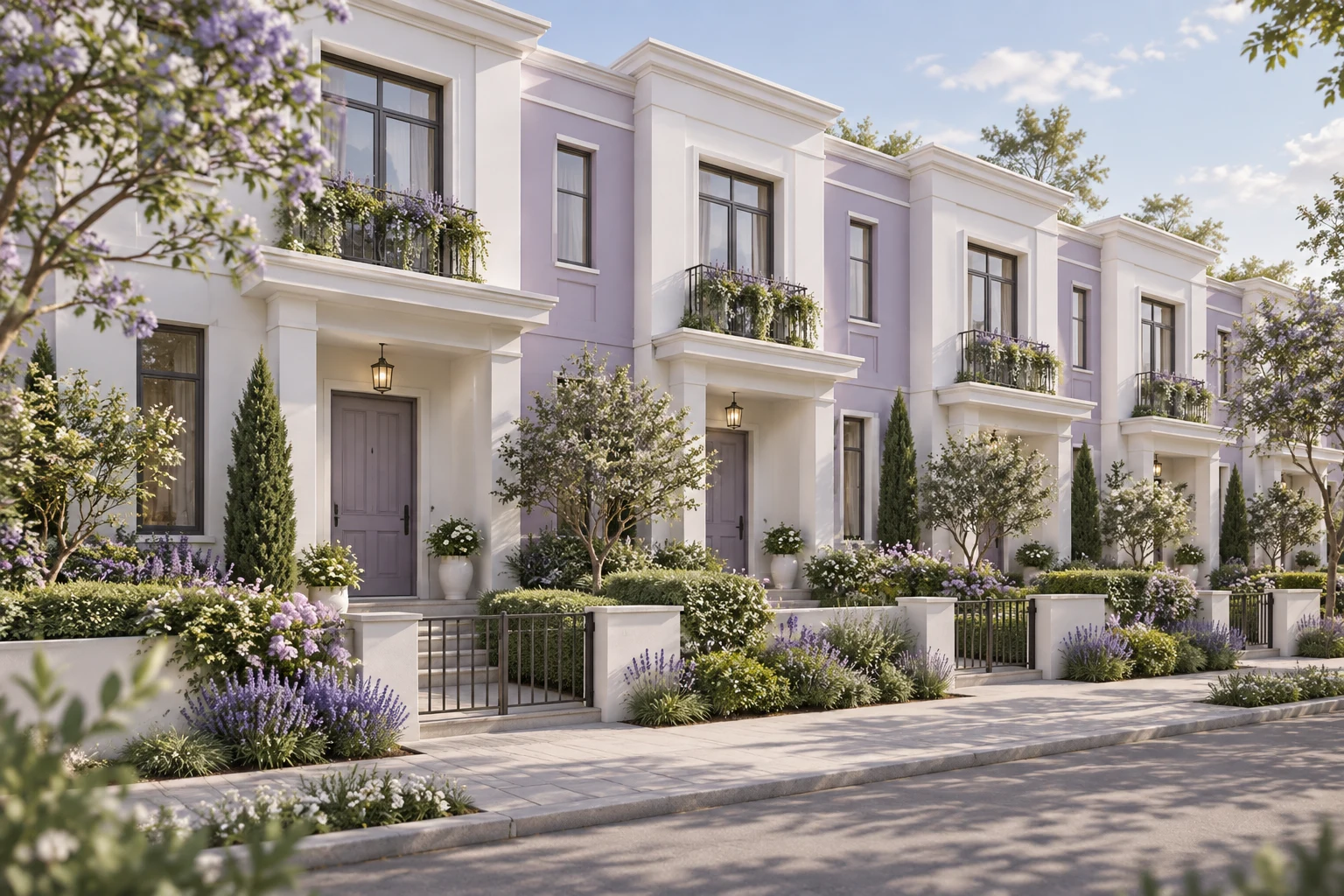
In this guide
- Understand the physical arrangement first
- Compare privacy through sightlines and routines
- Separate private areas from shared responsibilities
- Think about outdoor space as usable space
- Compare the maintenance routine honestly
- Consider community life alongside independence
- Compare two descriptions of the same need
- Use a decision table with personal priorities
Property descriptions often use the words villa and rowhouse together, which can make two different layouts sound interchangeable. Godrej Florenne is described by the developer as a rowhouse project. For a buyer, the important task is to understand what that format means in the selected unit: its relationship to neighbouring homes, the boundaries of private space and the way the community is managed.
This guide compares everyday questions associated with attached rowhouses and detached homes in general. It does not describe another project or establish legal rights for a particular property. Begin with the Godrej Florenne project overview, then request the relevant drawings and documents. A useful comparison depends on the actual home and its arrangements, not on which label sounds more luxurious.
Understand the physical arrangement first
A rowhouse is generally one home within a connected row, while an independent or detached villa is generally separated from neighbouring buildings. Marketing terminology can vary, so confirm the physical arrangement on the current plan. Look at shared boundaries, the position of openings and the relationship between the homes rather than relying on the name alone.
Ask which walls and external areas relate to your selected unit. A plan should make the building outline and relevant boundaries understandable. If a drawing is unclear, request an explanation using the unit reference and revision date. Do not estimate ownership or exclusive use from a rendered garden or paving pattern.
When reviewing Godrej Florenne Whitefield rowhouses, keep the developer's stated format in mind while examining the individual layout. The comparison should begin with what is actually being offered. A generic photograph of a detached home is not a reliable benchmark for the experience of an attached rowhouse.
Compare privacy through sightlines and routines
Privacy has several parts. Consider what can be seen from neighbouring windows, the internal road and shared paths. Then consider how rooms are used during the day. A bedroom, a study and an outdoor sitting area may require different levels of separation. The building label alone cannot answer these questions.
Look at the proposed furniture positions and window treatments alongside the unit's location. A comfortable private corner can depend on orientation, nearby buildings and the way an opening is arranged. Ask for relevant drawings and visit where possible. Treat observations of a sample home as specific to that display rather than universal across every unit.
Sound privacy also requires careful interpretation. Do not assume either attached or detached construction guarantees silence. Ask about applicable construction details and seek suitable professional assessment if sound separation is central to your decision. Lifestyle descriptions and decorative finishes cannot establish acoustic performance on their own.
Separate private areas from shared responsibilities
Request clear information about the spaces associated with the home and the spaces managed for the community. The entrance route, landscape edge or parking arrangement may look continuous in an illustration while having different responsibilities in practice. Keep those distinctions visible on the plan.
Ask who maintains relevant external elements and how issues are reported. Avoid assuming that a private-looking area is entirely yours to alter or that community management covers every exterior task. The applicable documents and operating arrangements should explain the scope. Obtain professional advice where a question concerns legal rights or obligations.
Use Florenne villa information on Soukya Road as a research reference, then verify boundaries and responsibilities through the appropriate documents. A listing can introduce the format, but it cannot replace the details needed to understand a particular home's use and maintenance.
Think about outdoor space as usable space
An outdoor area is useful when it supports an activity your household will actually enjoy. Identify whether you want a place to sit, keep a few plants or spend time outside with family. Then test the available dimensions and access. A larger-looking area may not be more useful if its shape or location does not suit the intended activity.
For a rowhouse, examine the relationship between the private outdoor area, neighbouring homes and common circulation. For a detached format in a general comparison, ask the same questions rather than assuming separation automatically resolves them. Boundaries, setbacks and maintenance access all affect how outdoor space functions.
Confirm any restrictions on planting, structures, equipment or facade changes before planning additions. Do not treat a rendered pergola or landscaped corner as permission to reproduce it. Keep ideas provisional until the relevant scope and approvals have been checked for the selected home.
Compare the maintenance routine honestly
Write down the tasks associated with the home you are considering: cleaning, exterior care, plant maintenance and service access. Identify which tasks belong to the household and which are covered by an agreed community arrangement. A comparison is more useful when it considers responsibility as well as the attractiveness of the surroundings.
Avoid assuming that one format is always easier or cheaper to maintain. Size, finishes, services and management arrangements differ. Ask for a clear description of the applicable scope and any current operating information, while keeping future estimates separate from confirmed charges. Do not turn a general expectation into a promise.
The Godrej Florenne project information reference can help you collect questions about the offered home. Bring a practical maintenance list to the discussion so that terms such as managed community are translated into specific tasks and contacts. Clear responsibilities matter more than a broad label.
Consider community life alongside independence
An attached rowhouse within a community may suit someone who values a defined neighbourhood setting and shared facilities, subject to the actual project arrangements. That same person may also want quiet hours, predictable visitor procedures and clear use rules. Discuss these expectations before assuming that community living will feel a particular way.
Independence is also a question of routine. Think about deliveries, visitors, pets, household work and time spent away. Ask how these activities would be managed in the home under consideration. Greater physical separation does not automatically remove practical coordination, while a community setting does not mean every household task is handled for you.
A second Godrej Florenne rowhouse reference can support your information gathering. Keep the focus on confirmed arrangements rather than imagined social life. Neighbour relationships develop over time, and no brochure can guarantee the atmosphere that will emerge after occupation.
Compare two descriptions of the same need
Suppose your priority is a private place to read outdoors. That need can be expressed as a preference for a detached home, but the label does not answer whether the actual outdoor space is comfortable, accessible or overlooked. Write the requirement directly: a usable sitting position, suitable access from the home and an outlook you find acceptable. Then assess the offered rowhouse against those criteria using the relevant documents and observations.
Try the same exercise for another priority, such as control over maintenance. Instead of assuming that independence means fewer restrictions or that a community means less work, list the tasks and decisions involved. Ask who is responsible for each and which rules apply. This approach does not remove the differences between housing formats. It makes those differences concrete enough to discuss. If a requirement cannot be met within the confirmed arrangement, record that clearly rather than trying to compensate with unrelated attractive features. If it can be met, you can recognise that without needing the home to match an idealised label. Keep the comparison focused on your needs and the available evidence, and seek qualified interpretation whenever the answer depends on property rights or contractual obligations rather than room planning.
Use a decision table with personal priorities
Choose a small set of criteria that matter to your household: room arrangement, privacy, outdoor use, upkeep and community procedures. Write the evidence beside each criterion and leave unknowns clearly marked. Avoid giving a home an advantage simply because the label matches an aspiration you have not translated into daily use.
Review the criteria with everyone who will live there. One person may prioritise private outdoor space while another values an easy maintenance routine. A shared discussion helps make those differences explicit. The aim is not to declare one housing format universally better, but to choose a home whose trade-offs are understood.
Return to the Godrej Florenne home overview for the relevant unit information and remaining enquiries. A rowhouse decision becomes clearer when you can explain how the home connects to its neighbours, what space you can use, which responsibilities you retain and how the household will live within that arrangement. Those answers provide a more useful foundation than the word villa by itself.
More Godrej Florenne guides
Discuss your Godrej Florenne shortlist
Ask for the project details relevant to this guide.
Chat about Godrej Florenne: Rowhouse or Independent Villa?