
Godrej Florenne Clubhouse: Questions to Ask
Review Godrej Florenne clubhouse proposals with questions about facilities, access, opening arrangements and real use.
21 September 2026 · 1,406 words · About 8 minutes
Ask about this topic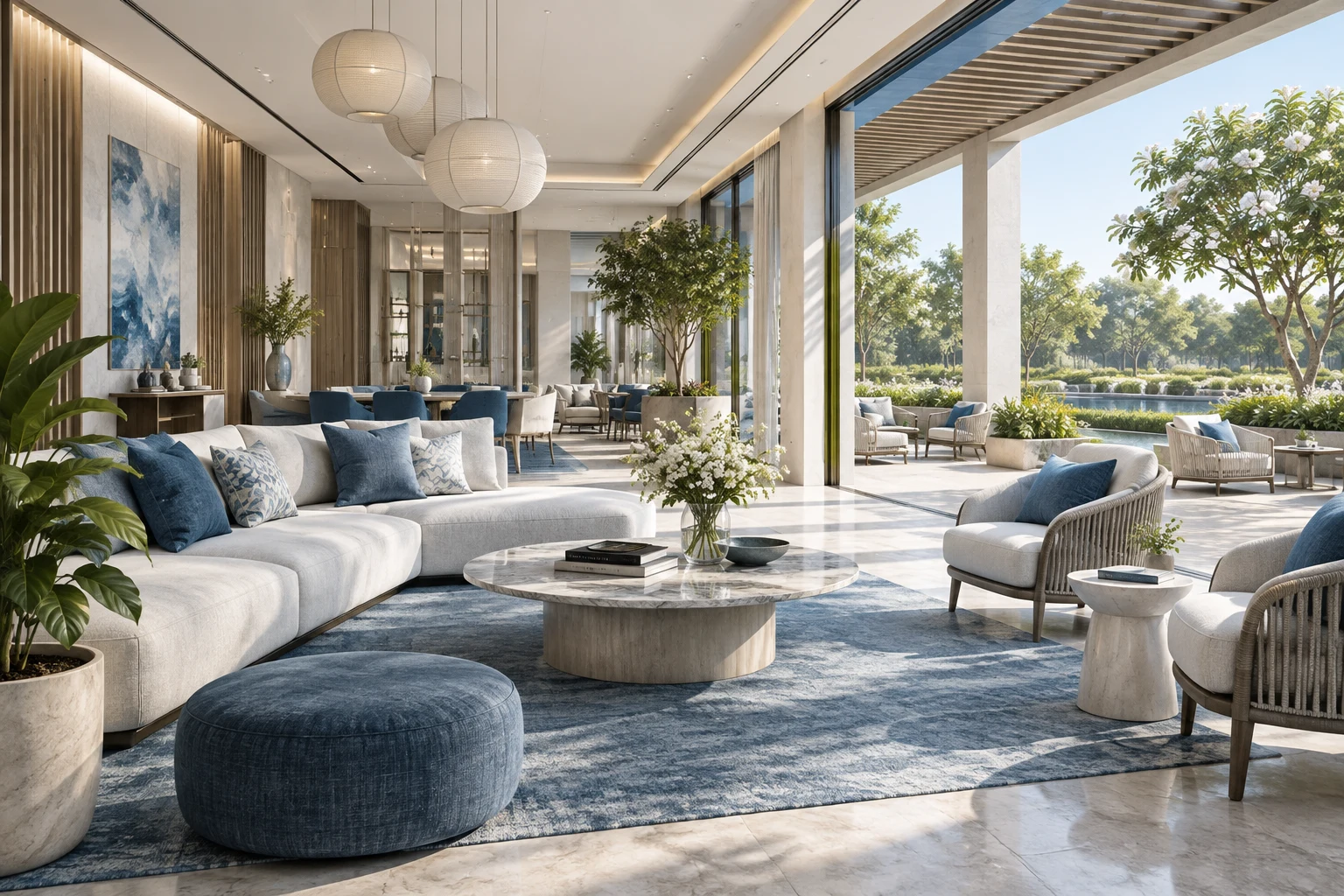
In this guide
A clubhouse is easy to admire in an image and harder to assess as part of everyday life. The useful question is not simply how many facilities appear in a list, but which ones your household would use and how access would work. A Godrej Florenne clubhouse review should connect the proposed spaces to your routine while keeping unconfirmed details clearly marked.
This guide does not present a verified inventory of completed facilities or rate amenities that have not been personally assessed. Ask for the current applicable amenity schedule and operating information. Keep the Godrej Florenne project overview with those enquiries, then use the questions below to separate an attractive concept from a practical understanding of what is proposed and what remains to be confirmed.
Start with a current facility schedule
Request the list of facilities applicable to the project and ask which document defines the offered scope. Record the issue date and any qualifications. If several brochures or online pages show different descriptions, ask the project team to clarify the current version. Do not combine the most appealing items from different sources into one assumed package.
For each facility that matters to you, identify whether it is proposed, under development or operational. Use the actual confirmed status rather than a broad project-stage label. A home delivery schedule and a shared-facility opening schedule may raise different questions, so ask about each separately.
When reading Godrej Florenne Whitefield project information, treat a clubhouse mention as the beginning of the enquiry. Request the details needed to understand the spaces you expect to use. A general description of premium amenities does not establish dimensions, equipment, staffing or opening arrangements.
Build an ordinary weekly-use plan
Ask each household member which activities they would realistically use during a normal week. Someone may want a quiet place to sit, another may be interested in exercise and another may occasionally host a gathering. Separate frequent use from activities that sound appealing but are unlikely to become part of your routine.
Place those activities in the actual week. Consider work hours, school schedules and the time needed to reach the facility from the home. An amenity that fits only an idealised weekend may have less practical value than a simple space used regularly. This exercise helps prioritise the questions worth asking in detail.
Avoid treating the clubhouse as a substitute for every room in the home. A shared space may support an activity, but access, availability and rules can affect its use. If a particular activity is essential to your daily life, understand those conditions before removing the corresponding requirement from your home plan.
Check the route from the selected unit
Locate the proposed clubhouse and the shortlisted home on the current master plan. Trace the route between them, noting roads, level changes and other relevant features. Ask which parts of the route are confirmed and how pedestrian access is intended to work. Do not estimate convenience solely from a compact marketing illustration.
Consider who will use the route and at what times. A short-looking path may still involve practical questions for someone carrying sports equipment, accompanying children or managing a mobility need. Seek suitable advice where access requirements are important. Confirm relevant provisions instead of assuming that a general accessibility claim covers every part of the journey.
Use Florenne row-villa details on Soukya Road to support project research, then keep route questions unit-specific. Two homes in the same community may have different relationships to shared spaces. A convenient position for one household may be less suitable for another that prioritises a quieter outlook.
Ask how use and bookings are intended to work
For spaces that may require booking, ask about the proposed process and whether final rules are available. Clarify which arrangements are established and which will be decided later. Avoid assuming that a facility is always available simply because it is included in the amenity schedule.
Ask about guest access, age-related use rules and supervision requirements where relevant. Obtain the applicable instructions from the responsible management contact rather than relying on a salesperson's general impression. The point is to understand the routine, not to invent restrictions that have not been stated.
If charges, deposits or membership arrangements apply, request the current written details and their scope. Do not treat an indicative figure as permanent. Keep these questions separate from the physical facility list so that the existence of a space is not confused with the conditions under which it can be used.
Understand the supporting spaces
A useful facility depends on more than its main activity area. Ask about the associated spaces relevant to your intended use, such as changing arrangements, storage or waiting areas, where applicable. Confirm what is actually proposed rather than assuming that every supporting feature accompanies a named amenity.
Think through arrival and departure. Where would a family member wait? How would equipment be carried? What happens if two household members finish activities at different times? These practical questions can reveal whether the routine is likely to feel convenient without requiring you to judge the facility by size alone.
The Godrej Florenne clubhouse enquiry reference can help you collect the broader project information. Follow up with a concise list of the specific supporting details you need. It is easier for the project team to answer a defined use scenario than a general question about whether the clubhouse is good.
Separate images from confirmed delivery
Ask whether the images you are viewing are architectural concepts, reference photographs or photographs of completed work. Each can be useful, but they support different conclusions. A concept can communicate an intended atmosphere without proving the final furniture, equipment or finish selection.
If a sample or reference facility is shown, ask how it relates to Florenne. Do not assume that its dimensions or operating model will be reproduced. Keep photographs and notes labelled accurately so they do not become mistaken evidence later when you review the project with another household member.
A further Godrej Florenne villa information reference may show additional descriptions. Compare them against the current applicable schedule rather than treating repetition across listings as independent confirmation. Where the information differs, ask for clarification and leave the point open until it is resolved.
Test one complete visit
Choose an activity your household expects to use and describe the whole visit from leaving home to returning. Include anything carried, the route, any booking step and what happens if the space is unavailable. This is a planning example rather than a promise about a particular facility. The exercise may reveal that a supporting detail, such as where somebody waits or how equipment is stored, matters more to your routine than the main room's visual appearance.
Repeat the exercise for a second household member with a different schedule. Compare the questions that arise and bring the common ones to the project team. Ask for written clarification where an answer affects your expectations about access or supplied scope. If the operating arrangements are still being developed, keep a provisional routine and identify when it should be reviewed. Do not convert an intended weekly activity into a guaranteed benefit before the relevant details are known. A short complete-use scenario makes it easier to understand the clubhouse as part of the community, rather than as an isolated image. It also gives you a sensible way to revisit the assessment when facilities and resident procedures become available, without starting the entire enquiry again from the beginning.
Review the clubhouse as part of the home decision
Bring the weekly-use plan back to the discussion after gathering answers. Identify which activities are supported by confirmed information, which depend on future operating arrangements and which remain uncertain. This gives you a realistic view of the clubhouse's potential role without reducing the decision to a count of facilities.
Consider whether the home still suits your household if an occasional shared activity is unavailable at a particular time. A balanced decision should not depend entirely on an ideal operating scenario. Keep the essential home requirements visible alongside the shared amenities rather than allowing one attractive rendering to dominate the shortlist.
Use the Godrej Florenne home overview to organise remaining enquiries about location, scope and delivery. A useful clubhouse assessment ends with an understandable routine: the activities you expect to use, how you would reach them, the conditions that apply and the details still awaiting confirmation. That is more informative than rating facilities from pictures alone.
More Godrej Florenne guides
Discuss your Godrej Florenne shortlist
Ask for the project details relevant to this guide.
Chat about Godrej Florenne Clubhouse: Questions to Ask