GODREJ AVELINE · SHARED BEDROOM
Godrej Aveline: A Shared Siblings Bedroom
Plan a Godrej Aveline shared bedroom with personal storage, study space and changing routines for two siblings.
12 September 2026 · 1,400 words · About 8 minutes
Ask about this topic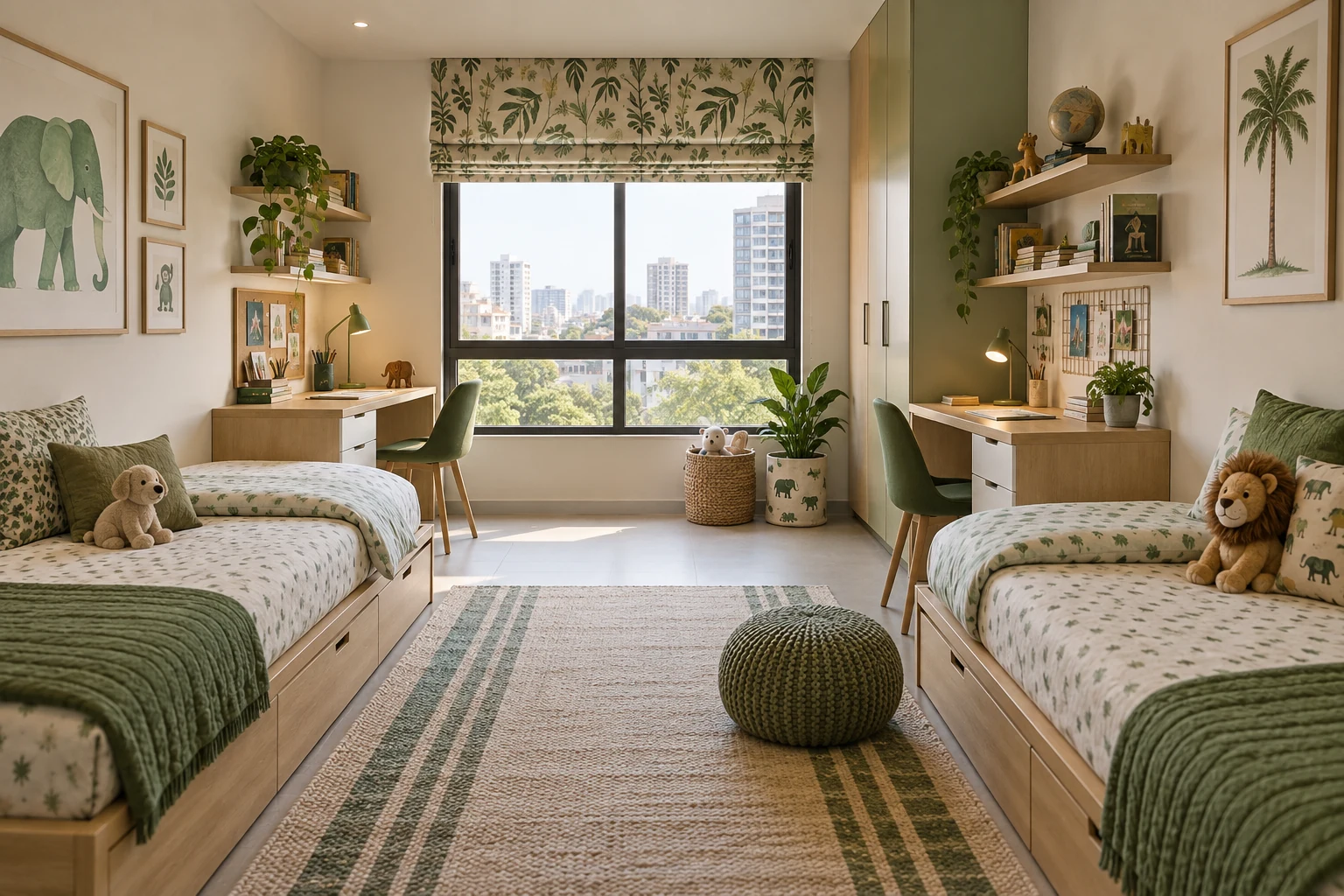
A Godrej Aveline shared bedroom can give siblings both companionship and a recognisable place of their own. The challenge is not simply fitting two beds. Each child may have different study habits, belongings and preferences about quiet time. Planning those differences early helps the room remain useful as routines change, without making every disagreement a reason to buy more furniture.
Start with the Godrej Aveline Yelahanka project page and identify the relevant apartment and bedroom. The examples here concern personal room organisation. They do not confirm that a particular bed, desk or storage arrangement fits every Aveline unit, so use the actual room information before ordering.
Ask each child what matters
Talk separately and together about how the room will be used. One child may want a place to display drawings, while another wants possessions left undisturbed. Avoid assuming their needs are identical because they share a room. Small personal preferences can often be accommodated without dividing the space into two rigid halves.
Identify the activities that happen simultaneously. Homework, reading and play may overlap, but the degree of compatibility depends on the children. A younger sibling's playtime and an older sibling's focused study may need a different arrangement from two children completing similar tasks together.
Keep expectations age-appropriate and revisable. The room should respond to the children as they grow rather than preserve a decorative theme indefinitely. Their current habits provide a better starting point than a picture of a perfectly symmetrical room in which nobody has left a school bag.
Establish a fair personal boundary
Give each child an understandable place for personal belongings. Equal ownership does not necessarily mean identical furniture, especially when the children have different ages or needs. Agree what is personal, what can be shared and how borrowing works. Clear expectations can reduce friction that extra storage alone would not solve.
Use simple visual cues if they help the children recognise their spaces. The cue might be a drawer, shelf or chosen colour rather than a physical partition. Avoid an arrangement that makes one child's everyday storage difficult to reach while the other receives all the convenient locations.
IKEA's shared bedroom and study ideas can prompt this discussion about personal and shared belongings. Adapt the idea to the actual users instead of copying the furniture. The household's agreement matters more than matching accessories.
Choose beds through the complete room
Place the proposed beds on the relevant room drawing and include door movement, wardrobes and access around the furniture. Assess the products with the supplier and follow their age, installation and use requirements. Do not choose a particular bed type solely because it appears to save floor space in a photograph.
Consider how bedding is handled and how each child reaches their belongings. A layout that technically accommodates two beds can still make ordinary tasks awkward. Look at the room in use, with drawers open and someone passing through, rather than only as a neat arrangement of rectangles.
Leave a workable route to regularly used storage. If every wardrobe visit requires another person to move, the room may become frustrating during school mornings. A smaller or differently arranged piece of furniture may serve the household better than the most visually impressive option.
Decide whether study belongs in the room
Two desks may be useful, but they are not automatically necessary. Ask when and where each child studies, whether adult support is needed and what equipment is used. Some tasks may happen comfortably in another shared area, while focused work benefits from a more defined position.
If both children study in the bedroom, test the arrangement with the actual materials. Books, notebooks and a device can occupy more surface than an empty desk suggests. Consider the effect of conversation and calls, as well as access to power where relevant. Any electrical changes should be planned appropriately.
For households balancing adult work and children's study, the two-person home office guide offers a related method for mapping simultaneous activities. The principle is to solve the real overlap instead of allocating a desk to every person without considering use.
Make tidying understandable
Choose storage categories that the children can maintain. A complicated system may look organised when an adult arranges it but fail during everyday use. Keep frequently used belongings convenient and give unfinished school or craft work a clear temporary place. Otherwise it may spread across both children's personal areas.
Separate shared supplies from personal collections. Pencils used by both children can have one common home, while treasured objects may need an individual location. Agree the distinction before moving belongings into the room. It is easier to establish the system together than to impose new rules after arguments begin.
Review what does not fit the current routine. Toys or materials that are no longer used may belong elsewhere or need a family decision. More cupboards are not always the answer to a room holding several years of changing interests without any review.
Allow different quiet-time preferences
One child may want to read while another wants to talk or play. Decide which activities can share the room and which have another suitable location. A shared bedroom does not need to carry every household activity. Keeping some play or family interaction elsewhere can relieve pressure on the personal space.
Consider lighting and the way each child uses the room at different times. Choose suitable arrangements and follow product instructions, especially for furniture or fittings intended for children. Avoid assuming a decorative divider creates meaningful acoustic separation or solves every difference in routine.
The family space guide can help identify activities that belong in a common room. This allows the bedroom to remain a more manageable shared personal space rather than the only place available for play, study and quiet time.
Plan the school-morning sequence
A shared room often feels busiest when both children need clothing, bags and school materials at once. Walk through that sequence before finalising storage. Ask which drawer each child opens, where the bag waits and whether one person's task prevents the other from reaching their belongings.
Move only the relevant daily items into the most convenient positions. Bringing every toy and accessory closer to the exit may create more clutter rather than a smoother morning. The useful arrangement distinguishes preparation for school from play and occasional storage.
Give unfinished homework or items needed the next day a clear temporary location. A paper left on a bed may disappear when bedding is adjusted, while a defined folder or appropriate tray can make the next step understandable. Choose a method the children can maintain themselves, with support suited to their ages.
Discuss what happens on days with a different activity, such as sports or an outing. The room does not need permanent storage for every possible exception, but the household can have a simple preparation habit. A brief check the previous evening may be more useful than another large cabinet.
Keep the routine fair if one child leaves earlier. They should be able to find their ordinary belongings without searching through the other child's personal area. Equally, the later departure should not inherit a room covered in items displaced during the first one.
Review the sequence after the room has been used. The children may identify an inconvenient location that adults missed in the furniture plan. Listening to that observation can produce a small, effective adjustment and give them meaningful ownership of the shared arrangement.
Keep that feedback specific, so the next adjustment addresses a real inconvenience rather than another purely decorative preference.
Review the arrangement together
After the room has been used through an ordinary week, ask each child what works and what causes inconvenience. Keep the questions concrete: which drawer is hard to use, where school materials collect and whether both can carry out their usual activity. Avoid asking only whether they like the room's appearance.
Imagine siblings who initially receive identical desks but have very different study needs. The family changes one storage arrangement and moves a shared activity to the living area, making the bedroom easier to use without replacing everything. Small changes based on experience can be more effective than a complete decorative redesign.
Bring the room-specific questions to the Godrej Aveline project guide before making permanent furniture decisions. A good shared bedroom gives each child ownership, supports the activities that genuinely belong there and remains flexible enough to change with their lives.
More Godrej Aveline articles

EXPLORE THE PORTFOLIO
Projects by the same builder



Browse all Godrej project guides
Discuss your Godrej Aveline shortlist
Ask for the project details relevant to this guide.
Chat about Godrej Aveline: A Shared Siblings Bedroom