GODREJ SOUKYA ROAD · MUSIC ROOM
MAKE SPACE FOR DAILY LIFE
Godrej Soukya Road: Music Practice at Home
Plan music practice at Godrej Soukya Road with suitable room use, neighbour consideration and clear limits on sound assumptions.
12 September 2026 · 1,400 words · About 8 minutes
Ask about this topic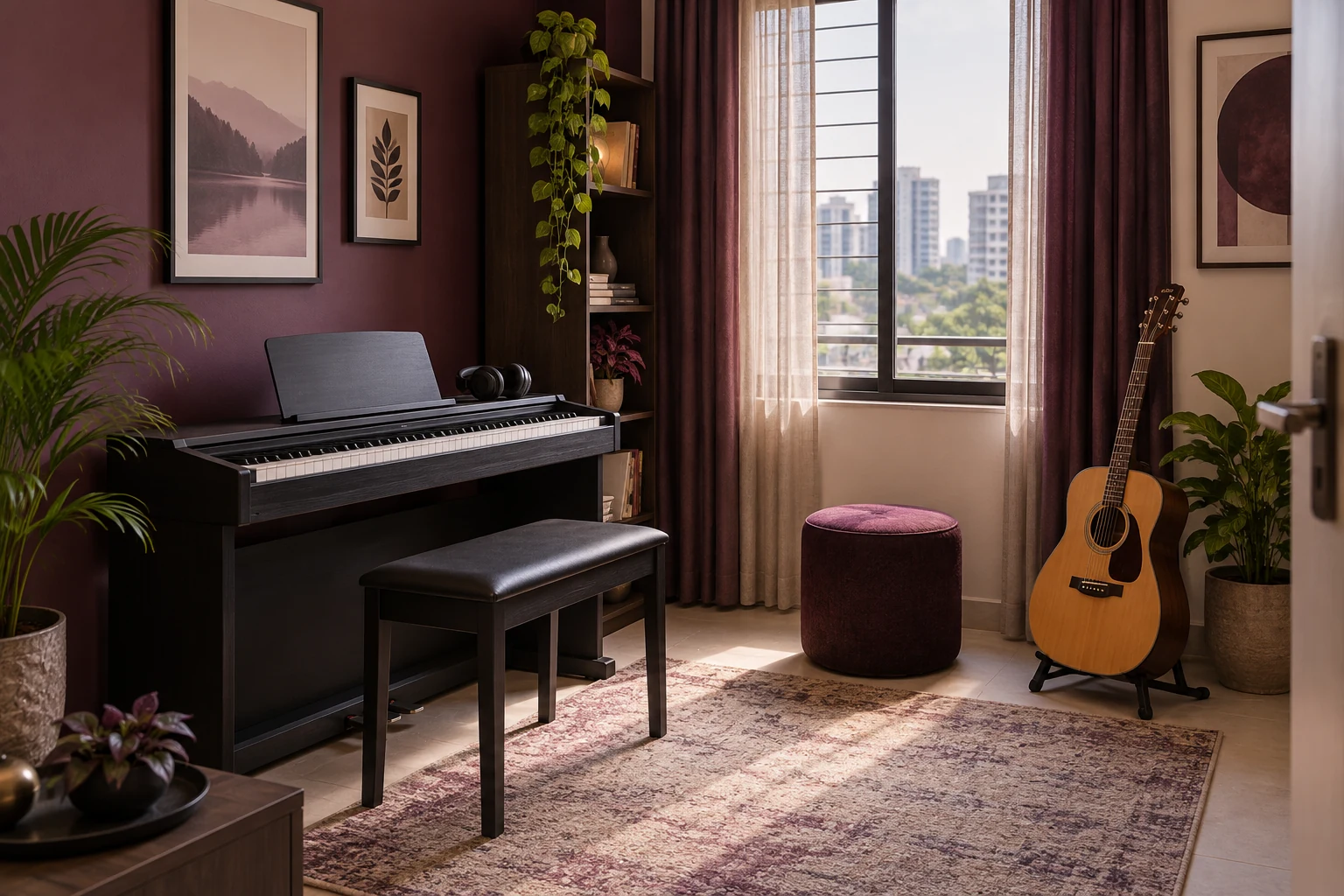
In this guide
A Godrej Soukya Road music room begins with the instrument and the practice routine, not a wall of decorative panels. A digital keyboard used with headphones, an acoustic instrument and an amplified rehearsal create different requirements. If regular practice matters to your household, discuss those requirements early so the chosen room and routine are realistic for both family members and neighbours.
Use the Godrej Row Houses Soukya Road project page to identify the home you are considering. This article is a planning guide, not a claim about the acoustic performance of the project. Do not assume that a row house arrangement or a closed room prevents sound from reaching other spaces.
Describe the actual practice session
List the instrument, equipment, typical session length and preferred time. Include lessons, accompaniment and any recording activity if those are part of the routine. A room used for quiet individual practice has a different brief from a space intended for several musicians. Be specific before comparing furniture or room treatments.
Ask what needs to remain set up between sessions. If practice begins with moving furniture and unpacking several cases, a more convenient arrangement could help. However, leaving every piece of equipment permanently out may consume a room that also serves another purpose. Find the balance through the activity you actually repeat.
Consider other household schedules. A child's practice may overlap with an adult's call or another person's quiet time. Identifying those overlaps allows a conversation about timing and room use before anyone assumes the space will work independently of the rest of the home.
Distinguish sound treatment from isolation
Improving how a room sounds to its user is not the same as preventing sound from travelling elsewhere. Decorative soft furnishings or products described as acoustic should not be treated as a guarantee of isolation. If limiting transmission is important, obtain an appropriate specialist assessment of the actual room and proposed activity.
Ask the specialist to explain the problem being addressed, the expected limits of the proposal and how it would be evaluated. Avoid relying on a promise of complete soundproofing without a defined scope. Any proposed building work must also be considered against the applicable permissions and the home's confirmed construction.
The Godrej Whitefield villas overview is a property reference. It cannot establish whether an instrument will be acceptable at a particular volume or time in a specific room. Keep acoustic questions separate from general descriptions of privacy or spaciousness.
Explore instrument-specific quiet options
Some instruments or systems offer headphone practice. Yamaha's digital piano overview describes that option for digital pianos. Check the exact model and its instructions rather than assuming every instrument can operate in the same way. A feature relevant to one instrument does not resolve all sound from movement or other equipment.
If you already own an instrument, speak to its supplier or a suitable technician about supported options. Do not modify equipment based on an unrelated online example. The useful question is which practical choices exist for your instrument and how those choices fit the routine you want to maintain.
Try the proposed setup before investing in extensive room work where possible. A suitable instrument arrangement and agreed schedule may meet the household's needs, while a more demanding use may require a different solution. The answer should follow the actual activity rather than a generic home studio checklist.
Choose furniture around playing movement
Place the instrument and appropriate seat first, then consider music stands, accessories and storage. Allow the player to move as the instrument requires, using manufacturer or teacher guidance where relevant. A compact furniture layout can become awkward when the person is actually playing, adjusting a stand or reaching controls.
Think about access for maintenance and movement of the instrument. A large or delicate item may need specialist delivery and handling. Check the full route before choosing an upper-level room. The furniture delivery planning guide provides a general route checklist, but instrument handling should be assessed by the appropriate provider.
While reviewing Soukya Road project search results, keep a separate instrument brief with dimensions, handling needs and the intended room. This makes the later discussion with a supplier or specialist more useful.
Organise accessories for quick setup
Give everyday accessories a consistent location. Music books, cables and small items should be easy to find without covering the playing surface. Keep storage appropriate to the equipment and follow its care guidance. A neat appearance is helpful only if it also supports correct handling and convenient use.
Separate active material from the larger collection. The music being practised this week should not be difficult to find among years of books. A simple current-session folder or suitable storage area can reduce preparation effort. Choose an arrangement that the player will maintain independently.
If the room has another purpose, agree how practice ends. The instrument may remain ready while smaller items return to storage, or some equipment may need to be put away. A clear closing routine helps the room remain useful without requiring another person to clear it before their activity.
Discuss neighbours and household expectations
Confirm applicable community rules and take neighbour consideration seriously when setting the routine. Do not assume that daytime use is automatically acceptable at any volume. The character of the instrument, duration and actual transmission matter. A considerate plan begins with understanding the setting and the limits of the proposed use.
Keep family expectations equally clear. Agree how lessons or practice sessions are communicated and what happens when another important activity overlaps. A room assignment alone does not resolve scheduling. The household may need a flexible routine rather than a fixed assumption that one activity always has priority.
The Soukya Road row houses project reference can support wider research, but direct clarification and an appropriate assessment are the relevant basis for any substantial music-room proposal.
Prepare a focused specialist brief
If professional acoustic advice is needed, provide a clear description of the instrument, intended hours, room location and the issue you want to address. Include the relevant home information when available. A specialist can respond more usefully to a defined activity than to a general request for a music room.
Ask which observations or tests are required before a proposal can be made. Clarify what the proposed work would and would not address, including the difference between the experience inside the room and transmission to other spaces. Keep any assumptions visible in the written scope.
Discuss the consequences for ordinary room use. A proposal may affect space, access, ventilation or other arrangements that need appropriate assessment. Do not evaluate it solely through the appearance of wall finishes. The room must remain suitable for its intended use as a whole.
Agree how completion would be reviewed and who handles later questions. A clear handover should identify the installed elements, their care requirements and any limitations that remain. Avoid treating an informal description of quiet practice as a measurable promise.
For a less demanding setup, the brief may instead go to an instrument supplier or teacher who can help with supported equipment choices and practical playing arrangements. The level of advice should match the activity. Starting with a precise description helps the household avoid both underestimating a demanding use and purchasing unnecessary room treatments before the actual need is understood.
Keep that brief with the instrument records and update it if the activity changes. A different instrument, additional player or revised practice schedule may require a fresh assessment rather than relying on the earlier arrangement. This keeps the room plan connected to its actual use as the musician’s interests develop further.
Test a realistic session
Imagine a household planning a keyboard room and initially focusing on decorative panels. It first tests the instrument's supported headphone option, the player's seat and the location of accessories. The family finds that convenient setup and agreed session times are the immediate priorities, while any further treatment needs a clearer purpose.
A household with an acoustic instrument may reach a different conclusion after specialist advice. The planning method remains the same: identify the activity, assess the real room, understand the limits and choose a routine that can be maintained responsibly.
Bring the room and provision questions to the Godrej Soukya Road project guide, and use Godrej Soukya Road search references for broader comparisons. A satisfying practice space supports the musician's habit while respecting the actual home, equipment requirements and the people around it.
More Godrej Soukya Road articles
EXPLORE THE PORTFOLIO
Projects by the same builder



Browse all Godrej project guides
Discuss your Godrej Soukya Road shortlist
Ask for the project details relevant to this guide.
Chat about Godrej Soukya Road: Music Practice at Home