
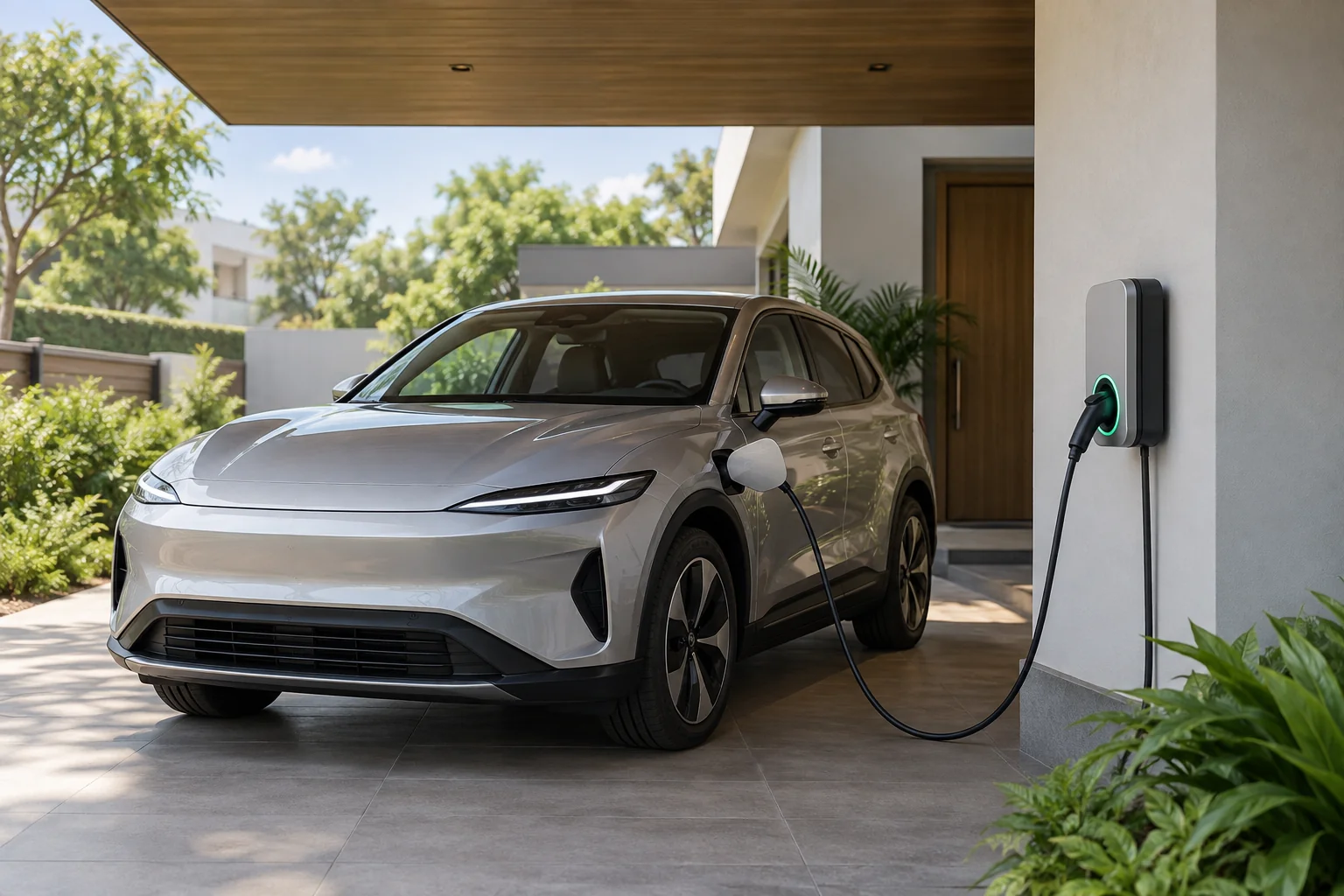
For an electric vehicle owner, charging is part of the parking routine. A home can look suitable until the conversation moves from a parking bay to the actual charging arrangement. This Godrej Soukya Road EV charging guide helps buyers distinguish a proposed provision from an installed, usable charger. It does not confirm the development's electrical capacity, equipment type or charging policy. The image is a generic illustration. Technical design and installation should be assessed by the responsible electrical professionals. Your role as a buyer is to establish the intended scope, location and responsibility, then check whether that arrangement fits your vehicle and everyday travel pattern.
Ask what EV provision actually includes
The phrases EV ready, charging point and installed charger can describe different things. Ask whether the proposal concerns a route for future wiring, an electrical connection or complete charging equipment. The Godrej Row Houses Soukya Road overview can start the project enquiry, while the current electrical specification should define the provision. Request the answer for the selected unit and parking position. A shared community charger is also different from equipment serving an individual home. Keep these possibilities separate in your notes. Clear terminology early in the discussion can prevent an assumed convenience from becoming an unexpected installation project after moving in.
Connect the enquiry to your vehicle
Record the vehicle model you own or expect to buy, then obtain its charging requirements from the manufacturer or authorised provider. Do not select electrical equipment based only on a general property advertisement. Ask the project team which details can be reviewed by your qualified installer when appropriate. Compatibility involves more than whether a plug appears similar in an image. Keep the vehicle information beside the project's written provision so professionals can identify any gap. If your future vehicle is undecided, describe that uncertainty rather than treating one specification as universally suitable. This guide intentionally avoids prescribing cable sizes, protection devices or electrical work for a particular home.
Review the position of the parking bay
Study the actual parking layout and ask where charging equipment could be located under the documented proposal. Consider the vehicle's charging port position and how the car would normally be parked. The cable route should be assessed as part of a proper installation design; buyers should not improvise an extension arrangement. Use Soukya Road property listings and search results to identify descriptions needing clarification. Then return to the relevant drawing and electrical scope. Ask whether the bay is assigned to the home and whether any shared access route passes nearby. A convenient location needs to work with everyday movement around the parked vehicle.
Separate private charging from shared access
If charging is proposed in a common area, ask how residents would access it and whether reservations are contemplated. Discuss how a completed session would be handled when another user needs the space. If provision is within an individual parking area, ask which parts belong to the home's supply and which are managed communally. Do not assume either arrangement has been confirmed. A household with predictable overnight parking may have different preferences from one using several vehicles at varying times. Record those preferences before comparing options. The most useful answer describes how charging would work in practice, including access, responsibility and any limitations still awaiting a final policy.
Understand how usage would be recorded
Ask whether electricity use is expected to appear on the home's bill, a separate meter or an operator's account. This guide does not establish any tariff or billing arrangement for the project. Request the proposed method and identify which details may be decided later. If a shared charger is mentioned, ask about possible service charges and how residents would review a session record. Keep energy charges distinct from installation costs, equipment purchase and general maintenance. A broad statement that charging is available does not answer these questions. Clear records help you compare arrangements without inventing a monthly amount based on an unverified tariff or assumed driving distance.
Request the professional scope of work
Ask who would supply, install, test and maintain any charging equipment included with the home. Where only a future provision is offered, establish the approved process for an owner to arrange installation. The Godrej Villa Whitefield project reference offers another starting point for enquiries, but it should not replace the electrical documentation. Ask whether written permissions or approved service procedures apply, without assuming a particular rule. Keep technical suitability with qualified professionals and the vehicle equipment provider. Your comparison should show what is supplied at handover, what requires later work and who is responsible for answering questions about that work.
Consider the ordinary weekly routine
Think about when the car is usually at home and when it must leave again. A household commuting most weekdays has a different pattern from one making occasional longer trips. Write down the parking windows rather than trying to calculate charging performance from a brochure phrase. The equipment provider can evaluate charging time once the relevant specifications are known. If two drivers share the vehicle, discuss who would connect it and check readiness for the next journey. These ordinary habits can reveal whether an arrangement feels convenient. They also help you ask specific questions instead of relying on a general promise that an EV provision will suit every lifestyle.
Ask about service and future changes
Find out whom residents would contact if equipment stops working and whether any service arrangement is documented. Ask how a change of vehicle or charger would be handled under the proposed community procedures. No future electrical capacity should be assumed from the presence of a single charging symbol. Review Godrej Soukya Road EV related search listings as leads for followup, then request a clear project response. If expansion is mentioned, ask whether it is part of an issued plan or only a possibility. Keeping those categories distinct makes the long term discussion more realistic and avoids relying on a technical upgrade that has not been committed.
Keep charging costs in their own comparison
Create separate entries for included provision, equipment that must be purchased, installation work and ongoing usage. Leave amounts blank until current written quotations or schedules are available. Ask whether an optional installation price includes all work described by the qualified installer, rather than comparing only the charger unit price. A lower equipment figure may represent a different scope. Do not combine assumptions from different homes or vehicle models into one estimate. A useful comparison identifies the same intended outcome for each option. This keeps the property decision connected to a practical charging arrangement while avoiding unsupported claims about savings, future tariffs or guaranteed operating costs.
Keep a fallback travel plan
Even when a charging arrangement is documented, think about how you would manage a day when the usual equipment is unavailable. Ask your vehicle provider about appropriate alternatives and use current service information when planning a journey. This guide does not identify a nearby public charger or confirm its availability. Avoid treating an unverified map symbol as a dependable part of the home routine.
If charging is especially important to your purchase decision, note the questions that must be resolved before you rely on the proposed arrangement. These may concern the scope at handover, the parking position or the responsible service contact. Share the same list with household members so that a vague verbal answer does not get remembered as a complete commitment. Keep the technical review with qualified professionals, and retain their relevant recommendations with the project response. This creates a practical record for later installation or equipment discussions without expecting a property listing to answer questions that depend on a particular vehicle and electrical design. Retain this information for the next technical discussion.
Prepare a focused EV enquiry
Send the project team your selected unit details, parking reference and the questions that matter most. Request the current electrical provision, proposed charging location and division of responsibilities. Ask which answers are confirmed and which depend on later operating decisions. Keep the response with your vehicle information for review by an appropriate professional. EV charging can be a useful part of residential convenience when the equipment, parking and management arrangements work together. Until those details are documented, treat a charging claim as a subject for investigation. A clear written scope is more valuable than an attractive carport image or an ambiguous statement that the development supports electric mobility.