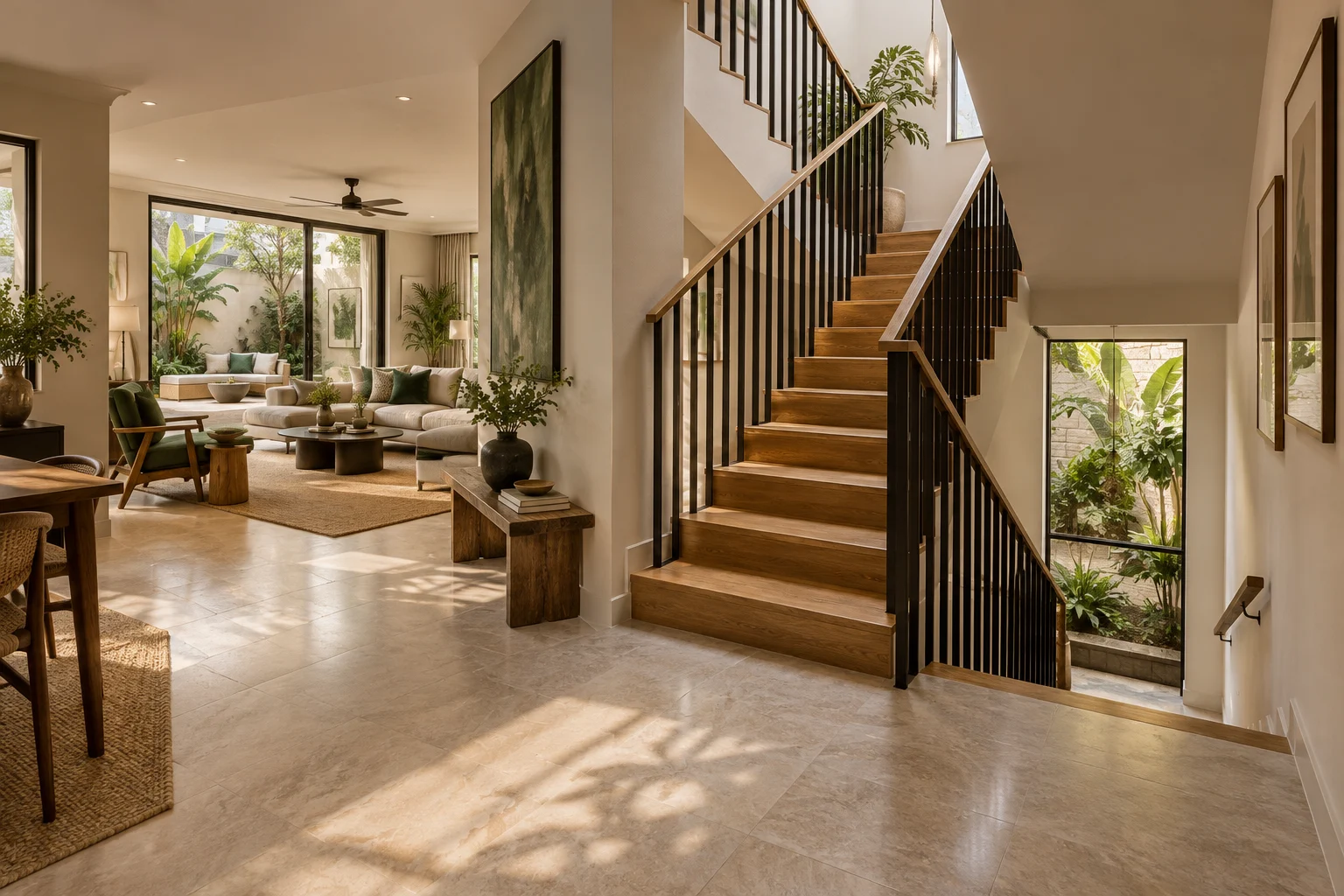
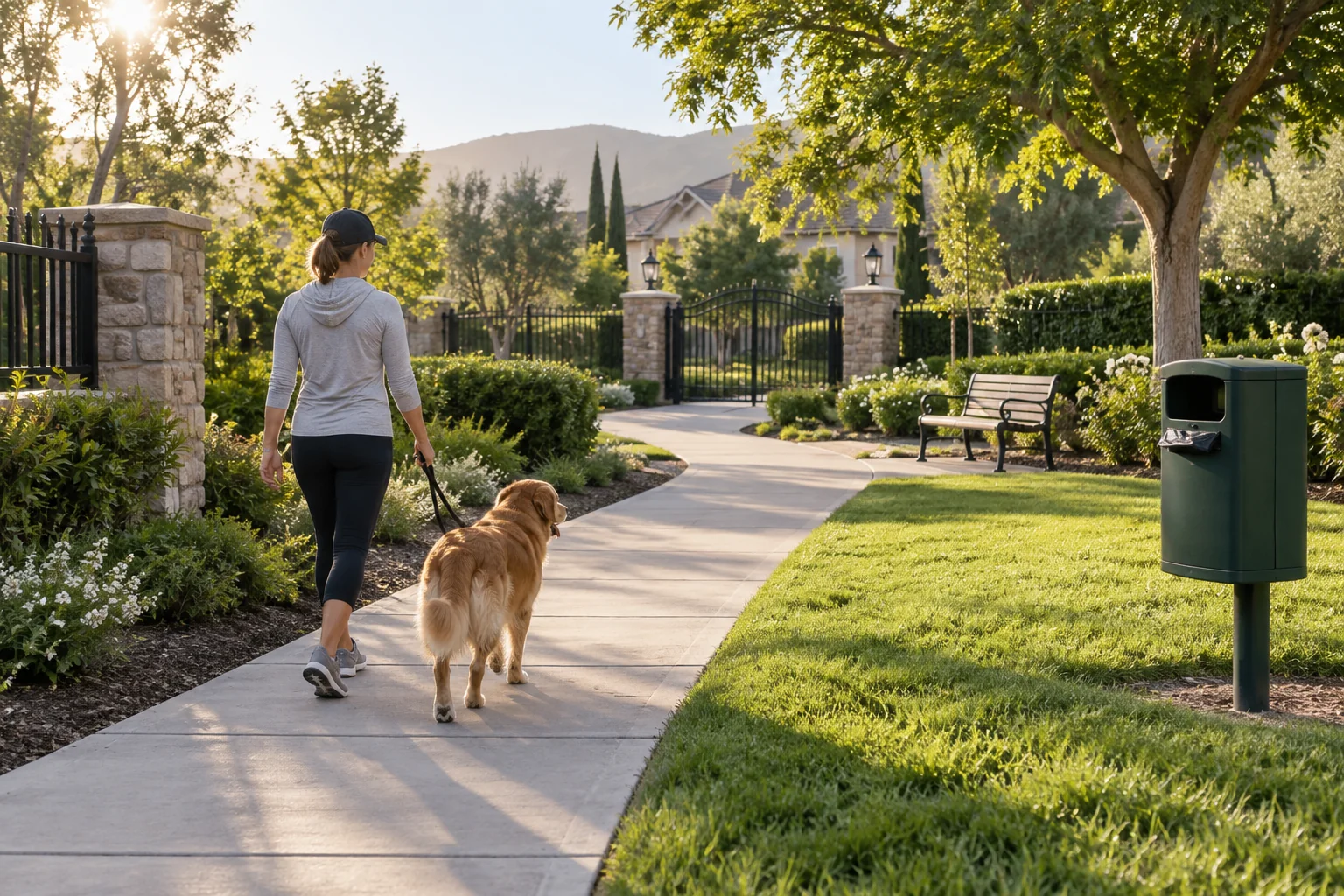
Whether Godrej Villa Whitefield is pet friendly should be answered through the community's actual arrangements and your pet's daily routine. A landscaped image or a general welcome statement does not explain walking routes, access procedures or the responsibilities of residents. This guide helps you organise those questions for the Soukya Road project. It does not confirm a specific pet policy, dedicated dog park or pet service. Ask the project team for the current written information and distinguish proposed facilities from operating rules that may still be developed. The illustration shows a generic residential walking scene rather than a verified project feature.
Start with your pet's ordinary day
Write down the activities that happen every day: walks, feeding, rest, play and time spent alone. Note when each activity occurs and which household member handles it. A home may seem suitable during a short visit but be less convenient for an early morning or late evening routine. Think about the route from the main living area to the place where you would begin a walk. If your pet is older or has particular mobility needs, discuss the home arrangement with your veterinarian. The goal is to identify practical requirements before reviewing the property, rather than assuming that every row house suits every animal.
Ask what pet friendly means in writing
Request the available community guidance on pets and ask which parts are current and which remain provisional. A representative's description may cover general acceptance without explaining shared space use. Ask about the process for communicating rules to residents and where updates would be recorded. This article does not interpret the legal validity of any particular restriction. If a rule would materially affect your household, obtain appropriate advice on the actual document. For the property comparison, the immediate task is to understand the proposed arrangement clearly. Keep the answer with your project notes rather than relying on a brief assurance during a sales conversation.
Inspect the walking route as a route
Look beyond the amount of greenery shown on a master plan. Ask where residents would walk pets, how those paths connect and whether they cross vehicle movement areas. Consider the start and end of the walk, including any gates or narrow transitions. If the development is not ready to inspect, use the current drawing to identify questions instead of describing the route as proven comfortable. Think about the times when you usually walk and what information is available about lighting and access. A pleasant looking path can still require closer review for the particular routine you intend to follow.
Consider the space inside the home
Identify where your pet would rest, eat and spend time when the household is busy. A multilevel layout may spread family activity across several floors, so consider whether that arrangement suits your pet. Ask about floor finishes and thresholds in the specification rather than guessing from a furnished image. Plan where food, leads and cleaning supplies would be stored. Keep passageways clear and avoid assuming that a future interior alteration will solve a difficult arrangement. A practical pet space should work alongside the people using the home. The most useful plan supports ordinary routines without creating constant obstacles in entrances, kitchens or stairs.
Review outdoor areas separately
If a shortlisted home has an outdoor area, confirm its dimensions, boundary treatment and permitted use in the unit documents. Do not assume that a private use garden is automatically enclosed in a way suitable for your pet. Ask about gaps, access points and any changes residents may make. For balconies or terraces, review the actual construction and seek appropriate professional advice on protective measures. An illustrative garden cannot establish containment or safety. Keep outdoor access as one part of the pet plan, alongside supervised walks and indoor rest. The space should be assessed for the actual animal and the way your household will manage it.
Plan considerate use of shared spaces
Living with pets in a community involves neighbours who have different preferences and routines. Ask how residents are expected to use shared paths and how concerns are communicated. Plan to carry cleanup supplies and keep your pet under suitable control in common areas. Avoid assuming that every lawn or recreation area is intended for pet use. If a designated space is advertised, ask where it is located and what is actually included. Clear expectations can make everyday interactions easier. The objective is a workable routine that respects shared spaces, rather than relying on a general pet friendly label to answer every practical question.
Ask about cleaning and disposal arrangements
Identify where waste can be disposed of and what guidance the community provides. Do not assume that bins shown in an illustration are installed or intended for pet waste. Ask about the cleaning responsibilities associated with shared routes and any procedures residents should follow. At home, consider where muddy paws, leads and outdoor equipment would be cleaned or stored without obstructing access. These small arrangements can have a large effect on daily convenience. A realistic plan is usually simple: a sensible entry routine, accessible supplies and clear disposal information. Confirm the project specific details before describing any of those services as included.
Check support beyond the project gate
Make a separate list of the services your pet already uses, such as veterinary care, grooming or boarding. Contact suitable providers to confirm their location, hours and relevant services before treating them as available options. This guide does not publish an unverified nearby clinic list. Test the route from the confirmed project entrance where a service is important to you. Keep routine appointments and urgent care planning separate, because the same provider may not cover both. Ask your veterinarian how to prepare for a move if your pet has specific needs. Property advertising cannot replace that individual guidance.
Think about visitors and time away
If a walker, sitter or family member helps care for your pet, ask how their access would be arranged. Confirm the available visitor process without assuming unrestricted entry. Consider where the helper would collect supplies and how you would communicate the routine. For travel periods, identify a realistic care plan before the move. A larger home does not remove the need for reliable support when the household is away. Talk through these arrangements with everyone involved. The aim is to choose a home where the routine remains manageable on busy days, during work changes and when the person who usually handles care is unavailable.
Use the project references to request specifics
The Soukya Road project reference can help identify the development for your enquiry. The Whitefield villa reference describes the same project under another name. Neither link should be treated here as confirmation of a detailed pet policy. Ask the project team to respond to your own checklist and provide the relevant documents. Where a feature or rule remains undecided, record that openly. This gives you a more useful basis for comparison than repeating a broad pet friendly claim without knowing how daily use would work.
Before a move, consider how the first few days in an unfamiliar home would be organised. Identify a quiet resting place, keep familiar supplies accessible and plan who will manage walks while furniture is being delivered. Discuss any individual adjustment concerns with your veterinarian. Ask the project team about the relevant move in procedures so you can organise access and avoid unnecessary disruption. This preparation belongs alongside the longer term property comparison. A home that suits the normal routine still needs a manageable transition, especially when several household members are busy coordinating deliveries, work and the practical details of settling in. Keep the first week simple, with familiar routines and clearly assigned responsibilities, then adjust the arrangement as the household learns how the new home works daily.
Compare the whole routine before deciding
Review the indoor layout, access to walks, outdoor boundaries, shared space guidance and support services together. Identify which requirements are essential and which are preferences. A home with more outdoor area may still be unsuitable if the access pattern does not work for your household. Another may offer a simpler routine with fewer unresolved questions. Godrej Soukya Road pet friendly living should be assessed through those specific details. Keep the current written answers with your notes and revisit them as the project develops, so that the final choice reflects the needs of both your household and your pet.