
GODREJ FLORENNE · OUTDOOR LIVING
Godrej Florenne: Terrace and Garden Planning
Plan Godrej Florenne terrace and garden use with clear activities, confirmed boundaries, suitable furniture and manageable care.
19 September 2026 · 1,400 words · About 8 minutes
Ask about this topic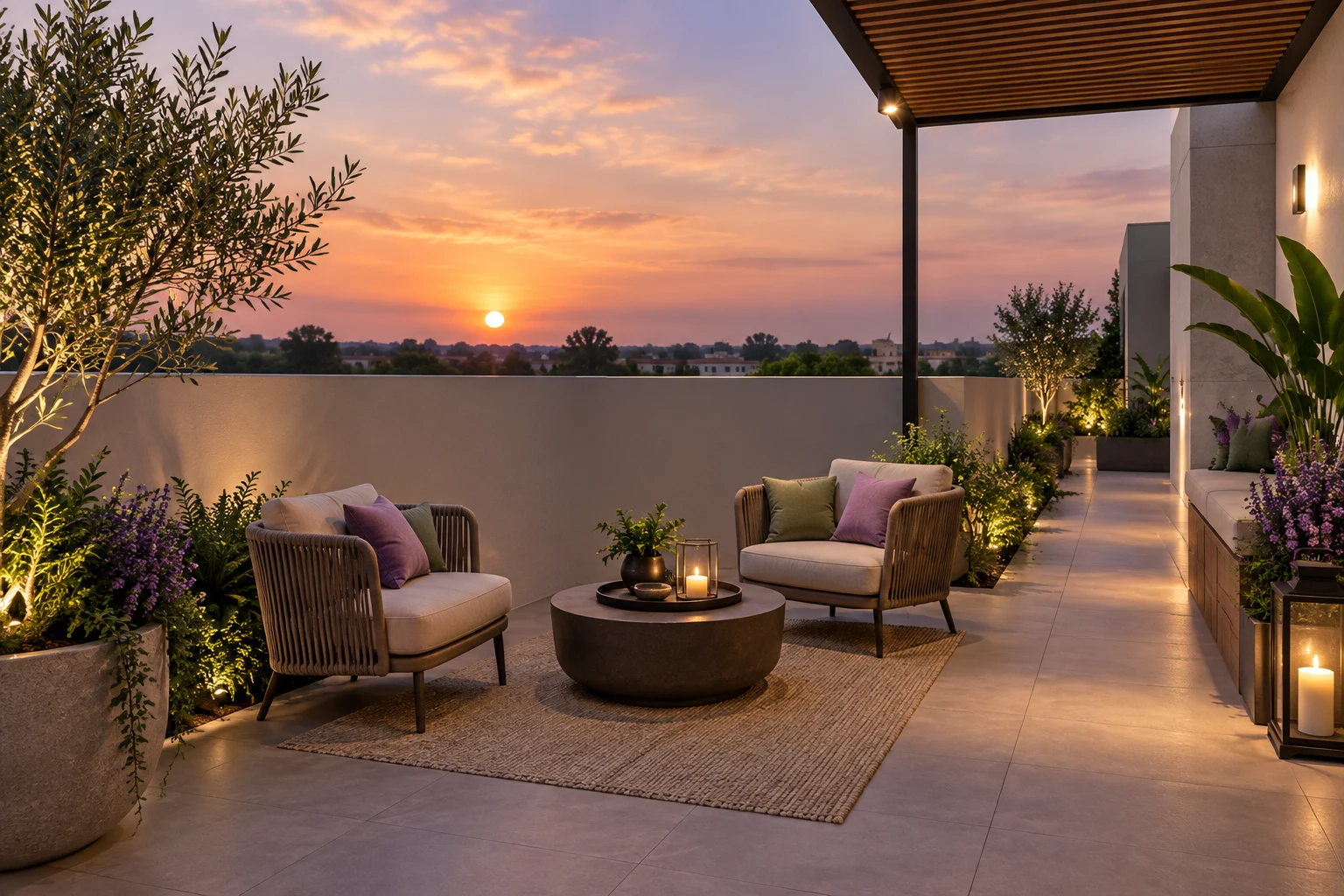
A considered home.
An easier routine.
Start with the activities that matter to your household, then plan the space around them.
Outdoor space becomes valuable through use: a quiet cup of tea, a place to read or a modest planting routine that fits the household. If you are considering Godrej Florenne, begin with the actual terrace, balcony or garden shown for the selected home rather than a collection of ambitious inspiration images. This guide explores practical planning ideas. It does not assume that every unit has identical outdoor areas or that structures, heavy planters and permanent alterations are permitted. Confirm boundaries, dimensions, responsibilities and relevant technical requirements before making a detailed proposal.
Give the space one clear purpose
Choose the activity you most want to support. A terrace used for occasional reading may need only suitable seating and a place for a drink. A garden intended for regular care asks different questions about access, maintenance and the person who will do the work.
Start with one primary use and leave secondary ideas for later. Trying to include outdoor dining, lounging, dense planting and storage immediately can make a space harder to use. A modest arrangement gives you room to learn how the area works in practice.
The Godrej Florenne outdoor-space reference introduces the marketed home features. Match those descriptions to the actual unit drawings before selecting furniture or planting. A terrace shown in one variant should not be assumed to belong to another.
Confirm boundaries and access
Ask which outdoor areas form part of the offered unit or are provided for its use, and how that is documented. A coloured patch in a plan does not explain all the relevant rights or responsibilities. Obtain the appropriate clarification before treating it as an unrestricted private garden.
Trace the route from the rooms you expect to use most. An outdoor area reached through a bedroom may support a different routine from one beside a shared living room. Consider carrying a book, a tray or basic gardening supplies along that route.
Mark doors, steps, drainage and service access on the sketch. Furniture and containers should not obstruct the areas that need to remain clear. Ask for professional advice where technical requirements or the suitability of an installation are uncertain.
Observe conditions before choosing plants
Look at the available light and the exposure of the actual space. A plant that suits one position may be less appropriate in another, even within the same home. Start with observed conditions and advice from a suitable plant supplier rather than copying a lush photograph.
Think about the care routine honestly. Someone needs to water, clean and manage the plants when the household is busy or away. A smaller collection that receives appropriate attention may be more enjoyable than an ambitious arrangement that becomes difficult to maintain.
The Florenne rowhouse lifestyle overview is a research reference, not a planting specification. It cannot establish the right species, container size or installation for your particular terrace or garden. Keep those decisions tied to the actual conditions and relevant advice.
Choose furniture for everyday comfort
Measure the usable seating area after preserving access. Then compare the dimensions of the actual furniture, including how it operates when occupied. A chair that fits as an outline may leave too little room to sit down or pass behind it comfortably.
Try the seating where possible and consider the people who will use it. A low lounge chair may suit one person while another prefers a more upright seat. The outdoor arrangement should support the activity and user rather than simply recreate a visual style.
Ask the supplier whether the product suits the expected exposure and how it should be cared for. Plan where cushions or movable pieces will go when not in use. An outdoor setup that creates inconvenient storage inside may need simplifying.
Treat structures and heavy additions carefully
Do not assume that a pergola, enclosure, large planter or water feature can be added because it appears in an inspiration image. Confirm the relevant permissions and obtain an appropriate professional assessment of the actual proposal and location.
The Godrej Florenne project-details page helps identify the home being discussed, but it is not approval for an alteration. Ask the responsible team what the current documents and rules allow before paying a supplier to develop a permanent installation.
Keep attachments to walls, railings and roofs within the same careful review. Decorative appearance does not remove structural, waterproofing or maintenance considerations. This guide deliberately avoids prescribing loads, fixing methods or construction details for an uninspected space.
Keep privacy and outlook in balance
Sit where the proposed furniture would be and consider views from adjoining openings or common routes. Changing the direction of a chair may improve the experience without adding a screen. Begin with the simplest arrangement that supports the activity.
If screening is desired, ask about permitted products and suitable installation. Do not assume a lightweight or temporary-looking element is automatically acceptable. Exposure, attachment and the building’s appearance may all need review by the relevant team.
Retain clear access and appropriate separation from protective edges. Furniture and climbable objects should not undermine the function of guarding. Obtain suitable advice where children, pets or particular household requirements raise questions that a general planning guide cannot answer.
Plan care before decoration
Decide how the space will be cleaned, where basic supplies are kept and who attends to routine tasks. Ask about responsibilities for surfaces, drainage and any shared interfaces. A clear understanding prevents the household from assuming that every outdoor maintenance task belongs to someone else.
The Florenne terrace and garden overview can support the enquiry, but maintenance and permitted use need current, specific answers. Keep the written clarification with the unit documents so that a later furnishing discussion uses the same information.
Avoid blocking access to components that may need attention. A storage bench or planter should not be positioned permanently over something that must remain reachable. Review the final layout with the relevant supplier or professional before installation.
Start with a small trial arrangement
Imagine a terrace intended for two people to have tea. Begin with two suitable chairs and one small table, then test the route from the door with both seats occupied. Only after that works should additional objects enter the plan.
For a garden, begin with a manageable planting area and observe the care it needs. This example is a planning approach, not a proposal for a specific Florenne plot. The actual dimensions and conditions should decide what is suitable.
Use the space at the times you intended and note what genuinely improves it. You may need a different chair position rather than another decorative item. A gradual approach helps you learn from use without committing early to an arrangement based entirely on a rendering.
Keep an outdoor planning notebook
Record the intended activity, the confirmed dimensions and the products being considered. Add the supplier’s care information and any relevant permission or professional advice. A small notebook can keep the plan coherent when furniture, planting and installation discussions happen with different people.
For each proposed addition, ask what problem it solves. A side table gives a drink a place to sit; a suitable container holds a plant you can care for; a storage item needs contents worth keeping outdoors. This question helps prevent decoration from consuming the space meant for the activity itself.
Revisit the notebook after using the area. If an object is repeatedly moved out of the way, the layout may need adjustment. If a plant is difficult to maintain in that position, seek appropriate advice rather than adding more plants to recreate the same image.
The record should remain simple and personal. Its value is that it connects decisions to the real space, the household’s routine and the information actually confirmed for the chosen home.
Bring a focused outdoor brief
Before your Godrej Florenne project enquiry, describe the outdoor activity you want, the area you are discussing and the information still required. Ask for the current drawing and relevant use or maintenance details rather than a general assurance about private outdoor living.
The best terrace or garden plan is one that respects the actual space and fits the household’s routine. A clear purpose, suitable furniture and manageable care can create a useful outdoor room without assuming that every attractive idea is possible or included in the offered home. Keep the final outdoor arrangement simple enough to explain and maintain, with every permanent addition checked against the actual home before installation.
More Godrej Florenne guides
Discuss your Godrej Florenne shortlist
Ask for the project details relevant to this guide.
Chat about Godrej Florenne: Terrace and Garden Planning