
GODREJ FLORENNE · BROCHURE CHECKLIST
Godrej Florenne Brochure: Seven Useful Checks
Review the Godrej Florenne brochure with seven checks covering editions, images, plans, areas, specifications, amenities and dates.
19 September 2026 · 1,400 words · About 8 minutes
Ask about this topic
In this guide
- First check the edition and project identity
- Second separate photographs and illustrations
- Third match the configuration to complete plans
- Fourth understand the area descriptions
- Fifth read the specifications as a schedule
- Sixth connect amenities to the layout
- Seventh align dates and quoted terms
- Turn the brochure into a short enquiry
- An example of a useful clarification
- Keep one reliable project folder
A brochure is useful when it helps you ask more precise questions about a home. It becomes less useful when a photograph, rounded figure or attractive phrase is treated as a complete specification. If you are researching Godrej Florenne, use the brochure beside the current plans and quotation rather than reading it in isolation. This guide covers seven checks that make the information easier to compare. It does not present a downloaded marketing document as an approval record or assume that every illustrated item is included in the offered rowhouse.
First check the edition and project identity
Save the brochure with its date and any revision information shown. Check the project name, location and the configurations it describes. If the file arrived without context, ask whether it is the current version and whether it covers the exact phase and unit you are discussing.
Keep older editions separately instead of overwriting them without a record. This allows you to identify a changed drawing or specification later. A newer filename alone is not proof that every page has been updated, so ask the representative to identify significant revisions.
The Godrej Florenne listing page is a useful reference while assembling the information. Match its descriptions to the current documents rather than assuming the website and brochure were updated at the same time. Where information differs, write down the question clearly.
Second separate photographs and illustrations
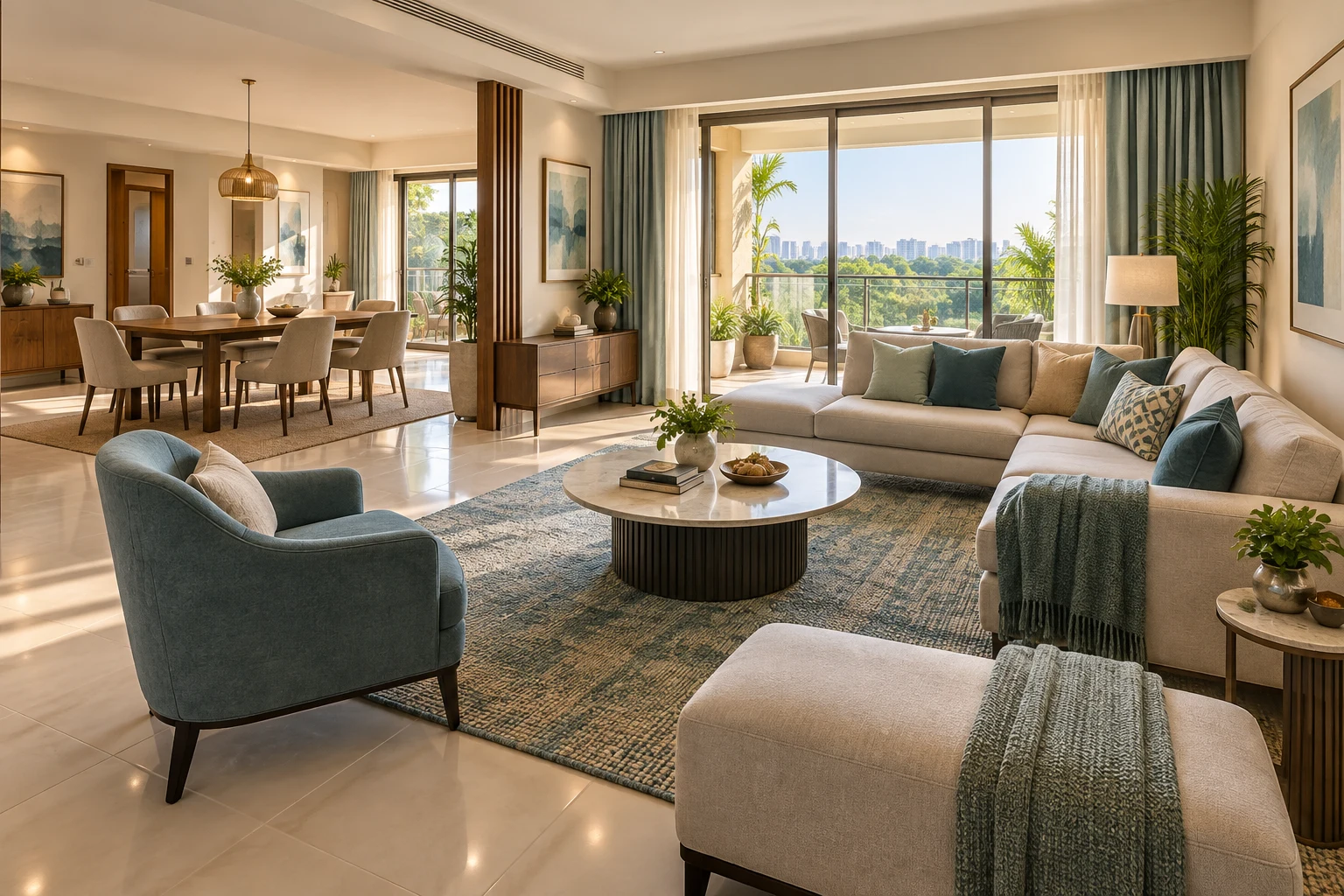
Look for captions describing artist impressions, renders, sample interiors or actual photographs. Each serves a different purpose. A furnished image may communicate atmosphere without establishing the furniture, lighting or finishes supplied in the purchase.
Study the empty architectural features as well as the styling. Window positions, room proportions and outdoor connections should be checked on drawings rather than inferred from an attractive perspective. Camera angles and rendering choices can make precise measurement impossible.
Ask which parts of a sample interior are standard and which are additional display treatments. Record the answer against the relevant specification item. This is more reliable than remembering that a representative broadly described the home as similar to the brochure.
Third match the configuration to complete plans
Identify the variant name and request every floor sheet. A rowhouse brochure may show selected levels or a representative layout, leaving important rooms outside the visible pages. Do not assume that a configuration name tells you the exact arrangement on each floor.
Check the room labels, staircase connection and bathroom relationships together. Put your likely room uses on a copy of the plan. This turns a general description of a spacious home into a practical discussion about sleeping, working, hosting and moving between levels.
Use the Florenne rowhouse information reference to collect the marketed options, then match the selected option to its dated drawings. Ask explicitly when a sheet is missing or a plan image is too small to read. An unreadable dimension should remain unknown until clarified.
Fourth understand the area descriptions
Look for the basis of every area figure. Saleable area, carpet area and outdoor areas are not interchangeable labels. A brochure may round a figure for convenience while a detailed statement gives a more precise breakdown. Ask for the current statement relevant to the offered unit.
Avoid adding dimensions from different documents to create your own total. There may be differences in what the figures include. Request a coordinated explanation from the representative and retain the terminology used in the official unit documents.
For furnishing, ask the responsible supplier to take final measurements when appropriate. Even a clear brochure plan is not a substitute for measuring completed surfaces and checking the installation conditions. Keep shortlisting measurements and production measurements as distinct records.
Fifth read the specifications as a schedule
Find the written specification pages and organise them by room or building element. Note what is described precisely and what remains broad. Words such as premium or elegant may communicate a design intention without naming the product, finish or included scope.
The Godrej Florenne project details provide another published description, but the comparison needs the current written specification for the home. If a listing promises a feature that is unclear in the brochure, ask for confirmation rather than silently adding it to your expected handover items.
Keep a distinction between included fittings and provisions for a later installation. An electrical point, allocated space or preparation for equipment does not necessarily mean the equipment is supplied. Ask who provides, installs and maintains each important item before making a furnishing budget around it.
Sixth connect amenities to the layout
Locate the amenities mentioned in the brochure on the current master plan. Ask which phase they belong to and what information is available about their intended operation. A facility name and a lifestyle photograph do not establish completion, opening hours or booking arrangements.
Choose the facilities you would realistically use and study their access from the selected home. A short walk on the actual path network may be more relevant than an impressive overall list. Consider who in the household would use the space and at what times.
Ask which details remain subject to final specifications. Keep those items marked as unresolved. You can still appreciate the proposed community concept without treating every visual element as a confirmed feature of the final delivery.
Seventh align dates and quoted terms
Compare any timing statement with the developer’s current information and the unit-specific documents. Marketing material can remain online after newer information is issued. Do not choose whichever date appears most convenient or assume that a general project schedule applies identically to every phase.
The Florenne property overview can support your research, but a dated quotation and the relevant current documents should explain the actual offered terms. Ask the representative to clarify differences in writing. This guide organises questions; it does not interpret a purchase agreement for you.
If the brochure includes a starting price, distinguish it from a total for an available unit. Request an itemised current quotation rather than filling missing charges with guesses. Keep all commercial questions attached to the exact home being offered.
Turn the brochure into a short enquiry
After these checks, prepare a concise list of unresolved items. Group them under plans, areas, specifications, amenities and timing. Attach the page or drawing that prompted each question so the person replying can address the actual issue.
For example, a brochure might show a furnished terrace while the specification describes only its basic finish. A useful question asks which elements are included and which are illustrative. A less useful question asks whether the terrace will look exactly like the image, because that combines several different matters.
Use the same approach when comparing variants. Ask for the specific change in layout or specification instead of relying on adjectives such as larger or more luxurious. Clear differences are easier to assess against your household’s needs.
An example of a useful clarification
Suppose a brochure shows a kitchen with cabinetry and appliances, while the written specification uses a shorter description. Instead of assuming the photograph settles the matter, list the individual elements you want confirmed. Ask which are supplied, which are provisions and which are display styling. Attach the relevant page so the representative can address the exact image.
The same method works for a garden or a fitted bedroom. It prevents a broad question from receiving an equally broad answer. You are not asking the representative to approve your interpretation of an image; you are asking for a clear account of the offered scope.
Once the response arrives, record it beside the specification and keep the original question. That context is useful if the home or document version changes later. A tidy record should make the information easier to understand, not hide the distinction between an illustration and a confirmed inclusion.
Keep one reliable project folder
Store the current brochure, full plan set, quotation and written clarifications together. Give each file a meaningful name and date. Mark superseded documents so an old drawing does not accidentally become the basis of a later furniture order or family discussion.
Bring that folder to the next Godrej Florenne project conversation. You do not need to memorise the brochure or treat it with suspicion. You need to understand what it explains, what it illustrates and what still requires a current, specific answer. That approach makes the brochure a useful part of the decision rather than the decision itself. Keep each answer dated.
More Godrej Florenne guides


Discuss your Godrej Florenne shortlist
Ask for the project details relevant to this guide.
Chat about Godrej Florenne Brochure: Seven Useful Checks