Godrej Aveline: A Home Fitness Corner
Plan a Godrej Aveline home fitness corner around movement space, equipment storage and considerate apartment routines.
12 September 2026 · 1,400 words · About 8 minutes
Ask about this topic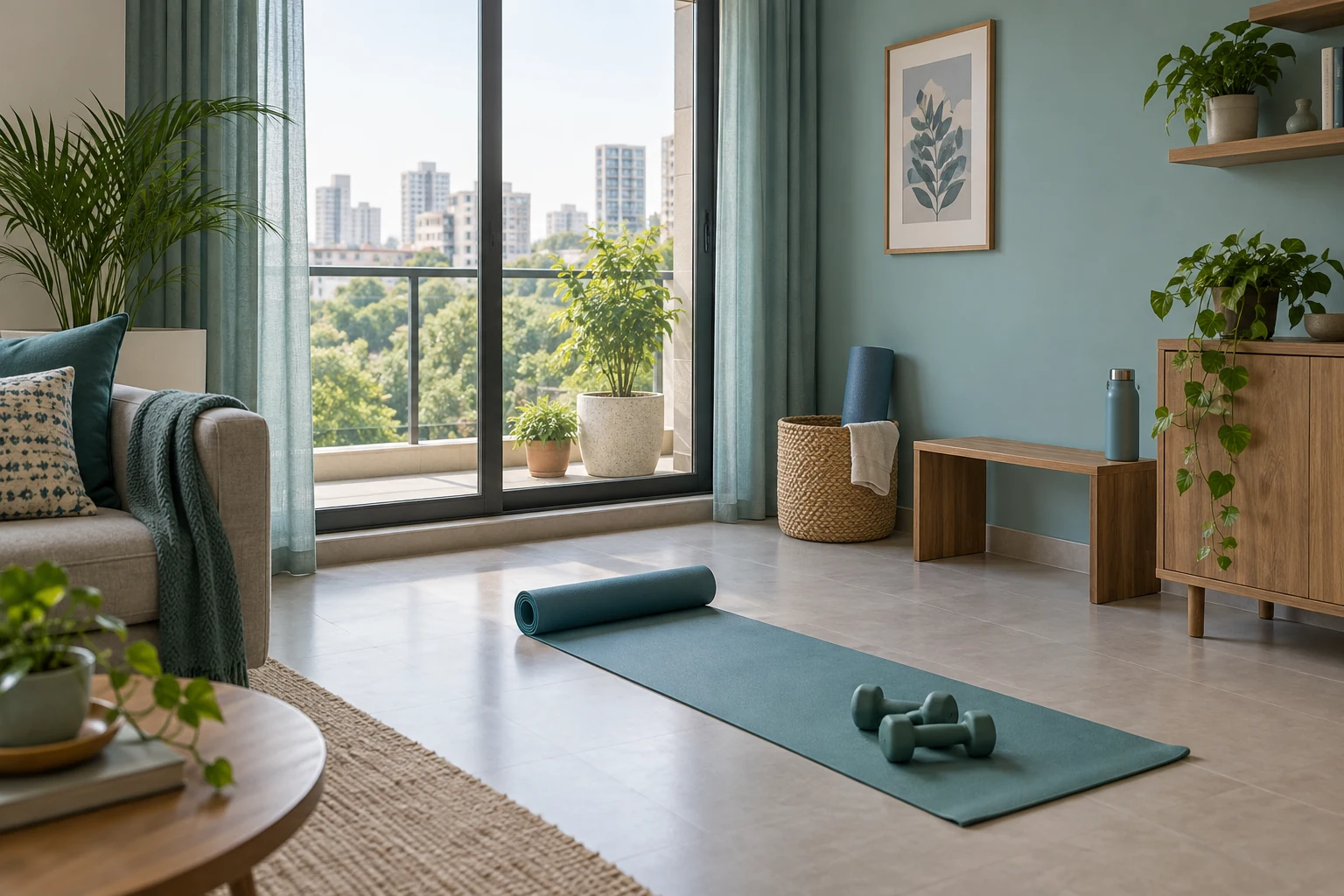
In this guide
- Describe the activity before claiming a corner
- Check the complete working footprint
- Decide whether the setup is permanent
- Store equipment according to its requirements
- Be considerate of the household and neighbours
- Keep the room useful outside the routine
- Compare setup time with the available session
- Make a proportionate equipment decision
A Godrej Aveline home fitness corner should be planned around the movement and equipment you already use, rather than a photograph of a complete gym. For some households, a clear area and a place for a mat are enough. Others may consider equipment with specific space, installation and use requirements. The useful starting point is a realistic routine and the actual apartment.
Use the Godrej Aveline Yelahanka project guide to identify the relevant home information. This article addresses space and household organisation, not an exercise programme or medical advice. Follow appropriate guidance for your activities and the manufacturer's requirements for any equipment.
Describe the activity before claiming a corner
List what the space will support and when it will be used. A brief routine without large equipment has different needs from an activity requiring a machine. Include setup, movement and putting items away. The equipment's stored footprint is only one part of the area it may need during use.
Ask whether the routine is established or aspirational. If you are trying a new habit, a modest arrangement may allow you to learn what is useful before purchasing substantial equipment. This is a planning choice, not a judgment about motivation. The room should respond to actual use rather than become a permanent store for an untested idea.
Consider who else uses the same space at that time. A clear corner in an empty room may not be available when another person is working, studying or moving through it. Map the ordinary overlap before deciding that the apartment has a dedicated exercise area.
Check the complete working footprint
Use the selected equipment's instructions and appropriate advice to understand its operating space, clearances and installation requirements. Do not assume a machine is suitable because its base fits inside a rectangle on the plan. Access, movement and the relevant building considerations need to be assessed for the actual proposal.
For an activity without a machine, keep the intended movement area clear and appropriate to the routine. Avoid planning around obstacles that must be stepped over or furniture that cannot be moved safely. The layout should support the activity without turning normal circulation into part of the exercise space.
If substantial equipment is proposed, obtain suitable professional input for the actual apartment and confirm applicable permissions. A general description of a spacious home does not establish load suitability or permission for every installation. Keep those questions specific to the item and location.
Decide whether the setup is permanent
A permanent arrangement can reduce setup time, but it also commits space throughout the day. A temporary corner may preserve flexibility if its equipment can be stored and handled appropriately. Compare both the active and stored states rather than assuming that folding equipment disappears without needing a destination.
Try the setup sequence. How many items must move, who moves them and how does the room return to its usual role? If preparation is cumbersome, the arrangement may discourage use. A simpler routine or different location could be more practical than a larger collection of equipment.
The hobby corner guide explores a similar setup-and-return question for another activity. The equipment requirements differ, but both benefit from a clear working area and an appropriate place for items after use.
Store equipment according to its requirements
Choose a defined location for the items used regularly, following their storage and handling guidance. Keep the arrangement understandable to other household members so equipment does not remain unexpectedly in a route through the room. Appropriate storage should make both retrieval and return practical.
Consider the filled weight and use of any storage furniture. Do not assume a decorative shelf is suitable for heavy items. Ask the supplier about intended loading and fixing, and arrange appropriate installation where needed. The storage proposal should be assessed with the actual contents in mind.
Avoid accumulating accessories before knowing which ones support the routine. A clear inventory makes it easier to choose storage and reduces the chance that the corner becomes crowded by equipment used only once. Review the collection when the activity changes rather than automatically adding another container.
Be considerate of the household and neighbours
Think about timing, sound and movement in the actual apartment. Do not assume that a mat or a closed door eliminates transmission. Follow applicable community rules and obtain appropriate advice if the intended activity raises questions about noise or vibration. A considerate routine begins with understanding the setting and its limits.
Discuss the schedule with the household. A session that overlaps with another person's call or quiet time may need a different location or time. The arrangement should not depend on everyone else repeatedly abandoning their normal activity without agreement.
The different-shifts guide can help map those overlaps. Use the actual household timetable rather than assuming that morning or evening is convenient for every person nearby.
Keep the room useful outside the routine
An apartment corner may also support reading, family activity or ordinary circulation. Decide which of those uses remain possible while equipment is stored. A setup that permanently displaces a valued household activity deserves a conscious discussion, even if the equipment itself fits neatly.
Avoid using common corridors or other shared areas as an assumed extension of the apartment. Keep the plan within the permitted space and confirm any relevant rules. The aim is a workable home arrangement, not a solution that depends on space the household does not control.
Review the corner after a period of ordinary use. Notice whether the equipment returns to storage and whether the routine happens as expected. If the space remains blocked between sessions, the closing sequence may need improvement rather than another furnishing purchase.
Compare setup time with the available session
Time spent preparing the corner is part of the practical decision. If the household has a short available window, moving several pieces of furniture may make the arrangement less useful. Record the actual steps and ask whether the routine can be supported with a simpler setup that remains appropriate for the activity.
Do not rush handling or skip equipment requirements to make the sequence faster. The aim is to choose a workable arrangement from the start, following relevant instructions and advice. A product that is awkward to move or store may not suit a temporary corner even if it is described as compact.
Consider the closing sequence with equal care. Equipment should return to its appropriate location, leaving the room usable for the next household activity. If this step is repeatedly postponed, review whether the storage location or amount of equipment is realistic.
Keep the trial focused on established activities and suitable guidance. The room planning exercise should not become an improvised fitness programme. Its purpose is to determine whether the chosen space and equipment can support the routine the user already intends to follow appropriately.
Discuss any recurring conflict with the household before buying more equipment. A timing problem may need a schedule change rather than a larger installation. Similarly, a storage problem may be resolved by a more suitable item instead of another cabinet.
After a few ordinary sessions, note what was genuinely used and what remained in the way. Those observations provide a clearer basis for later purchases and help the corner remain a useful part of the apartment rather than a permanent collection of equipment waiting for an ideal day.
Keep those observations with the equipment information, so any later change considers both the manufacturer’s requirements and the household’s experience of using, storing and sharing the space during ordinary days rather than an idealised empty-room demonstration.
Make a proportionate equipment decision
Imagine a household considering a large machine before trying its intended routine at home. It first establishes a suitable clear area for the activities it already practises and learns when that space is available. It can then assess whether further equipment serves a real need and whether the actual apartment can appropriately accommodate it.
Another household with an established equipment-based routine may need a more specific professional assessment from the outset. The right process depends on the proposed use. Avoid comparing options only through appearance or the amount of equipment they contain.
Bring the room and permission questions to the Godrej Aveline project page and the equipment questions to an appropriate provider. A useful home fitness corner is practical to set up, suitable for its intended use and considerate of the shared life around it.
More Godrej Aveline articles
EXPLORE THE PORTFOLIO
Projects by the same builder



Browse all Godrej project guides
Discuss your Godrej Aveline shortlist
Ask for the project details relevant to this guide.
Chat about Godrej Aveline: A Home Fitness Corner