
GODREJ MSR CITY · SITE VISIT
Godrej MSR City Site Visit: A Buyer Checklist
Plan a Godrej MSR City site visit with a clear route, sample-home checks and a focused list of questions to resolve.
24 September 2026 · 1,407 words · About 8 minutes
Ask about this topic
A Godrej MSR City site visit is most useful when it answers the questions that decide your shortlist. Arriving with only a general interest in the project can lead to an enjoyable tour but an incomplete decision. Prepare a short brief covering the phase, apartment type, daily routes and documents you want to understand before the appointment.
Use the Godrej MSR City project overview to review the existing Barca material first. Then ask the team what the visit can actually cover. A sales presentation, sample apartment and permitted view of construction each offer different information. Knowing that scope helps you interpret the experience without confusing a display with the home being offered.
Book the right Godrej MSR City visit
State the configuration and phase you want to discuss when arranging the appointment. Ask for the meeting location, visitor instructions and a contact for the day. Confirm whether the team can address the selected unit or only provide a general introduction. A small amount of preparation can prevent a second journey for information that could have been arranged beforehand.
The Godrej MSR City Shettigere project details can help frame the initial enquiry. Keep your request specific: a relevant unit shortlist, matching plan and a clear explanation of the visit route. Avoid assuming that every building, facility or sample configuration is accessible simply because it appears in promotional material.
Choose a time that suits the questions you want to test. If your main concern is an ordinary workday journey, consider how your travel to the appointment relates to that routine. One trip will not establish every traffic condition, but recording its date and circumstances gives it more value than remembering only a broad impression of distance.
Prepare a household brief before leaving
Write down the essential requirements rather than a long wish list. Include the rooms you need, the activities that must fit and any practical access preferences. Distinguish essentials from features you would simply enjoy. This makes it easier to evaluate the home consistently when attractive finishes or a strong presentation compete for your attention.
Bring dimensions for major furniture you expect to keep, but treat the visit as an early fit review rather than a final measurement exercise. Have the relevant drawing available and note where a dimension needs confirmation. Custom work should wait for the appropriate verified information and permissions, not a hurried estimate during a sample-home tour.
Agree how the household will record observations. One person might note room questions while another watches the route and surrounding context. Compare notes afterward instead of interrupting every explanation. A shared brief keeps the visit focused while allowing different family members to notice details that matter to their own daily routines.
Understand the approach and meeting point
Confirm the intended entrance before starting the journey. A map result for the township, sales office or a nearby landmark may not identify the same arrival point. Ask for the authorised meeting location and follow the site's instructions. Record the route you actually used so later comparisons are based on the same destination.
For a Godrej MSR City Phase 2 site visit enquiry, make the phase explicit when requesting directions and the appointment scope. Ask whether the visit includes a view relevant to that phase. A convenient sales location does not by itself show the daily approach to every future residential building.
During the journey, notice practical transitions such as the turn from the main route and the final approach. Do not use a single visit to promise a fixed commute time or assess every seasonal condition. Turn observations into follow-up questions where appropriate, especially if the route you would normally use differs from the one taken that day.
Walk through the sample home deliberately
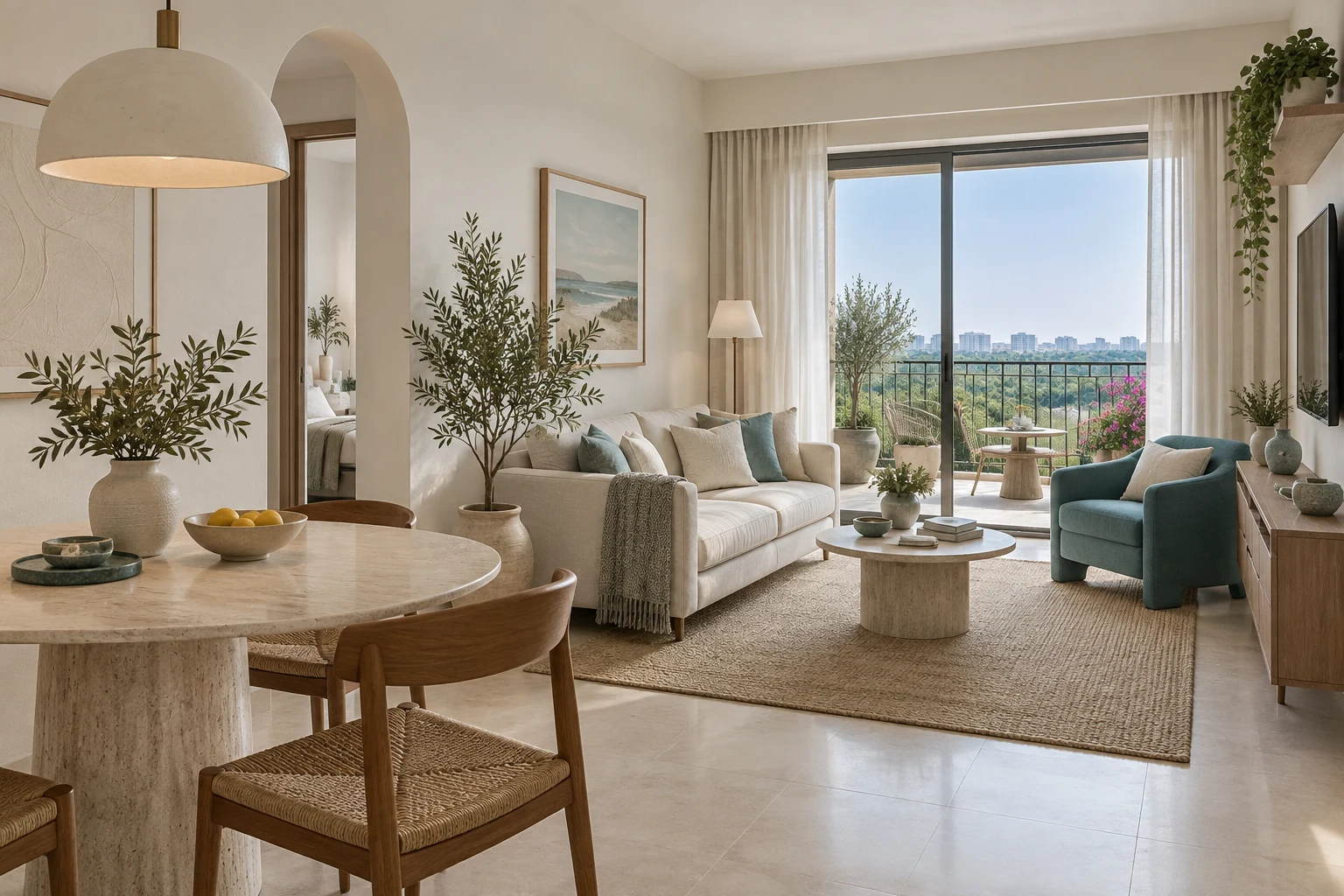
Start at the entrance and follow a normal sequence of activities: arriving with bags, moving into the living area, using the kitchen and reaching the bedrooms. Look at openings and circulation before concentrating on decoration. A staged home can feel spacious partly because its furniture and contents have been carefully selected for the presentation.
Ask which display features are included in the offered specification and which are decorative or optional. Keep those answers separate from your impressions of the design. A wall treatment, light fitting or built-in unit should not become an assumed inclusion merely because it is present in the sample apartment you visited.
Check the relationship between the sample configuration and your shortlisted unit. Ask about any known differences in layout, floor applicability or openings. If the exact option is not represented, use the sample to understand the general experience while relying on the matching drawing for the actual comparison. Label the limitation in your notes.
Ask about the unit and shared spaces
Request the tower, floor and unit references for the alternatives being discussed. Connect each to the relevant plan and quotation. This avoids leaving with a preference for a sample-home arrangement that does not match the available options. Ask the representative to mark the selected building on the applicable layout where possible.
Use the Godrej MSR City apartment configuration reference to organise broader questions, then make the discussion specific to the offered home. For amenities, ask about the relevant phase scope and intended access arrangements. A township-wide list may need clarification before it tells you what applies to your particular apartment.
Keep readiness and design intent separate. A rendered facility, a construction view and an operating space provide different evidence. Ask what is currently being shown and what documents support the explanation. This makes the visit more informative without expecting a sales tour to replace technical, contractual or regulatory review.
Record observations without losing context
Ask permission before photographing restricted areas, documents or people. Where photographs are allowed, label them with the date and what they show. A close-up is easier to use later if you also have a wider view explaining its location. Keep your own observations separate from captions supplied by someone else.
Write down unanswered questions as they arise, then review them together near the end of the appointment. A question list is more useful than a series of disconnected messages afterward. Identify which answers can be given immediately and which require a drawing, specification or response from another team.
Avoid recording a verbal statement as a confirmed inclusion unless the applicable document supports it. You can note what was said and who will clarify it. That distinction protects the accuracy of your own record and gives the project team a clear opportunity to resolve misunderstandings before they influence a decision.
Use a simple visit scorecard
Create a scorecard with the household's five most important criteria. For each, record observed, explained, documented or unresolved rather than assigning an arbitrary numerical rating. A room arrangement may be observed in the sample, while the corresponding unit detail remains unresolved. These categories preserve that difference better than a single overall score.
Add one practical note beneath each criterion. For example, a furniture requirement might need a clear dimension, while a commute concern might require another route test. The note should identify the next useful action. This keeps the scorecard focused on advancing the shortlist rather than simply declaring the visit good or disappointing.
Review the scorecard when the initial excitement has settled. Compare the findings with your original brief and identify what actually changed. If the visit revealed an important mismatch, acknowledge it. If it answered a key question, retain the supporting information. A good visit earns its value by improving the decision, whatever that decision eventually becomes.
Follow up with one organised request
Send the unit references, outstanding questions and requested documents in a single clear message. Ask for the current quotation and matching plan where those are still needed. Keep the reply with your visit notes. This gives the household a coherent record rather than several parallel conversations that refer to different apartments.
For a further Godrej MSR City Phase 2 apartment visit, carry forward only observations that apply to that phase or sample arrangement. Recheck the rest. A later visit should resolve specific gaps, not repeat the entire presentation without clarifying why the new information matters to your shortlist.
Return to the Godrej MSR City guide to revisit the established project context. A productive site visit combines a clear brief, careful observation and a manageable follow-up list. It should leave you better able to compare the actual homes being offered, with their attractive features and unanswered questions both visible.
CONTINUE READING
More Godrej MSR City guides


EXPLORE THE PORTFOLIO
Projects by the same builder



Browse all Godrej project guides
Discuss your Godrej MSR City shortlist
Ask for the project details relevant to this guide.
Chat about Godrej MSR City Site Visit: A Buyer Checklist