
Godrej Florenne Amenities: An Everyday Guide
Review Godrej Florenne amenities around real household routines, current specifications, access and proposed operating arrangements.
19 September 2026 · 1,400 words · About 8 minutes
Ask about this topic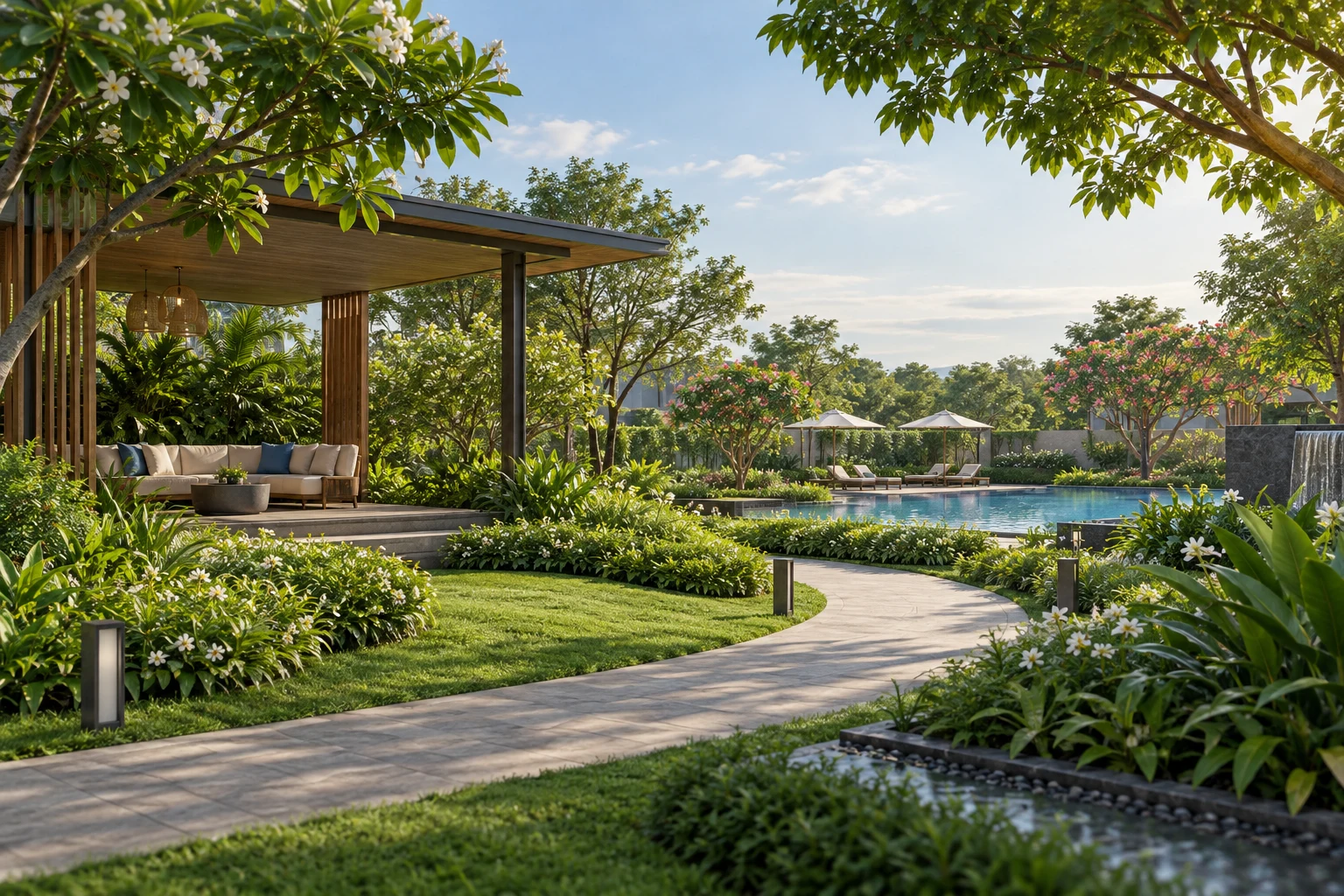
In this guide
- Start with a realistic weekly routine
- Locate the facilities on the plan
- Look at walking and outdoor sitting
- Ask practical fitness questions
- Review spaces for children and visitors
- Understand gathering and indoor spaces
- Connect maintenance with the proposal
- Compare use rather than counting names
- Prepare three questions for each priority
- Request the latest amenity schedule
An amenity list is most useful when you can connect it to an ordinary week. Buyers considering Godrej Florenne may see references to recreation, fitness and landscaped shared spaces, but the important questions concern the current scope, location and intended use of those facilities. This guide offers a practical way to review the proposals. It does not claim that the amenities are complete, assign invented ratings or guarantee operating arrangements. Use the latest master plan and specifications to confirm what is included for the relevant phase.
Start with a realistic weekly routine
Ask each household member which shared spaces they would actually use. A short morning walk, occasional swimming or a place to sit outdoors may matter more than a long list of activities that rarely enter your routine. Start with likely use instead of trying to value every facility equally.
Write down when those activities would happen. A facility that suits weekend use may not solve a weekday requirement if access or timing differs. These are questions to ask the responsible team, not operating hours that can be inferred from a brochure image.
The Godrej Florenne amenities listing introduces the marketed facilities. Use it to create your enquiry list, then ask which items appear in the current plan and specification. Keep proposed features distinct from completed facilities you have personally inspected.
Locate the facilities on the plan
Find each important amenity on the master plan and trace the route from the selected home. Consider the actual pedestrian connections rather than the straight-line distance on the image. An attractive landscaped area may not be a through route unless the drawing shows it as one.
Ask whether the layout you are viewing is the latest applicable version. If a facility appears in one image but not another, request clarification instead of assuming it has been added or removed. Different views can show different portions or stages of a project.
Record how the feature relates to nearby homes and common paths. This supports a balanced discussion about convenience and privacy without predicting activity levels from the drawing alone. The closest home is not automatically the most suitable position for every household.
Look at walking and outdoor sitting
Shared landscape can support modest everyday activities that are easy to overlook during a sales presentation. Ask how the walking routes connect, where seating is proposed and which areas are intended for different uses. A useful outdoor routine depends on those relationships, not only the amount of green colour on a plan.
Consider who would use the space and whether the route suits them. If someone has specific access needs, assess those needs directly with appropriate advice rather than assuming a landscaped path meets them. Marketing language cannot establish individual suitability.
The Florenne community overview describes the project’s shared-space themes. Treat that description as background while asking for the current layout and details relevant to your routine. Avoid presenting an illustrative garden image as a photograph of a completed facility.
Ask practical fitness questions
For a gym or activity space, ask what is included in the current proposal and what information is available about management. Equipment, access and intended use are separate topics. A room labelled gym does not by itself establish the exact equipment or operating arrangements.
For swimming or other organised activities, ask about the planned rules and supervision arrangements when available. Do not assume coaching, lifeguard coverage or unrestricted access from a facility name. Those details need a direct answer from the responsible team.
Consider whether the proposed activity matches the way you prefer to exercise. Someone who enjoys a short independent routine may ask different questions from someone seeking scheduled classes. The guide should help you identify that distinction without claiming that one preference is better.
Review spaces for children and visitors
Ask where children’s activity areas sit in relation to paths, entrances and seating. Discuss the intended age range and the available specification with the project team. Do not interpret a colourful rendering as proof that every activity is suitable for every child.
The Godrej Florenne shared-facility reference may list several family-oriented features. Confirm which ones belong to the current scope and ask about the rules expected to govern their use. A brochure does not replace supervision or a direct assessment of suitability.
For visitors, ask whether access differs from resident use and whether any spaces require booking. A household that regularly hosts family may value a clear procedure more than an additional feature name. Keep these operational questions in the shortlist discussion.
Understand gathering and indoor spaces
If a clubhouse, indoor games area or multipurpose space is proposed, ask what uses are intended and how the space is described in the current documents. One flexible room may support several activities at different times; that is different from several dedicated rooms.
Ask about reservations, capacity information and any proposed usage charges when those details are available. Do not assume a particular event can be held simply because a multipurpose facility is mentioned. The actual rules and management arrangements will matter.
Consider the route for guests and any practical equipment an event would need. These questions help you understand the facility as a usable space rather than a decorative addition to the amenity list. Keep unconfirmed details marked clearly until a reliable answer is supplied.
Connect maintenance with the proposal
Ask how shared facilities will be maintained and which current information is available about the associated charges. This article does not estimate maintenance costs. The useful step is to request the applicable written schedule and understand what it says is included.
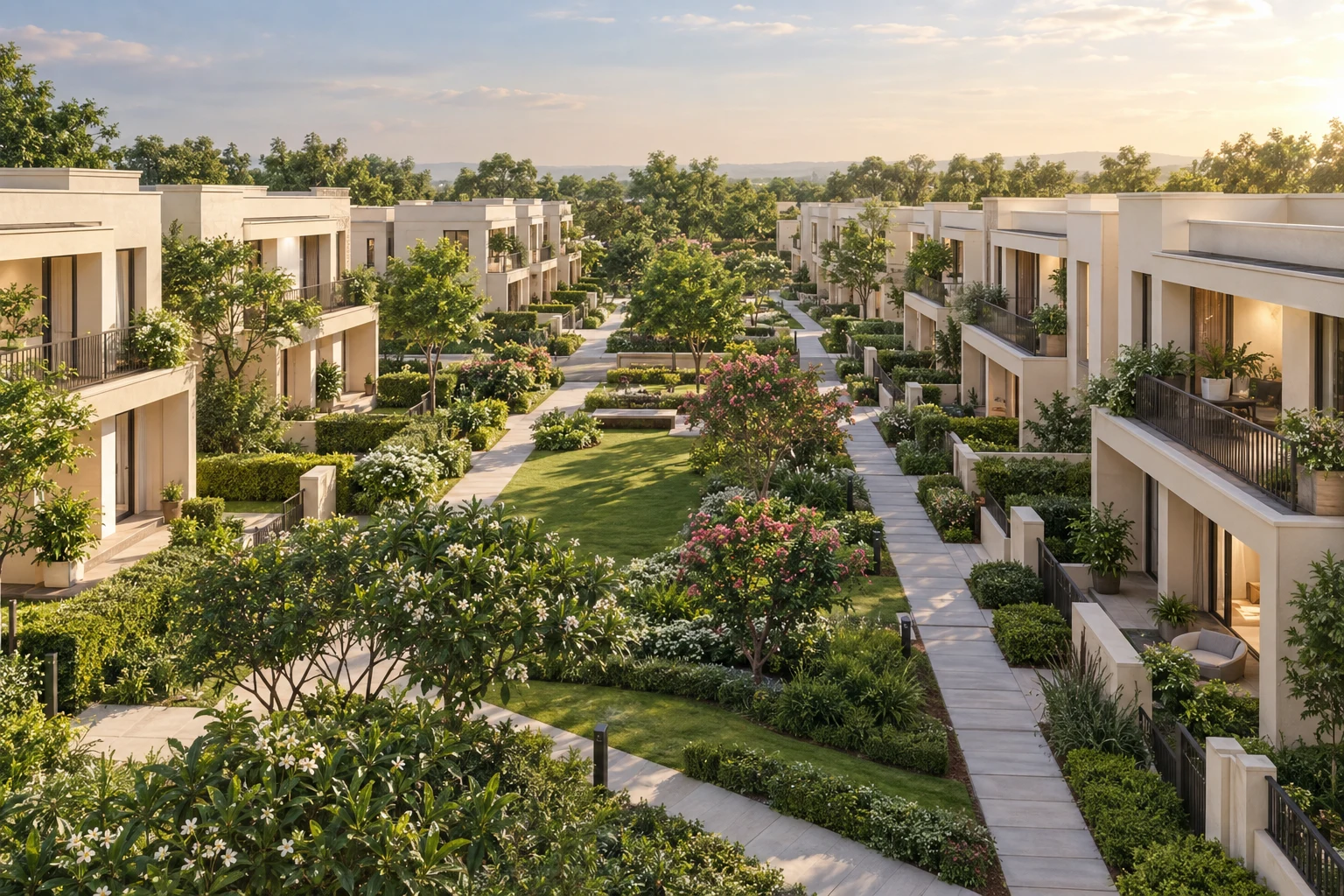
The Florenne rowhouse information page is a reference for the proposed lifestyle, but it cannot establish future management performance. Ask about the planned arrangements and avoid assuming that a long amenity list guarantees a particular level of service.
Keep physical specification and management questions separate. A well-described space still needs an operating arrangement, while a broad assurance about management does not explain the space itself. Reviewing both produces a more complete picture.
Compare use rather than counting names
Imagine a household that expects to walk most evenings, host visitors monthly and use a fitness space occasionally. Those activities can guide its questions about routes, seating, booking and equipment. Another household may reasonably prioritise different features within the same community.
Create a short list of the facilities that matter most, the evidence available and the unanswered questions. Avoid assigning numerical ratings to features you have not inspected or experienced. A clear description of relevance is more honest and more useful than an invented score.
When a feature is not important to you, note that without dismissing it for everyone. The aim is a personal shortlist, not a universal ranking of the community’s lifestyle offering.
Prepare three questions for each priority
For a facility you expect to use regularly, ask what is currently specified, how it is reached from the selected home and what is known about its operation. These three questions keep the discussion focused. They also reveal whether an attractive feature has enough detail available for your shortlist.
For example, a household interested in an indoor activity room may care about its intended use and booking process more than its decorative appearance. Another household may prioritise the continuity of a walking route. Neither needs to turn every amenity into a numerical score.
Keep the answers in plain language and mark any provisional details. If the facility matters strongly to the decision, request the relevant written information before treating it as a settled benefit. Where the detail is not yet available, acknowledge that uncertainty rather than filling it with expectations drawn from another community or a promotional photograph. A shorter list of well-understood facilities can support a better discussion than an impressive list whose practical meaning remains unclear.
Request the latest amenity schedule
Use your Godrej Florenne project enquiry to request the current amenity plan, relevant specifications and available information about phasing and operation. Keep those documents with the unit layout so location and facilities can be discussed together.
A good amenities review ends with a realistic picture of the spaces you expect to use and the details still awaiting confirmation. That is a stronger basis for choosing a home than counting icons in a brochure or assuming every attractive facility image represents a finished experience. Keep the facility questions with your shortlist so later updates can be assessed consistently together.
More Godrej Florenne guides
Discuss your Godrej Florenne shortlist
Ask for the project details relevant to this guide.
Chat about Godrej Florenne Amenities: An Everyday Guide